TIER IV releases five open-source AI models for autonomous driving

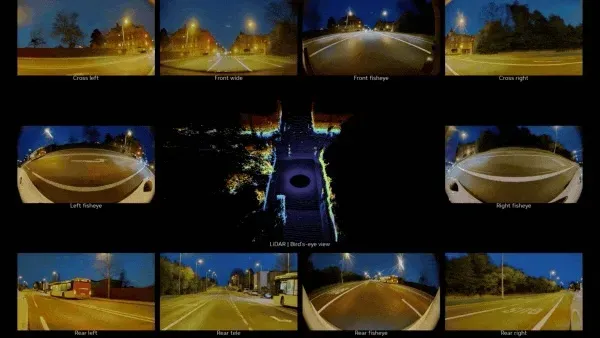
TIER IV has announced and open-sourced multiple end-to-end autonomous driving AI models that support different map requirements, sensor configurations and computing platforms. The models range from camera-only systems to designs using LiDAR, radar and high-definition maps.
- TIER IV released five open-source end-to-end autonomous driving AI models.
- The models support configurations ranging from cameras alone to LiDAR, radar and HD maps.
- Alpamayo 2 Edge has 2 billion parameters, while METEOR has 16 million.
- Autoware 2.0 is designed to combine AI models with conventional rule-based technologies.
- TIER IV is continuing in-vehicle optimization and development with automakers and partners.
Five models target different driving system requirements
The models are being released through the Autoware ecosystem, which TIER IV describes as open-source software for autonomous driving. The company says developers can select models according to their performance requirements and use Autoware to optimize them and integrate them into vehicle systems.
The release includes NVIDIA Alpamayo 2 Edge, AutoE2E, METEOR, OnePlanner and LatentDrive. Their designs cover different combinations of sensors, maps and planning methods.
- Alpamayo 2 Edge uses camera images as input and applies reasoning to generate driving trajectories. It has 2 billion parameters and has been integrated with Autoware.
- AutoE2E can run on computing platforms beyond NVIDIA hardware. Its Reactive Model has been released, while its World Model and Reasoning Model remain under development.
- METEOR is a 16 million parameter model aimed primarily at privately owned passenger vehicles. It supports one to eight cameras, as well as LiDAR and radar.
- OnePlanner combines perception and motion planning, using sensor data, HD maps, route information, traffic signal states and vehicle motion states to generate trajectories for the next six seconds.
- LatentDrive uses camera video, route information and vehicle motion states to generate trajectories for the next four seconds without requiring HD maps.
Autoware 2.0 is designed to combine AI and conventional systems
TIER IV is leading development of Autoware 2.0, which the company describes as a scalable and adaptable architecture. It is designed to combine AI models with conventional rule-based technologies, allowing autonomous driving systems to be built for different applications and system requirements.
AutoE2E uses a Fast to Slow architecture that combines a Reactive Model for real-time driving decisions, a World Model for predicting changes in the surrounding environment and a Reasoning Model to support driving decisions. METEOR uses a convolutional neural network and a bird's-eye-view representation to handle perception and trajectory generation in one neural network without relying on high-definition maps.
TIER IV says its CoMET automated labeling platform, part of Co-MLOps, works with agentic AI to automate data labeling, model training, evaluation and improvement. This is intended to help automakers and component suppliers optimize the open-source models for their own vehicle specifications and performance requirements.
The release expands options for automakers and partners
The models have different development statuses. TIER IV is optimizing Alpamayo 2 Edge and adapting it to real vehicles. AutoE2E's Reactive Model has been integrated with Autoware, while commercialization for robotaxi applications is under consideration. Integration with Autoware has also been achieved for OnePlanner, while LatentDrive is undergoing integration and validation in an in-vehicle environment.
Shinpei Kato, founder and CEO of TIER IV, said the releases give automakers and component suppliers more choice when incorporating AI into their products. “For automakers and component suppliers to incorporate AI technology into their own products, however, it is essential that they be able to internalize technologies according to their applications and performance requirements, without depending on a particular AI model or semiconductor platform,” Kato said in the company announcement.
TIER IV said it will continue improving the models, optimizing them for in-vehicle environments and promoting their development and commercialization through Autoware. The company also plans to strengthen collaboration with the global open-source community and expand autonomous driving systems across different vehicle types and applications.