Trimble launches AI scheduling tool to help contractors prevent delays
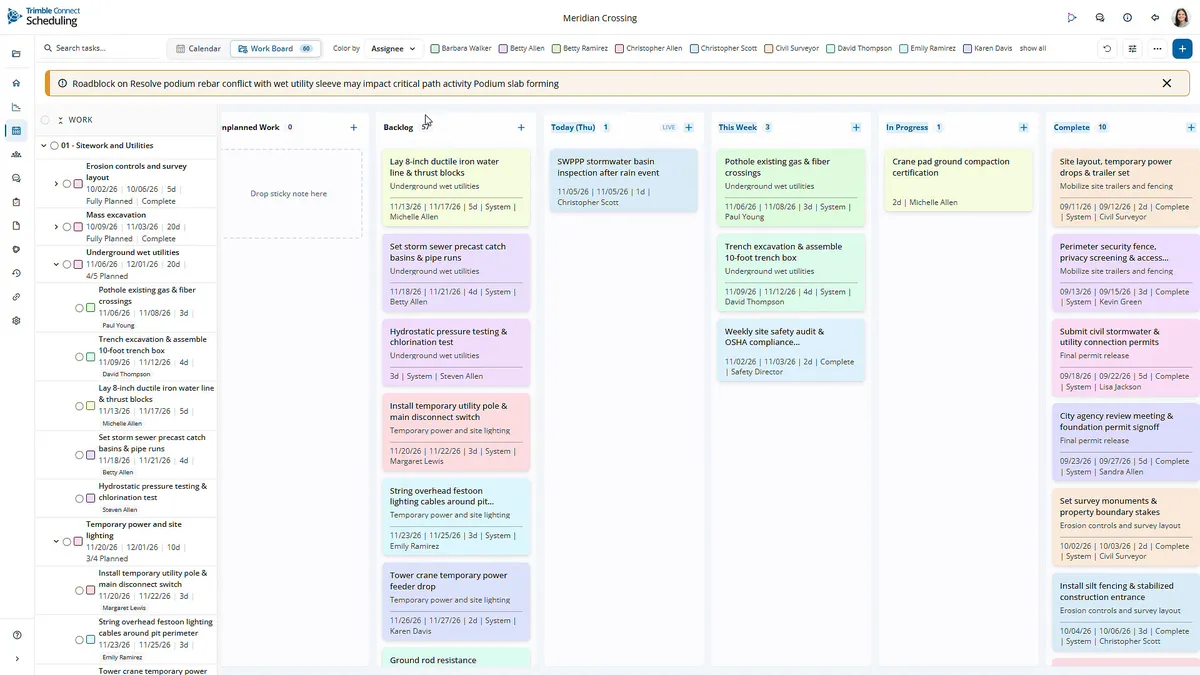
Trimble has introduced Trimble Connect Scheduling, an AI-assisted construction planning solution that reviews live project information to identify scheduling risks and recommend adjustments. The tool is designed to help field and office teams keep project schedules aligned and protect key milestones.
- Trimble Connect Scheduling is a new capability of the Trimble Connect platform.
- The tool reviews live project data to calculate scheduling risks.
- It can suggest float optimization and activity resequencing.
- Contractors can import Primavera P6, MS Project and other schedules.
- The solution is available in North America across all construction sectors.
Connecting schedules with live project data
Trimble Connect Scheduling is a new capability within the Trimble Connect platform, unveiled during the Trimble Dimensions User Conference. It connects a master schedule with data from look-aheads, requests for information, weather forecasts, daily reports, submittals and other project sources.
According to Trimble, construction schedules can shift because of crew availability, delayed deliveries, change orders, equipment issues, weather and other disruptions. Teams may also manage information across spreadsheets, whiteboards, niche applications, emails, texts and phone calls. Trimble says that disconnected approach can create version confusion and make it harder to identify risks early.
The solution continuously tracks changing variables, evaluates risks and suggests schedule changes for teams to review and approve. Trimble says this is intended to move project management from tracking delays after they occur toward preventing delays earlier.
Agentic AI identifies risks and suggests changes
Trimble Connect Scheduling uses an agentic planning engine that assesses information from the Trimble Connect common data environment and Trimble Connect Project Management. Trimble's AI planning engine can also compare current information with historical operational data and patterns to predict schedule threats and recommend remediation steps.
Its capabilities include continuous risk calculation using data such as BCF topics, RFIs and weather information. The system can identify emerging conflicts and suggest actions including float optimization and activity resequencing, according to Trimble.
The tool also links color-coded field look-ahead tasks with a project's master Gantt chart. Contractors can create and revise schedules in Trimble Connect Scheduling or import Primavera P6, MS Project and other schedules while preserving logic and baselines.
Trimble said the solution uses a domain-specific model trained on Trimble construction project data. The company says this provides contextual insights that generic large language models cannot match.
Availability and contractor feedback
Trimble Connect Scheduling is available in North America for general contractors and subcontractors of all sizes across all construction sectors. It is designed for field leaders, project managers, scheduling professionals, estimators and executives to collaborate on schedule planning and updates in real time.
Trimble developed the product with contractors, who used it over the past several months to streamline communication and organize schedules. Brendan Myers, vice president of DILFO Mechanical, said in the announcement that the product was “user friendly and easy enough for our field teams to pick up quickly, yet flexible enough to adapt to different jobs.”
Shelly Klarner, software specialist at Consolidated Construction, said the scheduling functionality can manage “everything from high-level milestones to the smallest project details.” The product's availability gives North American contractors a way to connect field planning with centralized schedule management, while Trimble's claims about risk detection and recommendations remain tied to the live project and historical data available through its platform.