Twinnin launches Human Verified and Defend Twinn to protect human likeness from AI misuse
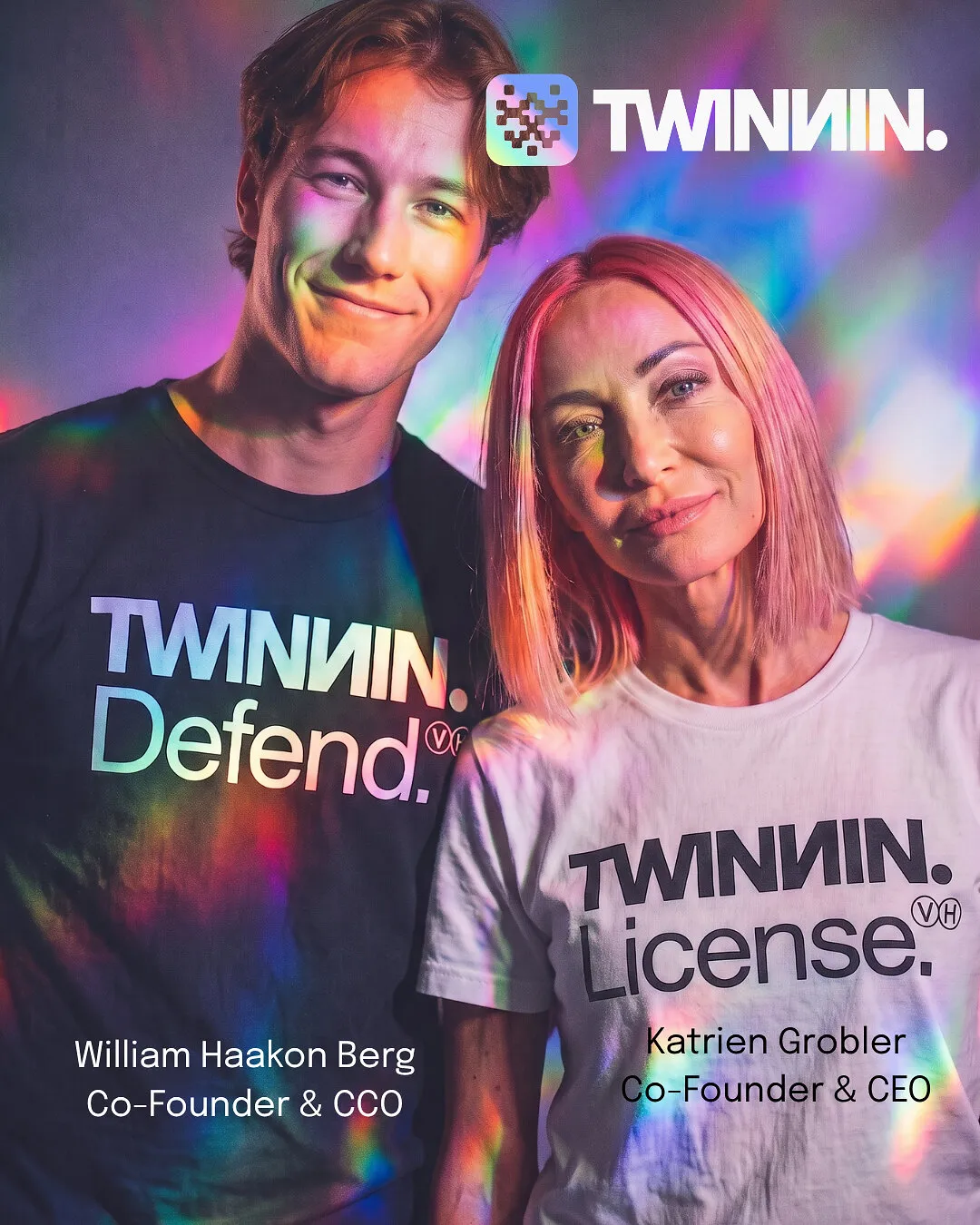
Twinnin, a consent and licensing registry for human likeness, has launched two products: Human Verified, an accreditation for businesses that use likenesses with consent, and Defend Twinn, a service for registering objections and starting takedown requests. Model Management, which says it manages a network of over three million models, is the first Human Verified partner.
- Twinnin launched Human Verified and Defend Twinn on Oct. 15, 2026.
- Defend Twinn lets people verify identity, register a timestamped objection to AI use of their likeness, and track takedown requests.
- Human Verified accredits businesses that use human likenesses with consent.
- Model Management is the first Human Verified partner, via an exclusive agreement covering over three million models.
- Co-founder Kat Grobler called on governments to act with greater urgency on likeness protection.
Two products aimed at consent-based AI use
Twinnin, co-founded by Kat Grobler and William Haakon Berg, announced the launch from London on Oct. 15, 2026. The company describes itself as a consent, licensing and provenance registry for human likeness. According to Twinnin, it helps people manage permission for AI use of their digital likeness and helps businesses access likenesses with consent.
The two new products are designed to support consent-based AI use and to help individuals challenge misuse of their image.
Defend Twinn lets people verify their identity, register a timestamped objection to AI use of their likeness, and initiate and track takedown requests.
Human Verified accredits businesses that use human likenesses with consent. Accredited companies receive a mark that signals their commitment to consent-based AI use.
Model Management signs up as first partner
Model Management is the first Human Verified partner. Through an exclusive agreement, the deal opens Twinnin to the agency's network of over three million models. The Human Verified mark will appear on the Model Management website.
Andreas von Estorff, CEO of Model Management, said: "As the world's largest provider of digital twins, we already ID-verify every model. Twinnin adds an independent, neutral trust layer: technically and legally sound third-party confirmation of each model's identity and choice for brands." He added that, as the first partner, the company joins Twinnin "in defending models' rights wherever their image is misused."
The release also says that for models, their likeness is their livelihood, and that companies need to know whose image they are using and what permission they have.
Grobler points to Hollywood and calls for faster law
Grobler framed the launch against rules set for performers in Hollywood. "SAG-AFTRA set the rule for Hollywood: no consent, no replica, and no replica without pay," she said. "Everyone else is still dealing with scraped faces and fine print. Twinnin gives every performer, union card or not, the deal Hollywood fought for."
She also argued that regulation is lagging behind the technology. "Technology is moving faster than the laws meant to protect people. Governments need to act with greater urgency. Anyone using a person's likeness commercially should have their permission and pay them for it," Grobler said.
Twinnin's technology is led by Chief Technology Officer Dr Mary Maller. The company's founder, Katrien Grobler, previously served as Head of Brand at Vodafone and has more than 20 years of senior leadership experience across Vodafone, Reckitt and Unilever, according to the release. United US managed the re-brand of Twinnin.
What it means for models and brands
For individuals, Defend Twinn offers a route to put an objection on record with a timestamp and to follow takedown requests in one place. For businesses, the Human Verified mark is meant to show customers and partners that likenesses are used with permission. The release does not give pricing, availability details beyond the launch, or technical specifics on how takedowns are enforced, so the practical reach of both products will depend on how many companies and platforms take part.