Vercel Makes Open Source Agent Framework eve Generally Available
Vercel has released eve 1.0, making its open source framework for building production ready agents generally available. The release adds broader integrations, security controls, native memory and OpenTelemetry based tracing, while Vercel says its testing showed lower agent turn latency and workflow costs.
- eve 1.0 is now generally available as an open source framework for production agents.
- The framework adds channels, web framework integrations, native memory and multi tenant controls.
- OpenTelemetry tracing includes model calls, costs, approvals and agent activity.
- Vercel reported median turn latency of 626ms in a 1.0 release candidate test.
- Vercel estimated a 76% lower workflow cost for a 50 turn Evo Docs session.
A framework built around an owned agent harness
Vercel describes eve as a framework whose harness calls models, runs tools and delegates work to subagents. Developers can choose the model, add or replace tools, edit instructions and decide which actions require approval.
The open source Workflow SDK saves progress as an agent runs. This allows an agent to resume from its last completed step after a crash. Multiplayer sessions and agent to agent calls are built in, while managed deployments can run on Vercel, using Vercel Workflows for durable execution and Vercel Sandbox to isolate agent generated code.
Vercel said it has shipped 230+ releases and merged thousands of pull requests since the public preview in June. The company said thousands of businesses already run eve in production for internal and customer facing agents.
Channels, web frameworks and multi tenant support
eve 1.0 includes native channels for Slack, Microsoft Teams, Discord, Telegram, GitHub, Linear, Twilio, Web Chat and iMessage. Its Chat SDK also supports platforms including WhatsApp, Messenger, Google Chat and email through platform adapters.
In Slack, each thread becomes a shared session. eve directs approvals and sign ins to the appropriate person, while a live task card displays progress and timing. Ambient mode lets an agent listen in selected channels and decide when to respond, help or take on a task. A small decision model screens each message first, according to Vercel, to limit model costs.
The release expands native integrations for Next.js, Nuxt, SvelteKit, TanStack Start and Vite. Client libraries provide consistent handling for tool calls, approval requests and questions, allowing developers to build custom agent interfaces. eve also supports multi tenant deployments, with separate memory, connection credentials and approval policies for each tenant and user.
Memory and more controlled observability
Native memory lets agents carry context from one session to the next. Developers can choose the memory scope and use eve's built in file memory, a memory provider or their own implementation. Built in fileMemory stores data in memory in eve dev and in a private Vercel Blob store configured on Vercel.
Vercel rebuilt eve's tracing around OpenTelemetry. Traces can record model selections, approval decisions, model usage and cost, as well as calls to MCP servers and remote agents. They also show when an agent is waiting for a person, including during tool approvals, questions, budget prompts and sign ins.
Developers choose what eve collects for tracing. Vercel says excluded content stays out of every destination, and inputs and outputs can be filtered or redacted per destination. In production, private conversations send only metadata by default, without prompts or tool results. On Vercel, Agent Runs uses the same traces to display sessions, model calls, tool execution, subagent activity and approval decisions in the dashboard.
Vercel reports faster turns and lower workflow costs
In a hosted stress test, Vercel reported that median turn latency fell from 3.036s in its September beta baseline to 626ms in the 1.0 release candidate. The 100 turn test sent messages one at a time, used one immediate mock model response and included no tool calls. It measured eve and Workflow overhead, excluding the time required for a model to generate a response.
Vercel said the change came from work with the Workflow team, including a single orchestrator for each run, WebSockets for event and stream writes, fewer redundant history reads and caching for session routing. The company also said a 50 turn Evo Docs session has an estimated Vercel Workflows cost of 5.4¢ in the previous setup and 1.3¢ with the new approach, about 76% lower, assuming roughly two model steps per turn and 30 day retention.
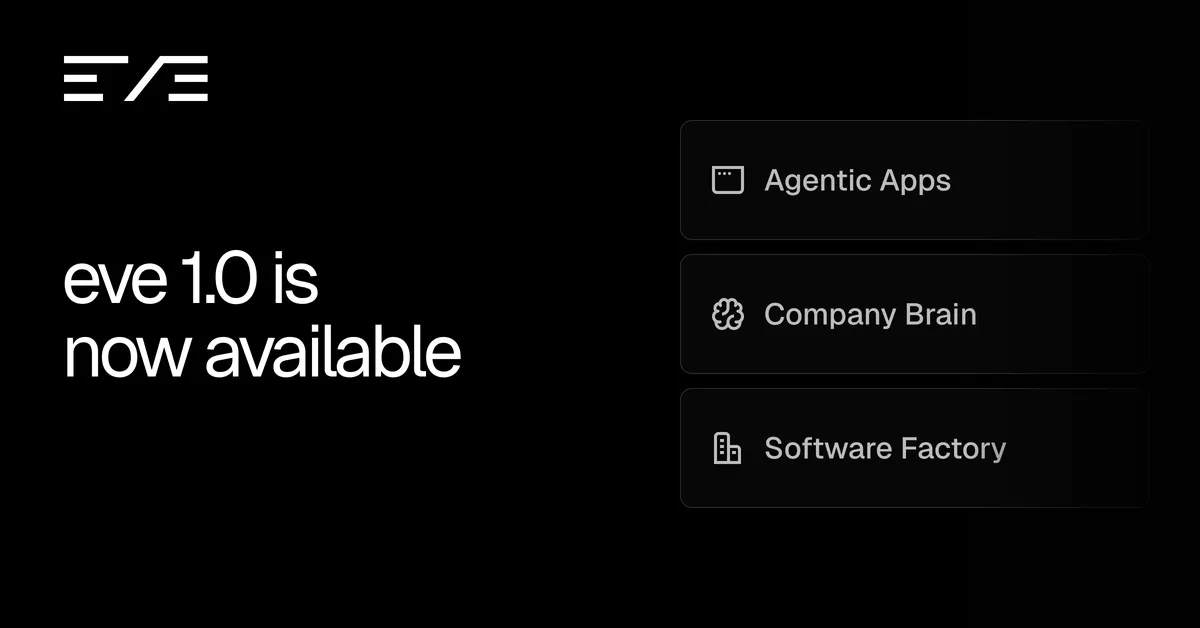
For developers, the release positions eve as a way to build agents that can operate across business systems and communication channels while retaining control over models, tools, approvals, memory and collected data. Vercel's examples include software factories that turn requests into tested pull requests, company brains that answer questions from business data and customer facing agents.
Vercel: Introducing eve 1.0