ZenML Reviews 7 Alternatives to Galileo for AI Observability
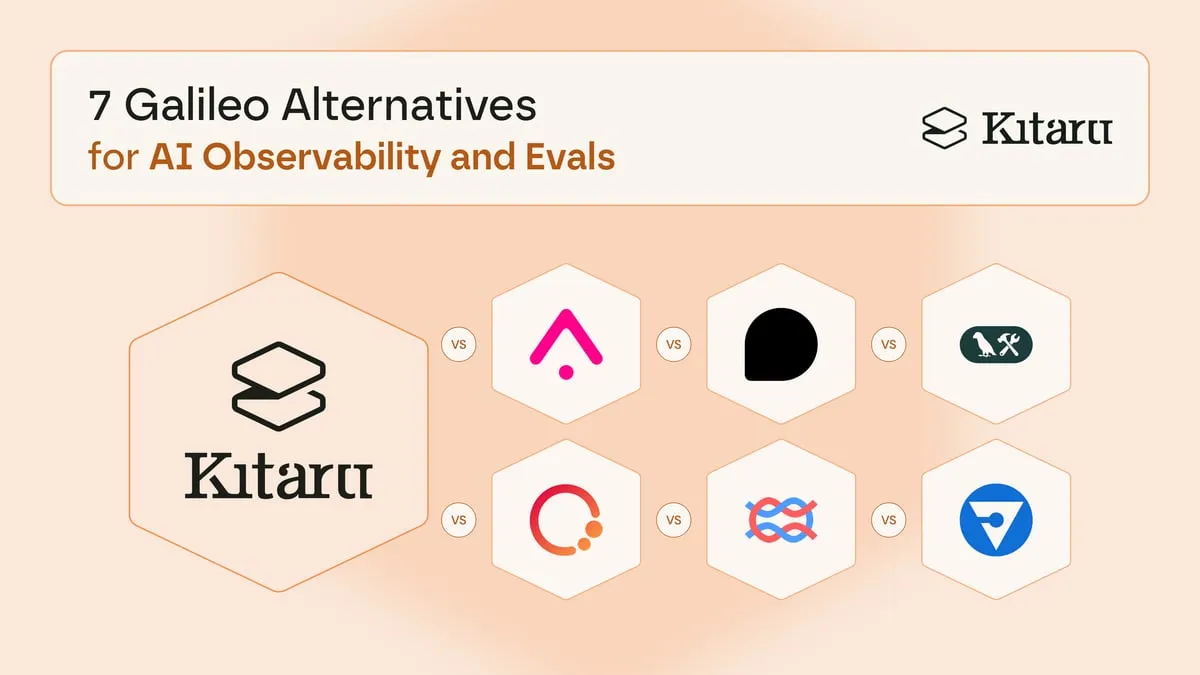
ZenML has reviewed seven alternatives to Galileo for teams building and operating AI agents in production. The comparison follows Cisco’s acquisition of Galileo and its transition into Splunk Agent Observability, while examining evaluation, tracing, testing and deployment needs.
- Cisco completed its acquisition of Galileo on May 22, 2026.
- Galileo is now offered as Splunk Agent Observability for new customers.
- ZenML compares seven alternatives across evals, tracing and regression testing.
- Kitaru replays agent code against recorded production sessions.
- The alternatives include Arize AX, Braintrust, LangSmith, Comet Opik, Langfuse and Fiddler AI.
Why teams may look beyond Galileo
Cisco announced its acquisition of Galileo on April 9, 2026, completed it on May 22, 2026, and folded Galileo into Splunk. Galileo’s release notes state: “As of August 7, 2026, Galileo is now Splunk Agent Observability.” Customers who onboarded before that date keep the galileo.ai product and documentation, while later customers are sent to Splunk.
ZenML says this creates a new product path, pricing model and set of deployment requirements for buyers to consider. Splunk lists a starting price of $100 per month, billed annually, for 1.2 million spans per year. That package also includes 500 million Luna tokens and five Luna fine-tuning runs per year.
The legacy Galileo pricing discussed by ZenML included a Free plan with 5,000 traces per month and a Pro plan at $100 per month, billed yearly, for 50,000 traces. Galileo’s published pricing did not show the next price point after Pro. ZenML says the old plans now apply only to existing customers, and recommends that new buyers read Splunk’s current product and pricing information.
Production requirements and comparison criteria
According to ZenML, Galileo reserved several production features for its Enterprise plan: SSO, private VPC or on-premises deployment, real-time guardrails and low-latency dedicated inference servers. The Luna-2 documentation also states: “Luna-2 is only available in the Enterprise tier of Galileo.” ZenML argues that smaller teams may need these capabilities before they are ready for an enterprise contract.
The review compares alternatives using four questions. Can an evaluator’s judgments be checked against labels from people who understand the task? Can teams use their own scoring code, judge model and dependencies? Can the platform trace tool calls, nested agents, parallel work and requests crossing service boundaries? Finally, can a production failure become a versioned test case with its inputs, expected outcome and context preserved?
ZenML identifies this trace-to-test path as the area where the tools differ most. It also considers OpenTelemetry support, which can make instrumentation easier to move between vendors.
Seven alternatives, from replay testing to enterprise control planes
The alternatives cover several approaches. Kitaru focuses on testing changes against recorded production sessions, replaying real agent code with recorded tool results. ZenML describes it as an open-source tool from the team behind ZenML, at version 0.27.6 on November 4, 2026, and still in beta. Paid plans start at $39 per month.
Arize AX is aimed at enterprise teams seeking online evaluations on every span, with LLM, code, agent and HTTP-endpoint evaluators. Braintrust targets eval-first teams that gate merges on scores, while LangSmith is positioned for LangGraph and LangChain teams. Comet Opik combines an Apache 2.0 core with test suites built from failed traces, and Langfuse offers an MIT core and an OTLP endpoint for teams that want the trace store on their own infrastructure.
Fiddler AI is aimed at enterprises running machine learning models and agents under one control plane, with guardrails and evaluator rules on production spans. ZenML’s comparison lists free and paid options across the group, including free open-source offerings and paid starting prices from $19 per month for Comet Opik to $249 per month for Braintrust.
For users, the review frames the choice around control over evaluations, self-hosting, cost and the ability to turn production failures into regression tests. Galileo’s capabilities remain part of the comparison, but new buyers must account for the Splunk product path and verify current terms before making a decision.