ADM+S researchers named in 2026 Stanford/Elsevier Top 2% Scientists list
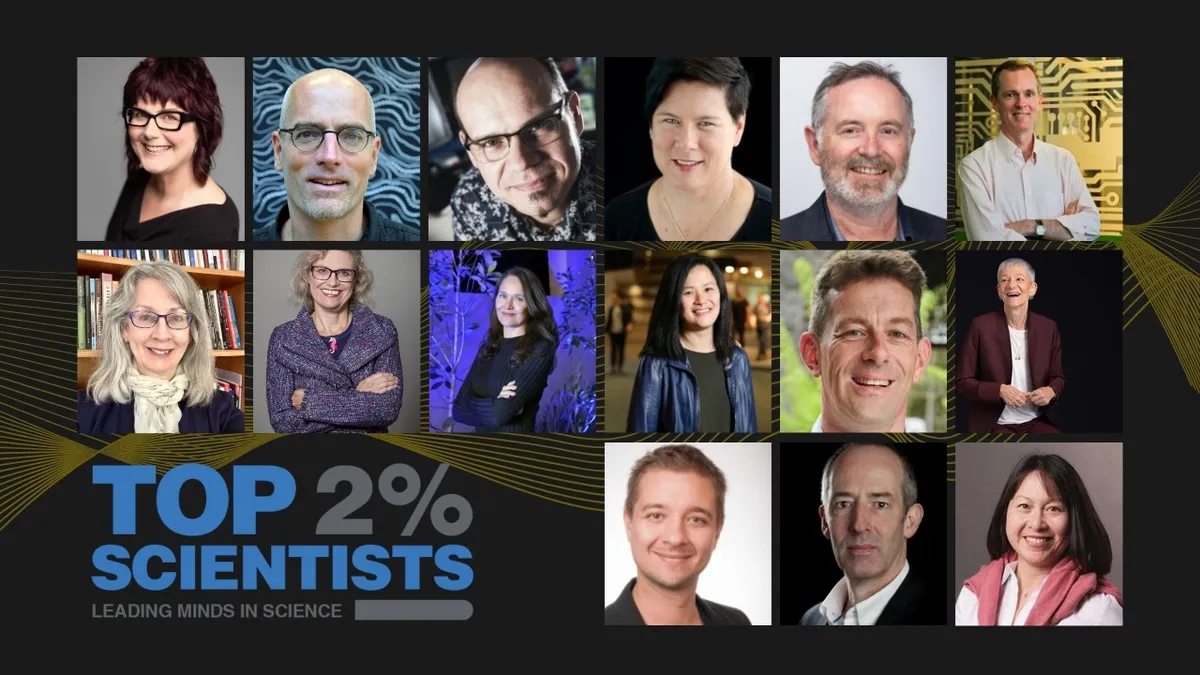
Researchers from the ARC Centre of Excellence for Automated Decision-Making and Society (ADM+S) have been recognised in the 2026 Stanford/Elsevier World's Top 2% Scientists, a global benchmark of scientific influence based on citation data. The centre says the listing reflects the international reach of its work across AI, digital media and technology policy.
- ADM+S researchers are named in the 2026 Stanford/Elsevier World's Top 2% Scientists rankings.
- Recognised researchers include 13 Chief Investigators and two Partner Investigators, according to the centre.
- The 2026 edition covers 22 scientific fields and 174 sub-fields, measuring career-long and single-year impact.
- Inclusion is based on a composite indicator of citations, co-authorship and authorship position.
- The rankings cover scientists in the top 100,000 globally or the top two per cent of their fields.
Who was recognised
According to the ADM+S Centre, the recognised researchers include 13 Chief Investigators: Kath Albury, Mark Andrejevic, Axel Bruns, Jean Burgess, Gerard Goggin, Christopher Leckie, Deborah Lupton, Christine Parker, Sarah Pink, Flora Salim, Mark Sanderson, Jackie Leach Sculy and Nicolas Suzor.
Two Partner Investigators are also named: Maarten de Rijke and Karen Yueng. The centre describes these as among the researchers recognised, so the list in its announcement may not be exhaustive.
The centre says the recognition covers research fields including artificial intelligence, digital media, platform governance, information retrieval, social sciences and technology policy.
How the rankings work
The rankings are compiled jointly by Stanford University and Elsevier. They aim to identify the world's most influential researchers using standardised citation metrics. The 2026 edition evaluates both career-long and single-year research impact across 22 scientific fields and 174 sub-fields.
Researchers are included based on a composite indicator that considers citation performance, co-authorship and authorship position. According to the centre, this approach recognises meaningful research impact rather than publication volume alone.
The 2026 rankings include researchers who are among the top 100,000 scientists globally or within the top two per cent of their respective fields.
What the listing signals
The ADM+S Centre says inclusion reflects a sustained contribution to advancing knowledge and shaping research agendas within scientific communities around the world. The listing is a citation-based measure, so it speaks to how widely the researchers' work is referenced by peers rather than to any single project.
The full top 2% database is available through the August 2026 data update of the "Updated science-wide author databases of standardized citation indicators". Readers who want to check individual entries or compare fields can consult that database directly.
ARC Centre of Excellence for ADM+S: ADM+S researchers recognised in the 2026 Stanford/Elsevier World’s Top 2% Scientists rankings