AI could widen wealth gap between Commonwealth countries, study finds
The rise of artificial intelligence could widen the divide between richer and poorer countries, according to an Ayre Think Tank study that estimates a $360 billion difference in potential economic gains across Commonwealth nations. The Ayre Index examined the living conditions of 732 million people aged 15 to 29 in the Commonwealth's 56 member states.
- The study estimates a $360 billion gap in potential economic gains from AI.
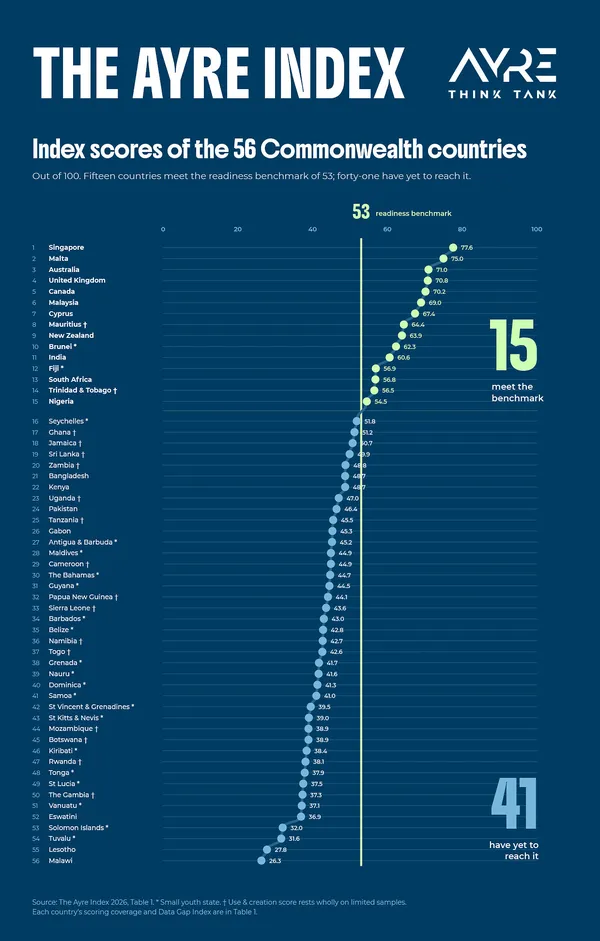
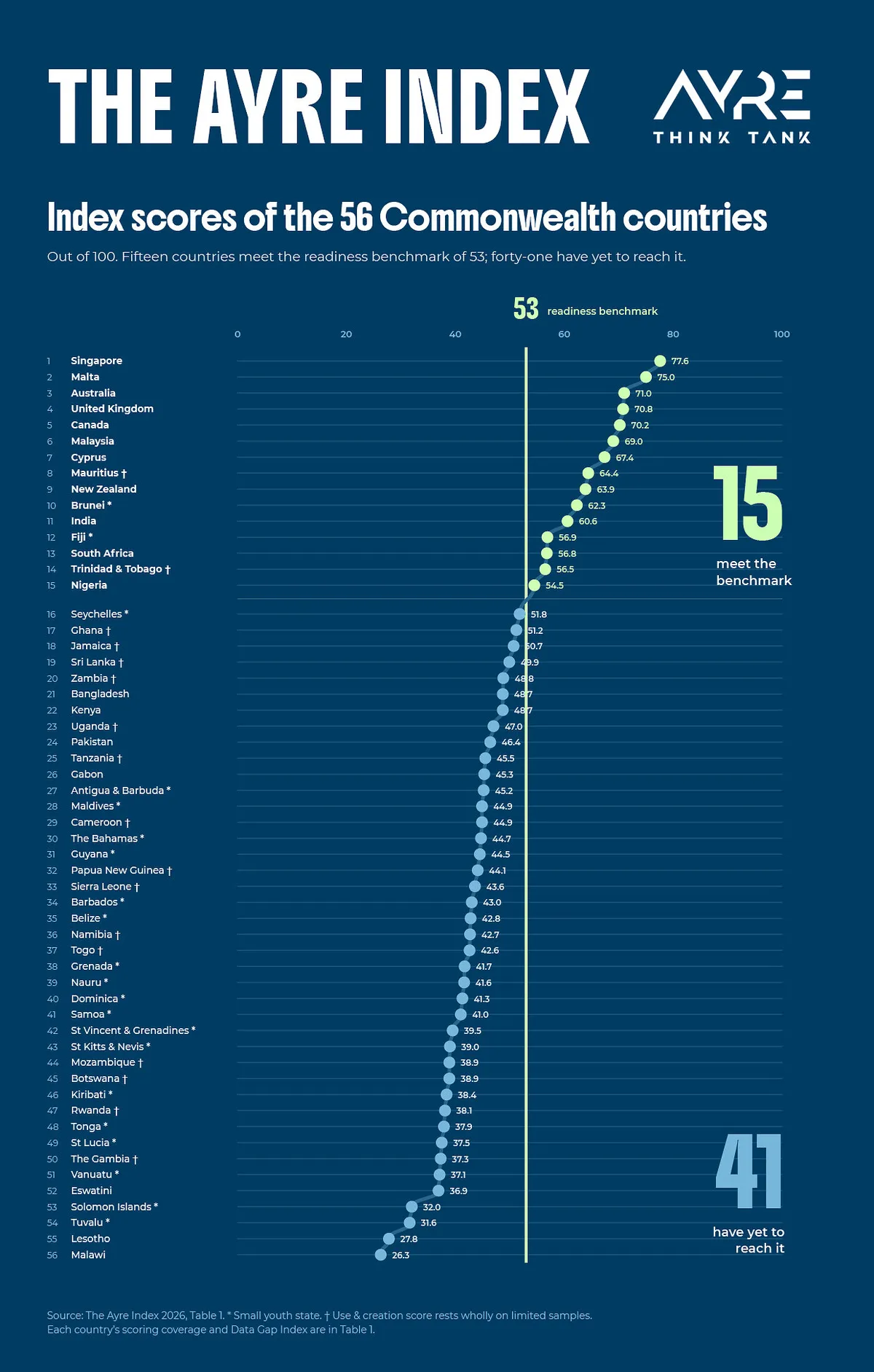
- Only 15 of the 56 Commonwealth countries reached the readiness benchmark.
- Singapore ranked first, while Malawi and Lesotho ranked last.
- The study says connectivity alone does not guarantee AI opportunities.
- Skills, affordable access and employment pathways could shape AI's economic impact.
A sharp gap in projected economic gains
Only 15 countries reached the study's benchmark for young people's readiness for AI. Under its median scenario, those countries could see their economies increase by a combined $389.2 billion after 10 years.
The other 41 countries could gain $29.2 billion, leaving a $360 billion shortfall between the two groups. The study said that gap is twice the $174 billion in development aid provided last year by the world's leading donor countries.
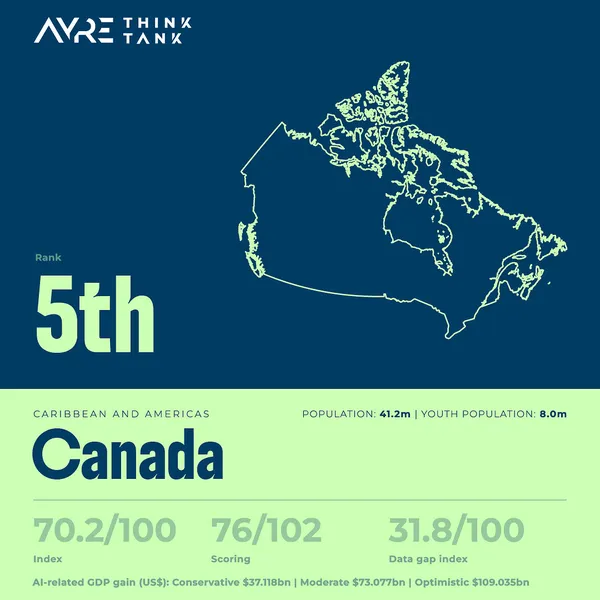
Singapore ranked first, followed by Malta, Australia, the United Kingdom and Canada. Malawi and Lesotho ranked at the bottom. Among the Commonwealth's 21 African members, only Mauritius, South Africa and Nigeria reached the required readiness level.
Connectivity does not automatically create opportunity
The study said that building networks alone does not guarantee that young people will benefit from AI. In Togo, 4G coverage reaches almost the entire population, but fewer than half of young people report using the internet. In Malawi, electricity is accessible to one-fifth of the population.
There are also capability gaps in countries where interest in AI is high. About 90% of surveyed young Nigerians expect to use AI for work or study within a year, but Nigeria scored only 0.8 out of 10 on measures of traditional digital capabilities.
Meeting the readiness threshold does not guarantee employment either. South Africa met the required conditions, while unemployment stood at 46.3% among its young working population.
Skills and jobs will shape the outcome
Calvin Ayre, the entrepreneur and philanthropist who founded the think tank behind the index, said AI will change working methods, business practices and the ways wealth is created. He called on governments to provide young people with the skills and opportunities needed to succeed.
The study drew on 1,128 sources, while highlighting a lack of comparable data on young people's actual AI capabilities in some countries. Its central warning is that access alone is insufficient.
According to the study, skills, affordable connectivity, routes into employment and support for entrepreneurs will determine whether AI produces new businesses and better jobs, or reinforces existing economic inequalities. The Ayre Index was unveiled at the Commonwealth Heads of Government Meeting in Antigua and Barbuda.