As AI Enters Biology Labs, Accidents Deserve as Much Attention as Misuse
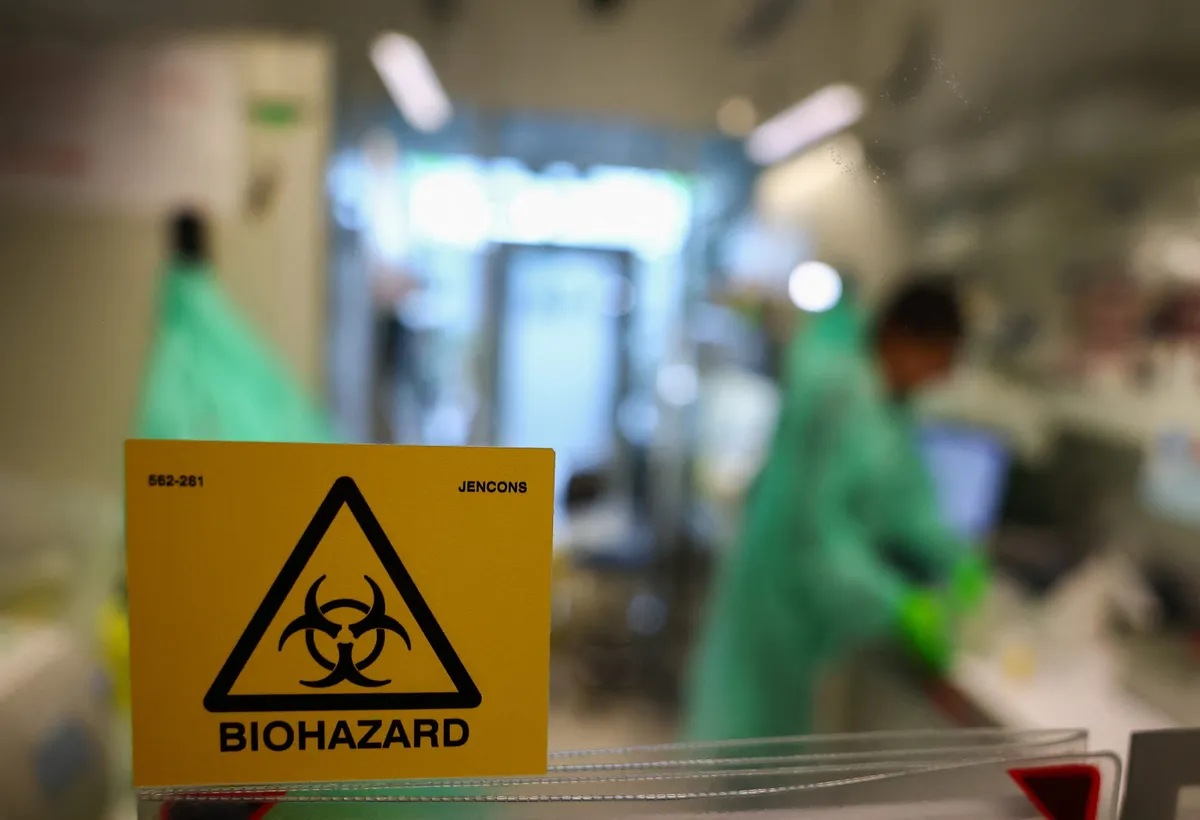
The debate over AI and biotechnology focuses mostly on terrorists building bioweapons, but an Atlantic Council dispatch argues that accidents in AI-enabled research deserve equal attention. The piece points to a growing number of high-containment labs, many in countries with weaker biosecurity rules.
- An Atlantic Council dispatch argues the AI-biosecurity debate pays too little attention to accidents compared with intentional misuse.
- The Global BioLabs project counted fifty-one operating BSL-4 labs in 2023, roughly twice the number of a decade earlier, across twenty-seven countries.
- A 2024 study found 309 laboratory-acquired infections and sixteen accidental pathogen escapes between 2000 and 2021.
- A July 2026 White House OSTP policy pauses federal funding for dangerous gain-of-function research and sets a twenty-four-hour reporting requirement.
- The author cites Canada's updated Human Pathogens and Toxins Act as a model for national oversight.
AI is moving deeper into biological research
The Atlantic Council piece starts from a series of recent developments. It says Anthropic announced that it recently established a biological research laboratory in San Francisco, where Claude is embedded in every step of the research process. In one of the lab's first published studies, according to the article, Claude autonomously discovered a novel enzyme system associated with DNA repeats, a pattern reminiscent of CRISPR.
The article also cites work by scientists at Stanford University, who used the open-source AI tool Evo to create sixteen viable viruses never before seen in nature. None of the bacteriophages can infect humans, but the experiment shows that AI can help design biological sequences that do not exist naturally.
Adoption is broad. A study published in September by researchers from Google DeepMind, the Massachusetts Institute of Technology and several other universities found that nearly half of the surveyed scientists use AI every day, the article says. AI allows laboratories to work faster and at a lower cost.
Misuse concerns dominate, accidents get less notice
The author acknowledges the worries about deliberate misuse. In September, Anthropic released a report classifying biological misuse cases of Claude as among the most serious. One case involved a military research institute that sought help writing a grant to identify desirable mutations in the Chikungunya virus and develop clones with increased virulence. In another, a researcher tried to use Claude to help redesign a set of toxins.
Open-weight models such as China's Kimi-K3, together with desktop DNA synthesis machines, in theory reduce barriers to developing biological and chemical weapons. Still, the article says, the laboratory equipment, training and funding needed to produce a viable weapon remain significant obstacles. Its argument is that a tunnel-vision focus on intentional misuse overshadows concerns about legitimate AI-enhanced research.
Policy and the spread of high-containment labs
The piece notes that a July 2026 policy from the White House Office of Science and Technology Policy sets out new frameworks for dangerous gain-of-function (DGOF) research. It pauses federal funding for DGOF research, requires researchers to immediately halt work that may meet DGOF definitions and report to the funding agency within twenty-four hours, and requires institutions to identify potential DGOF research that is not federally funded. The author says the policy is very new and its effectiveness remains to be determined.
Another concern is the growth of biosafety level 4 (BSL-4) labs. In 2023, the Global BioLabs project identified fifty-one operating BSL-4 labs, three under construction and fifteen planned, across twenty-seven countries. The number of operational labs is approximately twice what it was a decade ago. Of those twenty-seven countries, only twelve scored high on biosecurity and only one, Canada, scored high on dual-use research governance. Congressional testimony that year reported that only seven scored high on overall biorisk management.
Lab escapes are documented, not hypothetical
A 2024 study identified 309 laboratory-acquired infections involving fifty-one pathogens, and sixteen accidental escapes involving eight pathogens, between 2000 and 2021. These reportedly resulted in eight deaths. A 2019 Brucella leak from a vaccine facility in Lanzhou, China, resulted in over ten thousand positive tests by November 2020. A 2025 study counted 712 infections across 250 reports between 2000 and 2024 and named inadequate decontamination, needlestick injuries and ineffective use of personal protective equipment as major risk factors.
The author says these figures almost certainly underestimate reality, because no formal global reporting system exists for laboratory-acquired infections and escapes.
What the analysis suggests
The article recommends that countries expanding high-containment research build biorisk frameworks alongside lab capacity, including national oversight of dual-use and DGOF research and internationally recognized biosafety practices. It holds up Canada's Human Pathogens and Toxins Act, updated in 2026, as a model. The act requires mandatory incident reporting, government licenses for high-consequence pathogen research, and written notification when researchers intend to increase traits such as virulence or pathogenicity.
The author stresses that these incidents do not show AI will cause more laboratory accidents. They do suggest accidental releases are already a serious vulnerability while AI-enabled research and high-containment capacity both grow. Preventing that vulnerability from growing, the piece concludes, will require biosafety and governance frameworks to advance alongside the technology.
Atlantic Council (AI): It’s not just misuse: AI-enabled biological research also runs the risk of accidents