AI Firefighter Helmets, Care Robots and Safer Agents: This Week's Data News
An AI-powered augmented-reality helmet for firefighters in Oklahoma City and smart glasses for people with low vision lead the Center for Data Innovation's roundup of data news for September 26 to October 2, 2026. The list covers ten projects across emergency response, health, manufacturing, agriculture, logistics and education.
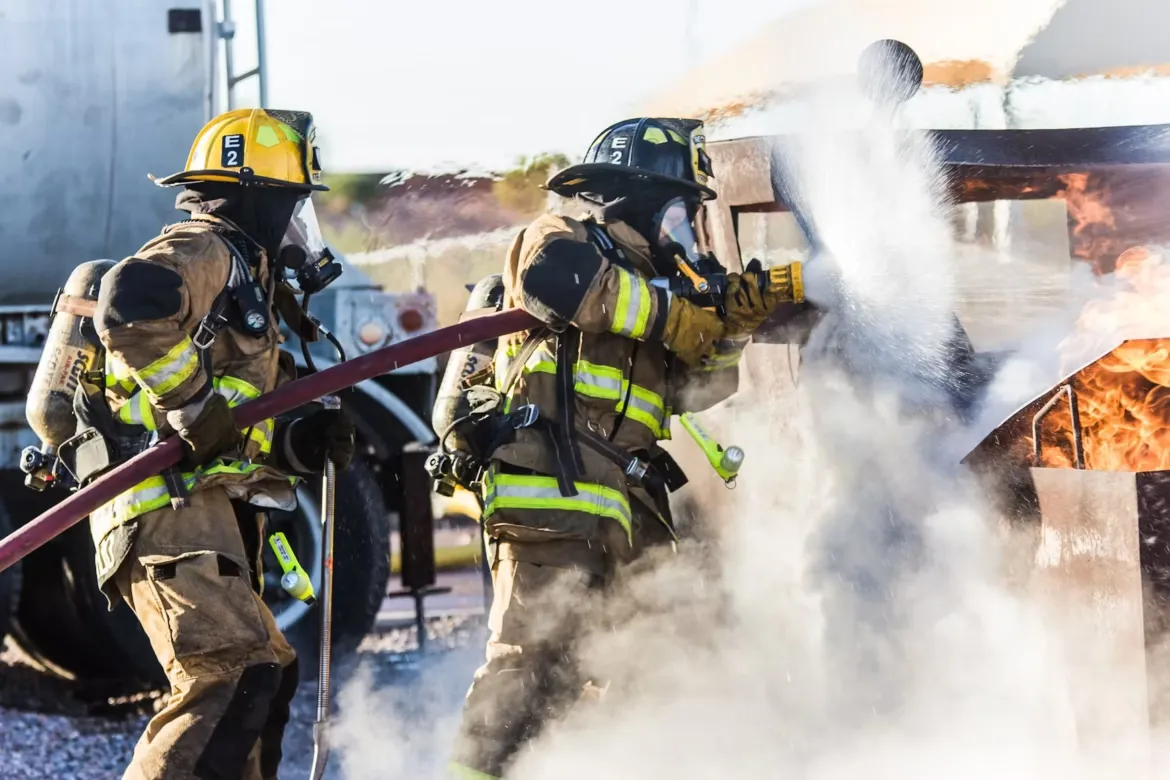
- Oklahoma City and the Department of Homeland Security introduced an AI-powered augmented-reality helmet to help firefighters navigate smoke-filled buildings.
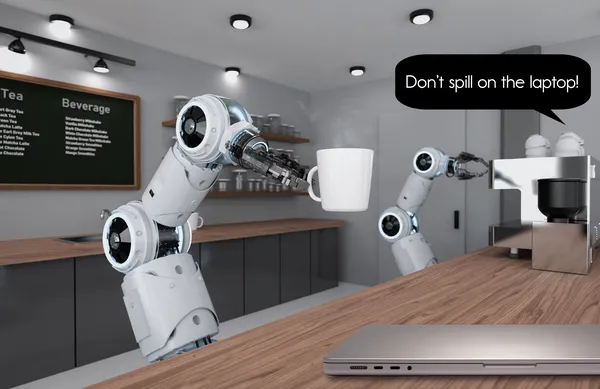
- Cera has introduced assistive-care robots for 1,000 people across England.
- MIT researchers used an AI algorithm to optimize lipid nanoparticles for more heat-resistant RNA vaccines.
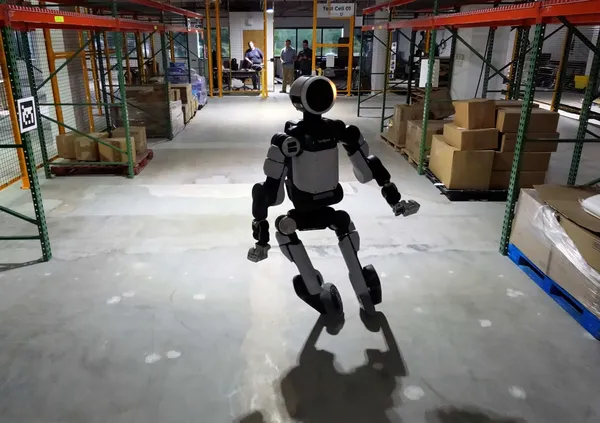
- Boston Dynamics opened a testing center at Hyundai's Georgia electric-vehicle site to train Atlas humanoid robots.
- NVIDIA's platform pairs OpenShell software with a hardware monitor called Sentry to contain unsafe AI agents.
Emergency response and care
Oklahoma City has partnered with the Department of Homeland Security to introduce an AI-powered augmented-reality helmet that helps firefighters navigate smoke-filled buildings. According to the Center for Data Innovation, the helmet displays enhanced visuals to guide crews and streams footage to commanders outside, so firefighters can stay oriented without GPS. The system could improve search-and-rescue operations by helping crews locate people in hazardous conditions.
In elderly care, UK-based health-technology company Cera has introduced assistive-care robots for 1,000 people across England. The devices draw on information about residents' medical needs and daily routines to provide medication reminders, encourage hydration, and prompt meals or activities. They also offer conversation topics and help carers monitor residents' wellbeing. The roundup says this could reduce loneliness and let care staff focus more on residents who need personal assistance.
For people with low vision, English farmer Dave Cragg, who has lost most of his vision, uses AI-powered smart glasses to manage everyday tasks more independently. Connected to tools such as Meta's reading features, the glasses can read text aloud, identify objects and describe his surroundings in real time.
Vaccines, farming and space
Researchers at MIT have tested a new method for making RNA vaccines more resistant to heat. The approach uses an AI algorithm to optimize lipid nanoparticles, tiny particles that protect fragile messenger RNA and help deliver it into cells. The resulting formulations remain stable for extended periods at elevated temperatures. That could reduce reliance on refrigeration and make vaccines easier to distribute in regions with limited cold-storage infrastructure.
UK-based weather-forecasting company FruitCast has developed an AI system that predicts when fruit will ripen across large farms. It analyzes images from drones, smartphones and tractor-mounted cameras alongside weather and irrigation data to estimate crop volumes and harvest dates. The forecasts aim to help growers schedule workers, reduce wasted produce and plan for short harvesting windows when weather changes quickly.
NASA's Dexterous Robotics Team is developing humanoid robots to assist astronauts on future lunar and Martian missions. Designed for conditions such as lunar dust, radiation and microgravity, the machines could move cargo, perform repairs and handle other hazardous tasks, leaving astronauts more time for scientific research.
Robots in factories and warehouses
U.S. robotics company Boston Dynamics has opened a new robotics testing center at Hyundai's electric-vehicle production site in Georgia. The facility will train Atlas humanoid robots to perform repetitive tasks, lift heavy materials and eventually assist with component assembly. It will help Hyundai evaluate how robots handle real manufacturing demands and explore future roles such as equipment transport, maintenance and other high-precision factory work.
Another U.S. robotics company, Destro, has developed an AI platform that coordinates robots and workers in cross-dock facilities, where goods move between incoming and outgoing vehicles. It uses AI models that connect visual information with language and actions to direct existing mobile robots and workers on where to move and what to load. The roundup says coordinating entire workflows could help logistics facilities operate more efficiently without new robot hardware.
Agent security and school networks
NVIDIA has introduced a platform designed to contain AI agents that behave unsafely or try to escape restricted environments. Its OpenShell software limits what agents can access, while a separate hardware monitor called Sentry continuously observes their activity and can quickly isolate anything that appears dangerous. The layered approach aims to reduce security risks as agents take on more complex tasks and gain access to digital systems.
Meta has expanded its Instagram School Partnership Program with a centralized hub for verified student communities. Schools can use broadcast Channels to share announcements, while students can browse directories, follow clubs and sports teams, and view school-specific posts.
What it means
The items share a focus on putting AI into physical and operational settings: helmets on firefighters, robots in care homes and factories, and forecasting tools on farms. The source frames most of these as potential improvements, using wording such as "could" and "aims to", rather than proven results. NVIDIA's OpenShell and Sentry, meanwhile, point to growing attention on keeping AI agents contained as they gain access to more systems.
Center for Data Innovation: 10 Bits: The Data News Hotlist