AI Game Improves Hand Dexterity in Children With Cerebral Palsy
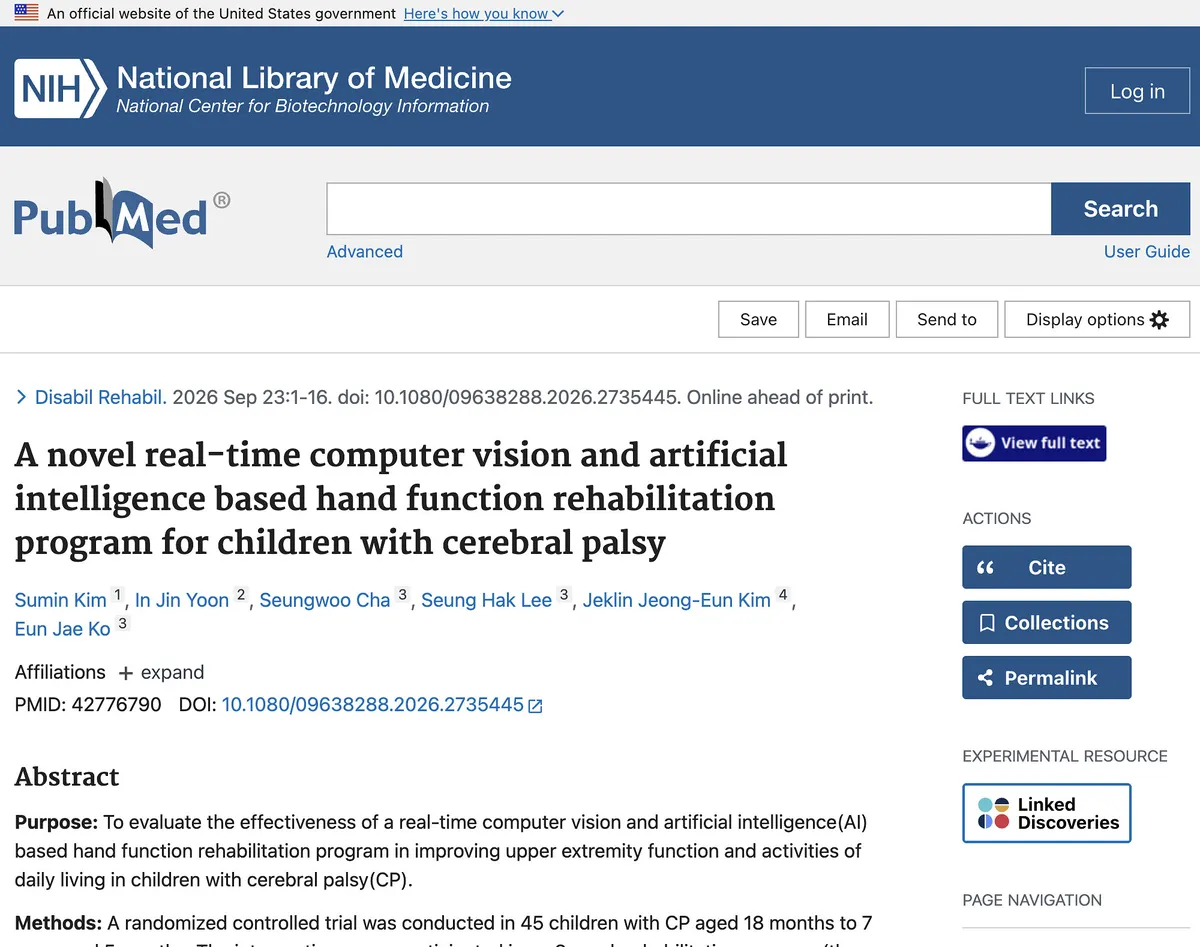
An eight-week randomized trial found that children with cerebral palsy who used the camera-based AI game GemGem400 at home made greater gains in hand dexterity and pinch strength than children who received no intervention. The peer-reviewed study analyzed data from 45 children and reported average adherence of 91.9% in the intervention group.
- The trial analyzed data from 45 children with cerebral palsy.
- GemGem400 training lasted about 15 minutes, three times a week, for eight weeks.
- The intervention group showed greater gains in dexterity and pinch strength.
- Average adherence in the intervention group was 91.9%.
- The small, single-center study had no long-term follow-up.
Trial found stronger gains with home training
Researchers at Asan Medical Center in Seoul randomly assigned 48 children with cerebral palsy, ranging in age from 18 months to 7 years 5 months, and analyzed data from 45 participants. Children in the intervention group trained with GemGem400 for about 15 minutes, three times a week, over eight weeks. The control group received no intervention.
The intervention group improved significantly more on the Box and Block Test, the study's primary measure of manual dexterity, in both hands. Palmar pinch strength also improved significantly more in both hands. In the non-dominant hand, the intervention group additionally recorded significantly greater improvements on the Functional Dexterity Test and in tip pinch strength. The study reported p < 0.05 for all.
The game uses a standard device camera
GemGem400 uses the built-in camera on a smartphone or tablet to recognize a child's hand and wrist movements in real time. The game responds with instant visual and audio feedback, while target movements and difficulty can be tailored to each child.
The setup does not require gloves, sensors or other hardware. According to GemGem Therapeutics, the design allows families to continue hand therapy between clinic visits, while therapists can assign exercises for use at home, in clinics and in schools.
Children in the intervention group completed their home training with average adherence of 91.9%. The study described adherence as a measure of how consistently participants followed the program, rather than a measure of treatment success. Caregivers reported high satisfaction and less psychological, time and effort burden.
Researchers caution that the evidence has limits
The study's authors say digital tools such as GemGem400 are intended to complement, rather than replace, in-person occupational therapy. The trial was small and conducted at a single center, and it did not include long-term follow-up. Because the control group received no intervention, the results compare GemGem400 home training with no added training and do not isolate the effect of the AI technology itself.
GemGem founder and CEO Jeklin Kim co-authored the paper, while GemGem Therapeutics provided the platform and technical support used in the study. The company is preparing a separate follow-up study with the University of Utah. The paper, titled A novel real-time computer vision and artificial intelligence based hand function rehabilitation program for children with cerebral palsy, was published online Sept. 23, 2026, in Disability and Rehabilitation.
For families, the findings support the potential of structured, high-repetition hand training at home, but they do not establish that the game can replace clinical therapy or show how benefits may last over time.