AI Maps Britain's Trade History and Monitors Rogue Agents in Weekly Data Roundup

An AI tool that reads 100,000 pages of handwritten maritime records and new Microsoft security tools for monitoring AI agents lead the Center for Data Innovation's data news roundup for October 17 to October 23, 2026.
- University of Southampton researchers used AI to analyze 100,000 pages of handwritten maritime records and built an interactive map of Britain's trade history.
- Microsoft introduced tools that monitor AI agents, detect suspicious behavior and restrict unsafe actions.
- The University of Washington's Institute for Protein Design and Nvidia developed RFD4-Proteina, an open-source protein design model.
- General Motors plans to cut vehicle-development times from about four years to two using AI systems.
- Mass General Brigham built AI tools trained on more than 40 million facial images to estimate biological age and predict cancer patient survival.
Historic records, protein design and flood warnings
Researchers at the University of Southampton in the UK used an AI tool to analyze 100,000 pages of handwritten maritime records documenting Britain's trading history. The system pulls out information about ships, ports, cargo and merchants from centuries-old documents. The resulting dataset powers an interactive map that could help historians trace trade networks, rediscover lost ports and understand Britain's historical economic ties with Europe and beyond.
The University of Washington's Institute for Protein Design has partnered with Nvidia on RFD4-Proteina, an open-source AI model for designing proteins with specific functions. According to the roundup, the model generates protein sequences and three-dimensional structures together, which helps researchers explore promising designs more quickly than earlier approaches. It could speed up research into new medicines, enzymes and proteins designed to break down pollutants.
In Hawaii, Honolulu City Council officials approved measures to support an AI-powered hazard-detection system for Oahu. The proposed system would combine data from cameras, water gauges and other monitoring networks to help identify signs of flooding and emerging threats. The pilot could give emergency managers earlier warnings and more timely information for responding to floods, wildfires and tsunamis.
Security for AI agents and industrial applications
Microsoft has introduced security tools to monitor AI agents by detecting suspicious behavior and intervening when they go rogue. The system combines continuous monitoring with controls that limit agents' access to data and systems, assess potential threats and restrict unsafe actions. It can also help security teams investigate unusual activity and respond before problems escalate, which helps organizations manage risks as AI agents take on more complex tasks.
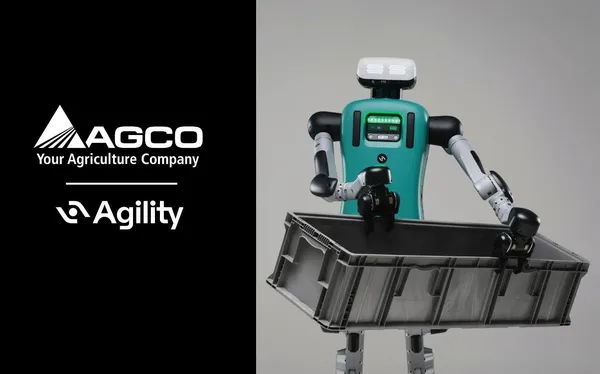
On the factory floor, U.S. agricultural-equipment maker AGCO has partnered with robotics company Agility Robotics to deploy Digit humanoid robots in its factories. The robots can move parts and storage containers, automating repetitive tasks that involve lifting and carrying. The partnership aims to improve productivity and reduce workers' exposure to physically demanding tasks so employees can focus on other responsibilities.
General Motors plans to use AI systems to cut vehicle-development times from about four years to two. The company is using the systems to evaluate hundreds of thousands of potential battery chemistries and components, which helps engineers narrow down promising designs before physical testing. The approach could accelerate the development of lower-cost electric vehicles and help GM compete in a rapidly changing automotive market.
Health care, public services and wearables
Researchers at Mass General Brigham in Boston developed AI tools that analyze facial photographs to estimate biological age and predict survival outcomes for patients with cancer. The models were trained on more than 40 million facial images and identify facial features associated with aging and health risks. The tools could give doctors additional information about patients' overall health when assessing treatment options.
Royal Berkshire Hospital in the UK has introduced a robotic scanning system called Arthur to help diagnose rheumatoid arthritis. The robot scans patients' hands and wrists, while an AI program called Diana analyzes the images and sends results to clinicians. By helping doctors assess patients more quickly, the system could shorten diagnostic delays and let more people receive treatment plans on the same day.
The nonprofit Center for Rural AI has partnered with Durango, Colorado, to use AI tools that reduce administrative work for Medicaid caseworkers and social-service providers. The tools could connect government databases, automate documentation, track unfinished tasks and simplify reporting. The initiative aims to free caseworkers to spend more time with clients and to develop solutions other rural communities could adopt.
Researchers at the National University of Singapore developed a shirt with a flexible touchscreen integrated into the fabric. Tiny chips embedded in the material power fabric-based pixels that display images and video, detect touch and connect wirelessly to other devices. The technology is designed to stay flexible, breathable and washable.
What the roundup shows
The items are mostly early-stage projects, pilots and proposals, and the roundup describes many of their benefits as possibilities, using phrases such as "could help" and "aims to". The common thread is AI applied to specific data problems, from digitizing historical archives to speeding up engineering and clinical decisions. The Microsoft item points to a growing need to oversee AI agents themselves as organizations give them more complex tasks.
Center for Data Innovation: 10 Bits: The Data News Hotlist