Study finds 10 AI labs' models share a common web design house style
AI models from different labs tend to make strikingly similar design choices when nobody tells them what good looks like, according to a study by HumanSignal, the company behind Label Studio. Across 100 generated sites, the same fonts, gradients and card styles appeared again and again.
- HumanSignal tested 10 models from 10 labs on 10 design briefs, with no reference design provided.
- Inter appeared in 47% of type systems, 91% of sites used gradients and 88% used cards with box shadows.
- Convergence appeared even in the direction arm, before any code was written.
- Judging used 450 matchups and 4,500 votes from 29 annotators in Label Studio.
- Results showing which models people preferred are to be published next.
A test of taste, not just competence
HumanSignal says most AI design benchmarks check whether a model can rebuild an existing interface from a reference. That shows whether a model can execute, the company argues, but not much about its taste. So the team removed the reference design. Each model had to decide on color, type and layout by itself, without outside tools or packages, and had to explain its decisions.
The framing draws on writing by HumanSignal CEO Michael Malyuk about a "taste moat": as AI makes execution cheaper and more accessible, judgment becomes more valuable. HumanSignal says there is "no compiler for taste", which is why it asked people to judge the results.
How the study was run
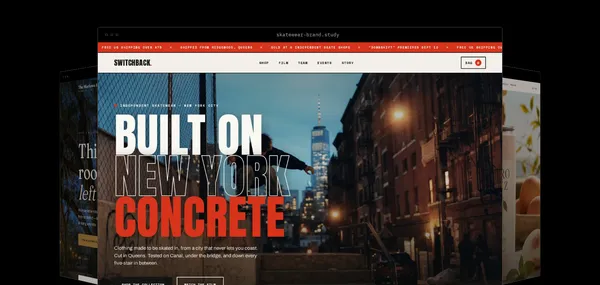
The study used 10 models from 10 labs and 10 design briefs, ranging from a telemedicine app to a New York skatewear brand. HumanSignal used Flue to give every model the same agent environment and OpenRouter as a common interface, pinning each request to a named provider with fallbacks disabled. Each model went through three arms for every brief:
- Direction: write a creative direction in JSON, with no tools or code.
- Build: build a site from a fixed direction inside a sealed sandbox.
- Full site: design and build the site with a budget for images, fonts and inspection tools.
All 10 models used the same image-generation model, so image quality would not explain differences in the results. Human judging took place in Label Studio as a blind, balanced round-robin. Every pair of models met on every brief, producing 450 matchups and 4,500 votes from 29 annotators. They saw two sites side by side without knowing which model made either, and could pick a winner or call a tie.
What the models kept choosing
Three figures stand out across the 100 generated sites. Inter appeared in 47% of type systems, with IBM Plex Mono next at 30%. A common combination was an expressive serif for headlines, Inter for body copy and a monospace for data. In addition, 91% of sites used gradients and 88% used cards with box shadows.
Color showed a similar pattern. For the telemedicine brief, the models scored 0.95 on primary-hue concentration, where 1.0 means every model chose the same hue. Independent film scored 0.14, the most varied brief in the study. Skatewear scored 0.08, but HumanSignal notes that this hides strong agreement: 8 of 10 models chose a near-black primary and largely avoided color.
Where models disagreed, they split into a few predictable camps. Boutique hotel divided between warm gold and deep green, dog park bar between orange and green, and independent film between amber and blue.
Convergence starts before the code
According to HumanSignal, the pattern was already present in the direction arm, where there was no code, framework or component library. Two of the 10 models emitted Tailwind color tokens and the other eight did not, yet all 10 landed in roughly the same place.
The reasoning looked similar too. Of 563 color rationales, 36% described a choice in terms of what the model wanted to avoid, using constructions such as "without X" and "rather than Y". The models were trying to differentiate their designs, HumanSignal says, but kept arriving at similar ideas of what "different" should look like.
What it means for products built on generative AI
HumanSignal argues that if a product generates design, this house style is likely part of the default, and a traditional competence benchmark probably will not reveal it. The generated sites work, are responsive and polished, but can look remarkably similar. Measuring whether a model can do the job, the company says, is not the same as measuring whether people prefer what it produced.
Its proposed answer is an evaluation loop for taste: show people the outputs, ask them to choose, and measure where they agree and which models consistently make preferred choices. HumanSignal says it will next publish what annotators chose across every blind matchup and which models came out ahead, and will examine the color rationales and their references in a later post.
HumanSignal (Label Studio): AI has a house style. We measured it across 10 labs.