Ten AI labs, one orange: models converge on the same palette for a skate brand
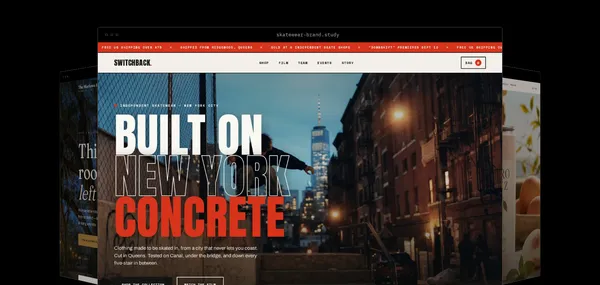
Given a brief for a New York street-skate brand and no visual direction, nine of ten AI models shipped a safety-orange accent in their built sites, according to HumanSignal, the company behind Label Studio. Three models from three different labs used the byte-identical hex #FF4D00.
- HumanSignal's study gave ten models from ten labs a New York street-skate brand brief with no visual direction.
- Nine of ten built sites used a safety orange, and three labs shipped the identical #FF4D00.
- Written rationales were not passed to the build step, yet both passes landed on the same colors.
- Nine of ten chose a bold grotesque for display type, and all ten added a monospace.
- HumanSignal published all 100 sites and stated directions in a public dashboard.
Two passes, same instinct
The finding comes from HumanSignal's AI taste study, in which ten models from ten labs worked ten design briefs with no reference design, palette or art direction. Data scientist Micaela Kaplan reports that each model handled the skate brief in two separate passes.
In the first, the model wrote a creative direction as structured JSON, with no tools and no code, and explained each color choice. Later, independently, it built an actual site. The written rationales were never passed to the build step, so HumanSignal treats the two passes as independent samples of the same model's instinct.
What the models wrote and built
In the written pass, eight of the ten models named a construction orange accent, in the band from #C45A1A to #FF5A1F. Two named the identical hex. The explanations also overlapped. claude-sonnet-5 chose #D9481F, described as "A traffic-cone / DOT-orange drawn directly from NYC street signage and construction barriers." kimi-k3 chose #FF4D00 as "Safety-vest orange: construction, traffic cones, bodega awnings, pure NYC utility."
Eight of ten also put a near-black asphalt tone in the primary slot, such as #101010, #111111 (used twice) or #1A1917.
HumanSignal then pulled the stylesheets from all ten shipped sites. Nine of ten declared a safety orange, and four named their variable --orange outright. The tenth, deepseek-v4-pro, shipped --taxi: #FFC71F, a cab yellow, which HumanSignal describes as pointing at a different piece of city infrastructure rather than breaking the pattern. Two models that never named orange in writing, gpt-6-astra and muse-spark-1.3, shipped it anyway, at #F75A2C and #FF4B00.
According to the post, the convergence cannot come from the models' stated reasoning, because that reasoning was not available when the site was built.
The pattern extends beyond skatewear
HumanSignal says the shipped CSS of all 100 sites shows the same picture. On an italian-soda brief, all ten models built a blood orange between #C8401F and #FF6B35. On telemedicine, eight of ten built a teal between #0D9488 and #155D64.
The company notes a methodological caveat. The color figures measure the most-used saturated color in each shipped stylesheet, which is HumanSignal's own analysis of the build, not the study's published metric. The study's hue-concentration scores describe the written directions, a different artifact.
Typography followed suit. Nine of ten models chose a bold, condensed or extended grotesque for display, including Neue Haas Grotesk (twice), Archivo (three times), Anton, Oswald Condensed and Monument Grotesk. All ten added a monospace for prices and labels. The one holdout, glm-5.3, picked an editorial serif, arguing that it "sets the brand apart from generic streetwear grotesques." HumanSignal notes that even this escape was reasoned from the convention.
What it means for teams shipping generated design
HumanSignal draws three conclusions. First, prompting the reasoning will not move the result: because the written direction and the build were separate passes, steering one would have left the other untouched. If the convergence appears in both, the company argues, it sits in the weights rather than the explanation.
Second, a competence benchmark will not surface it, since all 100 sites render, work and pass. Third, the room for differentiation is smaller than many teams assume. When nine of ten models ship the same accent and three ship the identical hex, the chance that a generated brand resembles a competitor's is not small, according to the post.
HumanSignal's advice is to inspect output in volume and compare it with what other models produce. It has published all 100 sites and every stated direction in a public dashboard for that purpose.
HumanSignal (Label Studio): Ten labs, one orange: what AI reaches for when a brief has a stereotype