Arm details workforce overhaul behind its move into production silicon
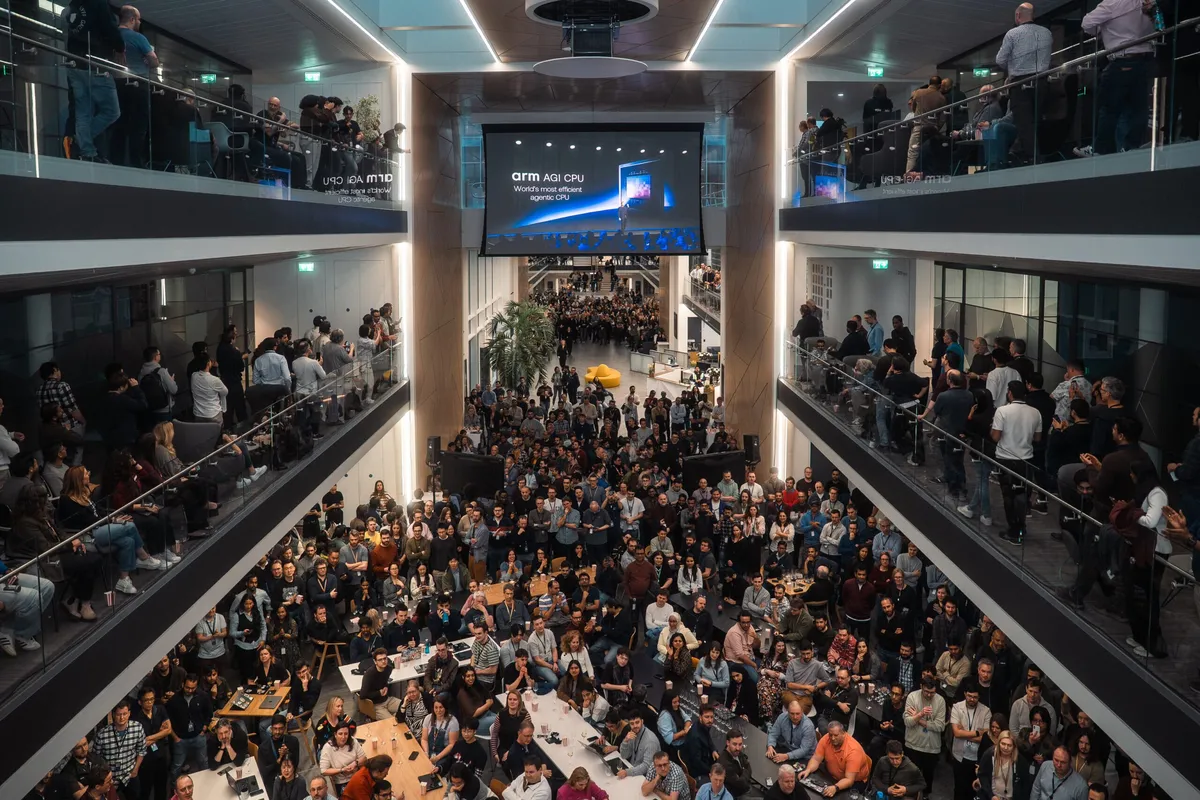
Arm says the organizational change behind its expansion into production silicon with the Arm AGI CPU was as important as the technology itself. In a blog post, Chief People Officer Charlotte Eaton describes hiring, new offices and a new company mindset introduced over the past two years.
- Arm is expanding into production silicon through the Arm AGI CPU, moving beyond its licensing model.
- Nearly 2,000 people joined Arm in the past year, plus just shy of 1,000 interns, graduates and apprentices this fiscal year.
- Nine new offices have opened and 15 existing locations have expanded in two years.
- New business units were formed: Cloud AI, Physical AI and Edge AI.
- 15 months after launch, 89% of staff understand the 10x Mindset and 86% know how to apply it, according to Arm.
A shift beyond licensing
According to Eaton, Arm's strategy has moved beyond the licensing model that established its success and now includes production silicon through the Arm AGI CPU. She writes that this changes the capabilities the company needs: new engineering disciplines, new operating models, closer collaboration across teams and deeper engagement with customers and partners.
Eaton describes the past two years as one of the biggest workforce transformations in Arm's history. Every function was involved, she says, from engineering, finance and sales to operations, product, manufacturing and people. In her words, Arm "was not simply scaling" but was shifting identity, operating model and ambition at the same time.
New business units were formed during this period: Cloud AI, Physical AI and Edge AI. Leadership teams changed as new skills arrived, and new working interfaces emerged between engineering, product, operations, sales and ecosystem teams. One example Eaton gives is Solutions Engineering, which she says is now a large capability helping drive the development of Arm's silicon products and brings expertise that did not exist inside the company a few years ago.
Hiring, onboarding and new offices
Eaton reports that Arm welcomed nearly 2,000 new colleagues over the past year, across engineering, manufacturing operations, developer ecosystems and other areas. The company also hired just shy of 1,000 interns, graduates and apprentices this fiscal year. Arm relies on an in-house talent acquisition model supported by partnerships.
To bring new staff up to speed, Arm introduced a Leadership Onboarding session that runs alongside its Big Picture events, where every new joiner spends two days with other new team members. The company is also adding an onboarding platform with built-in process automation and AI. Eaton says this is meant to give people the right information quickly, help them connect, and reduce the risk of cultural dilution.
The physical footprint has grown too. In two years, nine new offices have opened and 15 existing locations have expanded. Examples cited include the new Arm Bengaluru office, the expansion of the Arm Cambridge office with a new E&F building, and a new office in Trondheim.
The 10x Mindset
On culture, Eaton says fast growth can dilute what matters most unless a company reinforces it. Arm's answer was the "10x Mindset", written by the Arm leadership team as a shared way of thinking about how people work together, make decisions and execute strategy. It contains ten factors.
Eaton says Richard Grisenthwaite, one of Arm's longest-serving executives and a long-time advocate of the previous core beliefs, backed the change with the words: "It's time."
She cites internal figures 15 months after launch:
- 89% of people understand 10x.
- 86% know how to apply it in their role.
- 78% say they see their managers demonstrating it day-to-day.
Communication during constant change
Eaton acknowledges that the transformation was not linear. Arm was scaling rapidly while redesigning its operating model, which meant intense workloads, frequent reprioritization and a high degree of flexibility from staff. She says the company tried to communicate openly about both what was changing and why, including quarterly business updates led by the CEO and regular company-wide communications.
The source text is cut off before the end of the post, so further details on later steps are not available.
What it means
The post offers a view of what moving from licensing to production silicon demands inside a company: large-scale hiring, new teams and business units, more office space and a refreshed culture. Eaton frames the central question for any leadership team as whether the organization is designed to deliver the strategy. For Arm, according to its Chief People Officer, the answer involved restructuring around that goal while trying to keep the collaboration, inclusion and innovation it has stood for over more than 35 years.