Artprice founder defends authors' creative freedom when working with AI
Artprice by Artmarket and its founder and chairman Thierry Ehrmann are putting authors' freedom and responsibility at the centre of the debate over AI in literature. According to the company, AI gives writers extra resources to conceive and develop their works under their own direction.
- Artprice by Artmarket and founder Thierry Ehrmann say AI widens authors' creative freedom while responsibility stays with the author.
- The statement of 26 October 2026 builds on a press release of 15 October 2026 and a project announced in Q2 2026.
- Ehrmann calls a premium AI subscription of at most 100 to 200 euros a month a very modest cost.
- Artprice says AI as a writing assistant pays no royalties, offers no advance and does not decide on distribution.
- The release says authors can compare AI systems, including open-weight models, and switch tools freely.
A debate that is far from settled
According to the press release dated 26 October 2026, publishers and literary prize bodies are issuing statements on AI at a relentless pace as the autumn 2026 literary season unfolds. The positions range from rejecting AI-generated texts to tolerating AI help with research, from disclosure requirements to recognising creative works made with AI. Artprice says this variety shows the debate is far from over.
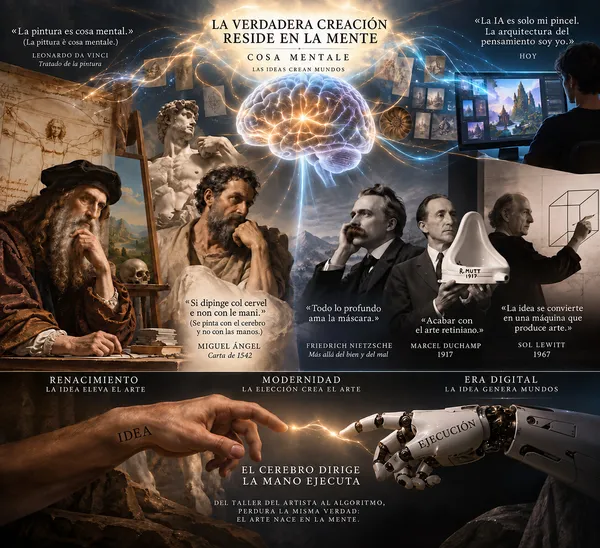
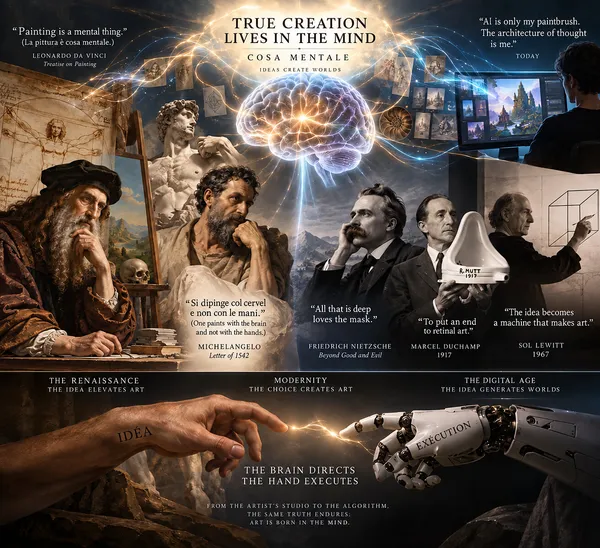
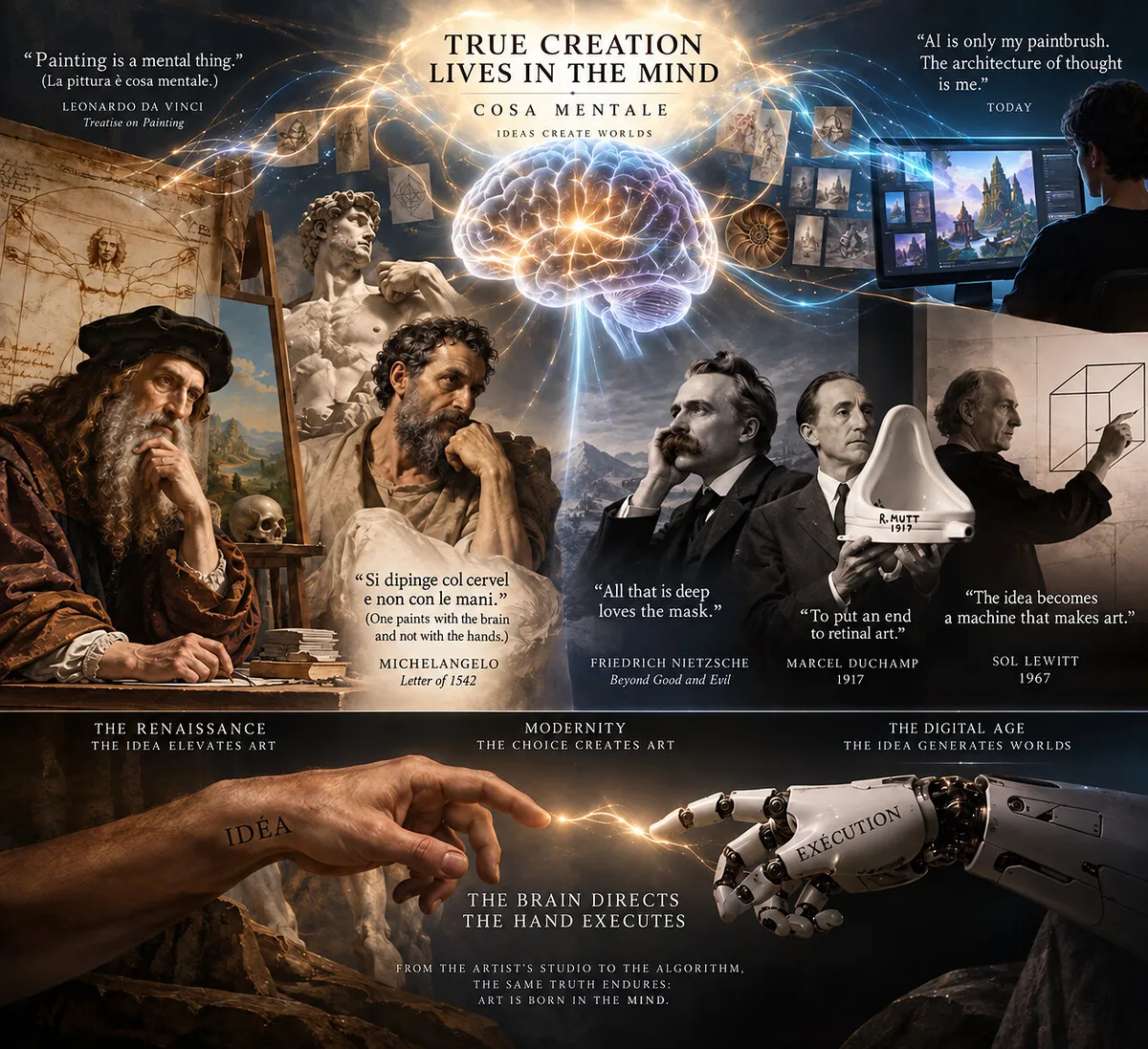
The company chose to contribute through a creative project it publicly announced in the second quarter of 2026. Building on its press release of 15 October 2026, Artprice by Artmarket and its founder put the cosa mentale, the author's freedom and the author's responsibility back at the centre of the discussion.
Ehrmann's case for AI as a writing tool
Thierry Ehrmann is a writer and visual artist and the founder of Artprice by Artmarket. He regards artificial intelligence as a significant advance. In the company's words, a writer's freedom is also measured by the resources available to give shape to what he or she has to say. A thought can remain undeveloped for lack of time, research material or support, and by easing the step from intuition to a fully developed work, AI widens that creative space.
The release argues that authors can develop their works without first waiting for an intermediary to recognise their value. As a writing assistant, AI pays no royalties, offers no advance and does not decide whether a work is distributed. Authors can therefore discuss its suggestions without negotiating with the party that controls their publishing income.
Ehrmann considers a monthly premium subscription of at most 100 to 200 euros a very modest cost given the research and writing resources and the time saved.
- Authors can reopen their writing workshop at any hour, request several alternatives or rebuild chapters eight to eleven when a new idea changes the perspective.
- They can reject any suggestion and return to an earlier version.
- AI research functions can help explore a body of texts, link texts, build a chronology or uncover contradictions.
- Authors can compare several AI systems, assign each specific tasks and switch tools. The release says the range and adaptability of some open-weight models widen that choice.
The release also cites a psychological dimension. According to Artprice, several authors recently told Ehrmann that the AI debate gives them a chance to breathe, because they can present a fragile idea and ask for rigorous criticism without immediately risking publication, credibility or income.
The author's background and the legal angle
The release describes Ehrmann as 64 years old, with almost forty-five years of creative practice and nearly thirty years leading Artprice, which it calls a world leader in art market information. He created "La Demeure du Chaos", which the release says the French state officially recognised as a total work of art, on a par with the Palais Idéal du Facteur Cheval and Niki de Saint Phalle's Cyclop. According to the release, the culture minister stated this on 20 March 2025 and the ministry confirmed it in the Senate edition of the Official Journal on 18 December 2025.
His written output includes books, treatises, essays and manifestos, among them Le Code des ventes volontaires et judiciaires, a 1,800-page legal and sociological study. Opus IX of "La Demeure du Chaos", 504 pages and published by Éditions Musée L'Organe, has been downloaded for free more than 32 million times, a figure the release says was officially certified by a French bailiff. The release adds that he was already a pioneer of AI-generated computer graphics in 1987.
Ehrmann also took part in the work leading to the law of 7 July 2016, whose first article states: "Das künstlerische Schaffen ist frei" (artistic creation is free). Until then, the release says, that freedom had been reserved for 135 years to the press, publishing and printing under the law of 29 July 1881. His advocacy for authors working with AI follows the same principle: preserving their ability to decide the meaning, form and distribution conditions of their work.
What it means for authors
The release is a position statement from a company with publishing interests, not a study of how AI affects writers. Its central claim is that authorship lies in conception and in the continuous series of decisions, revisions and rejections that shape a work, and that AI tools leave those decisions with the author. For writers weighing whether to use AI, Artprice's message is that the choice of tools and the responsibility for the result remain theirs.
PR Newswire: Artprice von Artmarket: Die kreative Freiheit der Autoren mit KI verteidigen