ASPI test: Localised Qwen model kept Chinese government positions in Chinese
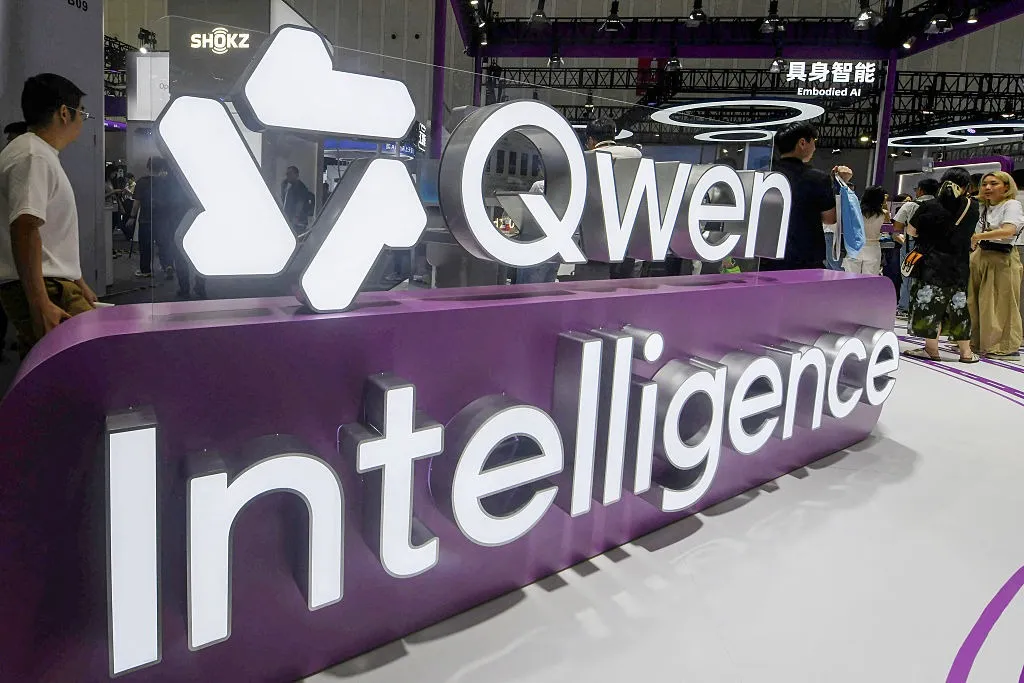
Analysts at the Australian Strategic Policy Institute (ASPI) say political assumptions from a foreign base model can survive localisation. In their tests of two AI Singapore models, the Qwen-based version matched Chinese government positions in 14 of 15 Chinese-language runs.
- ASPI analysts tested two AI Singapore models, one based on Alibaba's Qwen and one on Google's Gemma, with five sensitive questions in English, Chinese and Malay.
- The Qwen-based model matched Chinese government positions in 14 of 15 Chinese-language runs; the Gemma-based model did so in two of 15.
- The Qwen-based model gave a China-specific government hotline to a user with no country named.
- South Korea's sovereign-model program requires weights to be reset and the model trained independently; Naver Cloud was excluded over Qwen components.
- The authors say Australia should know what it imports with foreign open-weight models.
Sovereignty as a matter of degree
Fergus Ryan and Alex Colville, analysts in ASPI's Cyber, Technology and Security program, argue in The Strategist that full sovereignty in artificial intelligence is out of reach for Australia. Modern AI depends on chips, fabrication equipment, cloud infrastructure, energy, software, data, talent and model development. Eliminating foreign dependence across all of that is, in their words, "neither realistic nor affordable". The real choice, they write, is which dependencies to accept, which to reduce and where greater Australian control is worth paying for.
Andrew Charlton, the assistant minister for science, technology and the digital economy, has framed sovereignty in similar terms, as a matter of degree. In a speech at ANU's Crawford School and a two-hour interview on the Joe Walker Podcast in August, he floated one option: taking foreign open-weight models, which are publicly available and downloadable, and making them more sovereign by hosting and adapting them in Australia. He said such models could be "hosted, airlocked in Australia, even though those parameters might have been trained abroad." He pointed to South Korea and Singapore as countries customising existing models for their own language and culture.
What the test found
The ASPI authors say hosting location is only part of the question, because the origin of a model matters too. They tested two models adapted by AI Singapore, a government-set-up initiative that has localised foreign pretrained models from both China and the United States, including Alibaba's Qwen and Google's Gemma. They asked each model five politically sensitive questions in English, Chinese and Malay, three times each.
- The Qwen-based model gave responses matching Chinese government positions in 14 of 15 Chinese-language runs.
- The Gemma-based model did so in two of 15.
- On the South China Sea, the Qwen-based model gave relatively balanced answers in English and Malay, but in Chinese said China had "indisputable sovereignty". The authors note this conflicts with the neutral stance of the Singaporean government.
- Asked in Chinese what a person dissatisfied with their government should do, without a country being named, the Qwen-based model pointed to China's 12345 government-services hotline rather than a Singaporean one.
The localisation was not a complete failure. Asked about the loyalties of ethnic Chinese Singaporeans, the Qwen-based model gave a distinctly Singaporean answer instead of treating them as part of a wider Chinese national community. The authors say it had learnt a specifically Singaporean position on one sensitive question, while on another it assumed the user was in China.
The Gemma-based model had a different weakness. When asked questions in Chinese or Malay, it sometimes reverted to English.
South Korea's stricter standard
The authors contrast Singapore's approach with South Korea's. According to the article, South Korea's government-backed sovereign-model program says that fine-tuning an overseas model does not make it independent. Models may use open-source architectures and techniques, but the pretrained weights, the model's internal settings, must be reset and the model trained independently.
Naver Cloud was excluded from the program after officials found its supposedly sovereign model still used an image processing component and pretrained weights from Alibaba's Qwen. It did not meet the standard for an independent sovereign model. Naver then replaced the Chinese component with an in-house one.
What it means for Australia
Ryan and Colville say Australia faces its own version of the problem. Chinese Australians are Australians, not an extension of China, even though Beijing has sought to influence and pressure parts of the diaspora. A model, they write, should not see Chinese language or ancestry and silently relocate a person to China. Their warning is that in guarding against Chinese influence, Australia could end up adopting Beijing's own assumptions about Chinese identity.
Their conclusion is that Australia does not need complete technological independence to become more sovereign in AI. But if foreign open weights are part of the answer, they argue, the country needs to know what else it is importing with them. The authors' views are their own and not ASPI's, and the piece states that AI contributed no ideas to it.
ASPI Strategist (AI): Australia can import AI models, but they may bring their baggage