Zhejiang targets AI leadership with 582.87 billion yuan industry
Zhejiang is positioning itself as a major AI innovation hub, backed by rapid growth in its core AI industry, expanded computing infrastructure and an open-source model ecosystem. The province reported 582.87 billion yuan in revenue from core AI enterprises during the first eight months of 2026.
- Core AI industry revenue reached 582.87 billion yuan in the first eight months of 2026.
- Zhejiang had 2,112 core AI industry enterprises, spanning chips to application services.
- The province's computing power reached 197 EFLOPS by the end of September.
- ModelScope brings together more than 29 million AI developers and more than 200,000 models.
- The 2026 WIC Wuzhen Summit featured more than 30 embodied-intelligence robots.
AI industry expands across Zhejiang
The revenue came from enterprises above designated size in Zhejiang's core AI industry, rising 26.9 percent year-on-year, according to the China Daily report carried by PR Newswire. The number of core industry enterprises reached 2,112, creating an industry chain spanning chips, large models, intelligent agents and application services.
The figures form part of Zhejiang's longer-running Digital Zhejiang initiative. The province's government said in its 2026 work report that it aims to gain a leading position in AI development and build a high-quality open-source ecosystem.
AI is already being applied in manufacturing and commerce. At a sock factory in Zhuji, a designer can generate 20 original patterns within three minutes. In Yiwu, traders use an AI computing platform to create high-definition product images and short marketing videos with a single click.
Computing network supports industrial use
China Mobile's Zhejiang branch operates an integrated computing network across the province. Zhejiang's total computing power reached 197 EFLOPS by the end of September, ranking among the highest in China, according to the report.
Fifty-four enterprises and institutions in the province received national computing-power vouchers totaling 408 million yuan, or 37 percent of the national total. The vouchers are intended to support access to computing resources as more businesses adopt AI applications.
Hangzhou and Jiashan intelligent computing centers are also being put into operation. Qiu Xiaoyuan, a manager at China Mobile's Zhejiang branch, said the centers would enable “millisecond-level access to computing, integrated computing-network scheduling and one-stop security assurance.”
Models, open source and robotics broaden the ecosystem
Zhejiang's AI strategy also places emphasis on large models and open source. The report said the Qwen and DeepSeek large models are continuing to iterate, while the province's ModelScope community in Hangzhou's Xihu district brings together more than 29 million AI developers and more than 200,000 models worldwide.
The ecosystem includes companies and researchers developing systems on domestic hardware. Chen Tianrun, a doctoral student at Zhejiang University and founder of Moxin Technology, independently developed MoWorld, a real-time interactive world model built entirely on domestic neural processing units.
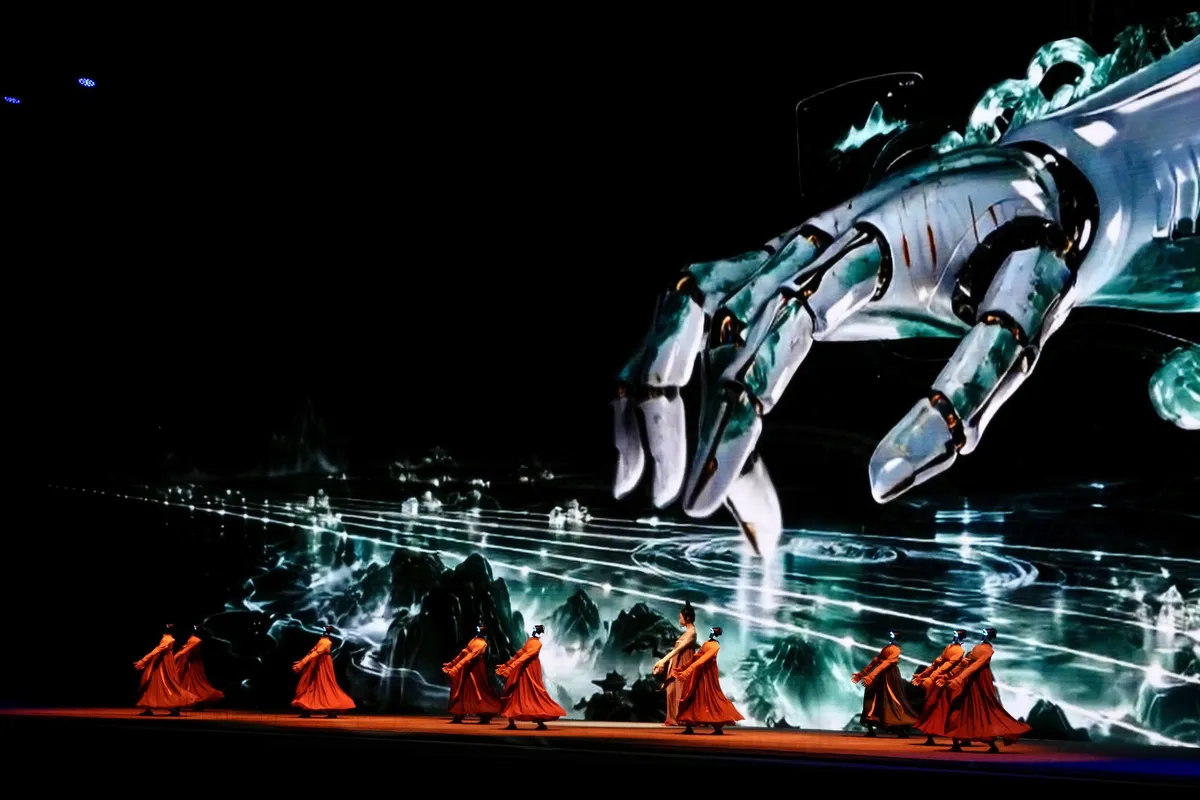
AI demonstrations at the 2026 World Internet Conference Wuzhen Summit showed how Zhejiang is presenting the technology to the public. More than 30 embodied-intelligence robots appeared at the Light of Internet Expo, including a bipedal humanoid robot described in the report as the world's first capable of autonomously playing badminton with humans. The summit's “Straight to Wuzhen” global internet competition attracted 1,347 projects and one-person company entries from 31 countries and regions.
For users and businesses, the developments point to broader access to AI tools for design, marketing, manufacturing and research. For Zhejiang, the combination of computing power, models, data and open-source development is central to its effort to overcome natural-resource constraints and become a trendsetter in innovation.
PR Newswire: Zhejiang aims to be highland of AI innovation