Atlantic Council: IMF and World Bank face fragmented economy at Bangkok meetings

The IMF and World Bank must preserve international economic cooperation in a more fragmented world, according to a new Atlantic Council issue brief. The report argues that their traditional tools are still needed but no longer sufficient.
- The Atlantic Council says the IMF and World Bank must preserve international economic cooperation as globalization becomes more contested and fragmented.
- About 1.2 billion young people in developing economies will reach working age over the coming decade, but only around 420 million jobs are likely to be created, according to the brief.
- The IMF's leverage is asymmetric: major economies that generate imbalances can more easily ignore its guidance.
- The brief warns that low-income economies risk becoming consumers rather than producers of AI technologies.
- Sovereign wealth funds alone manage over $15 trillion dollars in long-term capital, per the report.
A changed backdrop for the Bangkok meetings
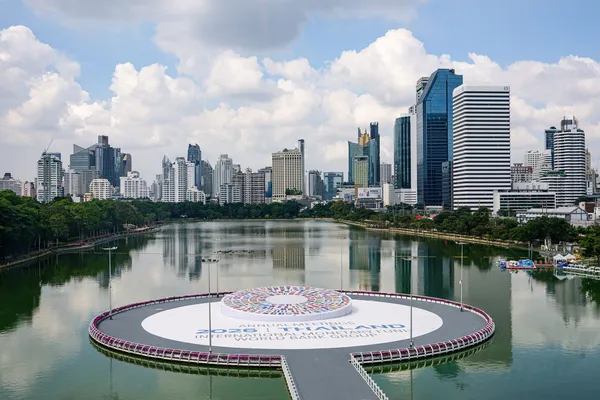
The brief, titled "The new geoeconomics of Bretton Woods" and introduced by Amin Mohseni-Cheraghlou, looks ahead to the 2026 Annual Meetings of the International Monetary Fund (IMF) and World Bank in Bangkok on October 12. According to the author, participants will face a global economy markedly changed since the 2023 meeting in Marrakesh.
The Atlantic Council describes a world in which trade, investment and supply chain maps are being redrawn. It points to geoeconomic competition, protectionism, tariffs, and economic and military conflict. The United States, China, the European Union and a growing number of middle powers are using tariffs, subsidies, export controls, investment restrictions, industrial policy and supply-chain strategies to protect domestic industries and secure strategic advantage.
The report's position is that globalization is not ending. In its words, it is "becoming more contested and fragmented." Developing countries, meanwhile, face pressure from conflict, high debt, fiscal strain, climate risks, demographic change and rapid technological transformation, namely AI and datacenters.
Different problems for the IMF and the World Bank
For the IMF, the brief calls for rethinking surveillance. Some of the largest sources of systemic risk, it says, come from economies that have little need for IMF financing and so little incentive to follow its advice. The United States, China and Europe generate much of the world's external imbalances, yet the IMF's leverage is asymmetric: countries that depend on its support face considerable reform pressure, while systemically important economies can more easily disregard its guidance.
The author argues that effective surveillance requires more than sharper forecasting. It requires greater candor and consistency in assessing major economies' policies, including fiscal deficits, industrial subsidies, exchange-rate policies and tariffs. The brief also urges realism. Many imbalances reflect structural differences in savings and investment, demographics, global value chains, industrial policy and accumulated international assets and liabilities, so macroeconomic adjustment alone cannot resolve them. The IMF should distinguish between cyclical imbalances that standard tools can address and structural, geoeconomic ones that need sustained international coordination.
For the World Bank, the challenge is its development model, which assumes that domestic reforms let countries attract investment, join global markets, raise productivity and create jobs. The brief says capital is no longer allocated solely according to market fundamentals, because industrial policy competition among the United States, China and Europe increasingly shapes where strategic investment flows. Investment-climate reform, regulatory simplification and de-risking remain important but are less powerful when the geopolitical strategies of the largest economies drive capital flows.
The jobs gap and the AI divide
The brief highlights a jobs crisis. Roughly 1.2 billion young people in developing economies are expected to reach working age over the coming decade, while only about 420 million jobs are likely to be created, leaving around 800 million people unemployed. The author calls the World Bank's growing focus on employment a significant institutional departure from the assumption that economic growth automatically boosts employment. Its success, however, depends on whether developing economies can gain access to markets, investment, technology, infrastructure and productive global value chains.
The report links these pressures. A more fragmented trading system makes it harder for poorer countries to follow the export-led industrialization strategies that transformed much of East Asia. High debt-service costs constrain spending on infrastructure, education, health, climate resilience and digital investment, which makes it harder to capture the productivity gains of AI. Countries that fall behind technologically may become less attractive to private capital, widening the development gaps the World Bank was created to narrow.
The brief also notes that governments and multilateral institutions no longer command anything close to a monopoly over the capital, technology, infrastructure or expertise shaping development. According to the report, sovereign wealth funds alone manage over $15 trillion dollars in long-term capital, while private companies increasingly control strategically important technologies and infrastructure.
On AI, the author lists semiconductors, computing capacity, data centers, electricity, critical minerals, skilled labor and digital connectivity as drivers of competitiveness whose distribution is starkly uneven across World Bank membership. Low-income and developing economies with inadequate power systems, weak digital infrastructure, limited human capital and insufficient investment risk becoming consumers of new technologies rather than producers or meaningful participants in the value chains they create.
What it means for the Bretton Woods institutions
The brief frames the task for both institutions as simultaneously economic, institutional and geopolitical. It also notes that rising members are challenging the traditionally Western-oriented governance structure of the institutions, and its table of contents includes a chapter on why the West must retain leadership of the IMF and World Bank while making them work better.
For users of the institutions' work, including governments and investors, the message is that jobs, global imbalances, capital access and AI are closely connected, and that handling them will require sustained international coordination rather than domestic reform alone. The excerpt provided does not detail specific policy recommendations beyond these directions.
Atlantic Council (AI): The new geoeconomics of Bretton Woods