Autonomous Mobility Faces a Trust Test as Deployment Moves Beyond Pilots
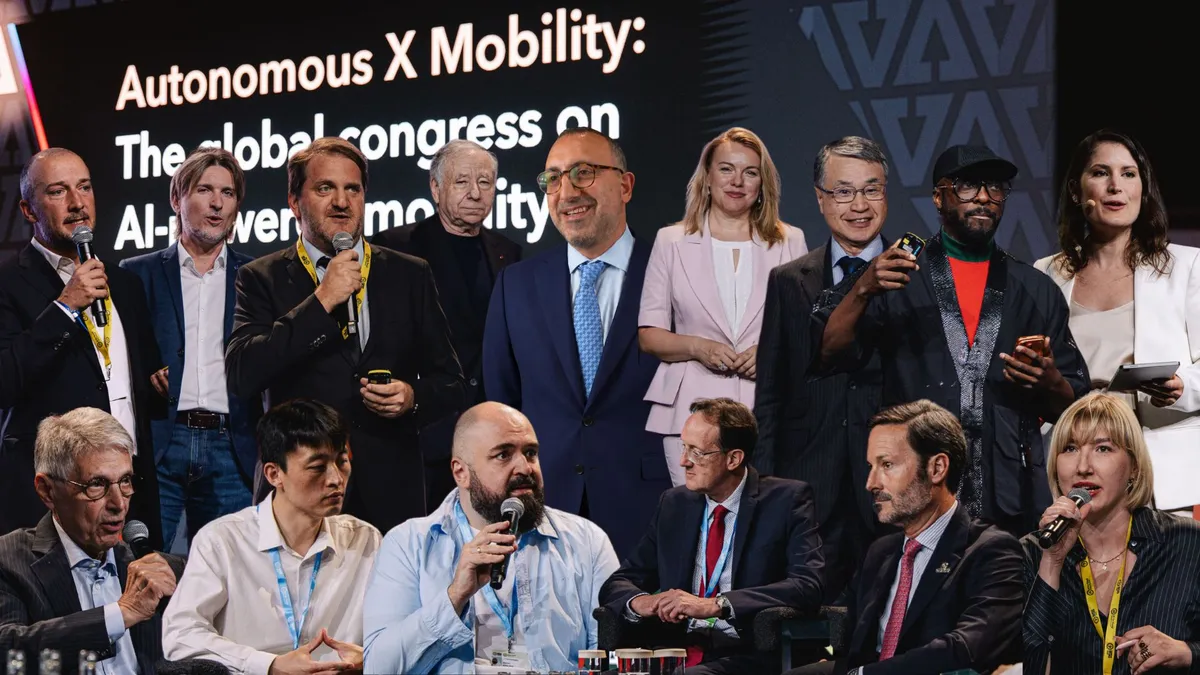
Autonomous vehicles, aircraft and railways are moving from pilots into real-world use, but speakers at the Autonomous X Mobility congress said regulation, infrastructure and public trust must keep pace. The event was held during the AI for Good Global Summit 2026, according to an ITU report.
- The Autonomous X Mobility congress took place during the AI for Good Global Summit 2026 and covered roads, eVTOL aircraft, railways and public transport.
- UNECE's François Guichard described a newly adopted framework as the world's first global regulatory framework for automated driving systems.
- EHang's Jose Ignacio Rexach said deployment needs operating standards, landing infrastructure, airspace management and viable business models.
- T-Technologies' Aleksei Shpilman called for more transparency on incident severity, not only kilometres travelled.
- Speakers agreed that technology alone will not determine whether autonomous mobility scales.
From feasibility to governance
According to the ITU's AI for Good account, the debate has shifted. For years the main question was whether AI could safely navigate roads, skies and rail networks. The focus is now on how autonomous systems can be integrated safely, consistently and at scale.
The Autonomous X Mobility congress brought together policymakers, regulators, industry leaders and researchers. Discussions covered road vehicles, electric vertical take-off and landing aircraft, railways and public transport. One message recurred: technological capability alone will not decide whether autonomous mobility reaches widespread deployment. Regulation, infrastructure, human oversight and public confidence must develop alongside it.
Namir Hourani, Managing Director of Global MICE Organisation Limited, opened the congress. He described autonomous mobility as one of the most significant transformations in transport since the invention of the automobile. He named safety, ethics, cybersecurity, liability, accessibility and public trust as being as important as advances in artificial intelligence itself. In his view, trust must be earned through collaboration among governments, regulators, industry and researchers.
Bilel Jamoussi of the ITU Telecommunication Standardisation Bureau highlighted the role of international standards in safety, trust and interoperability. Dmitry Mariyasin of UNECE said autonomous transport depends on networks that cross national boundaries and therefore needs shared regulatory frameworks.
Rules across borders and the road to deployment
François Guichard, Focal Point for Intelligent Transport Systems and Automated Driving at UNECE, discussed the recent adoption of what he described as the world's first global regulatory framework for automated driving systems. According to him, it sets internationally harmonised requirements for deploying fully autonomous vehicles and offers a common approach to demonstrating their safety.
Guichard presented regulation as an enabler rather than an obstacle. He argued that technology can cross borders but trust cannot. Without harmonised rules, he suggested, markets fragment, testing is duplicated and manufacturers face greater legal uncertainty. Participants acknowledged that such international coordination remains challenging, though standards and technical regulation were seen as practical tools even where national policies differ.
Certification is only part of the picture. Jose Ignacio (Nacho) Rexach, Chief Commercial Officer for Europe and Latin America at EHang, said autonomous electric aircraft require close collaboration among manufacturers, regulators, municipalities and infrastructure providers. He argued that deployment depends on operating standards, landing infrastructure, airspace management and commercially viable operating models, not only on certifying the aircraft. Drawing on EHang's experience in several countries, he said lessons from one jurisdiction can inform deployment elsewhere.
Oversight does not disappear
As autonomous systems take on more driving and decision-making, human oversight shifts from direct control to monitoring, governance and emergency-response systems, the report says.
On a panel about safety, ethics and public trust, Aleksei Shpilman, Director of AI at T-Technologies, called transparency one of the sector's greatest challenges. He noted that manufacturers often publish the kilometres travelled by autonomous vehicles, but there is far less visibility into the nature and severity of incidents. That makes it hard for the public to judge real-world performance. He said better incident transparency is essential to building confidence.
Shpilman also cautioned against assuming AI can always explain its own decisions. He argued for surrounding AI with deterministic systems that can intervene safely when uncertainty arises, treating AI as one component within a wider safety architecture rather than the sole decision-maker.
Jeroen Beukers, Head of Innovation at TPG, said removing the driver from a public transport vehicle creates new operational responsibilities. Automated systems may control the vehicle, but operators must still ensure passenger wellbeing.
What it means for the sector
The congress framed autonomous mobility as an institutional transition as much as a technological one. Vehicles may be getting more capable, but their place in everyday transport depends on harmonised rules, supporting infrastructure, clear responsibility when intervention is needed, and openness about safety performance. For manufacturers and operators, the discussions suggest that winning public confidence and navigating cross-border regulation will matter as much as improving the vehicles themselves.
ITU AI for Good: From testing to trust: What will it take to scale autonomous mobility?