Beacon AI Flies Murdock Pilot Assistant on Operational USAF KC-46A Tankers
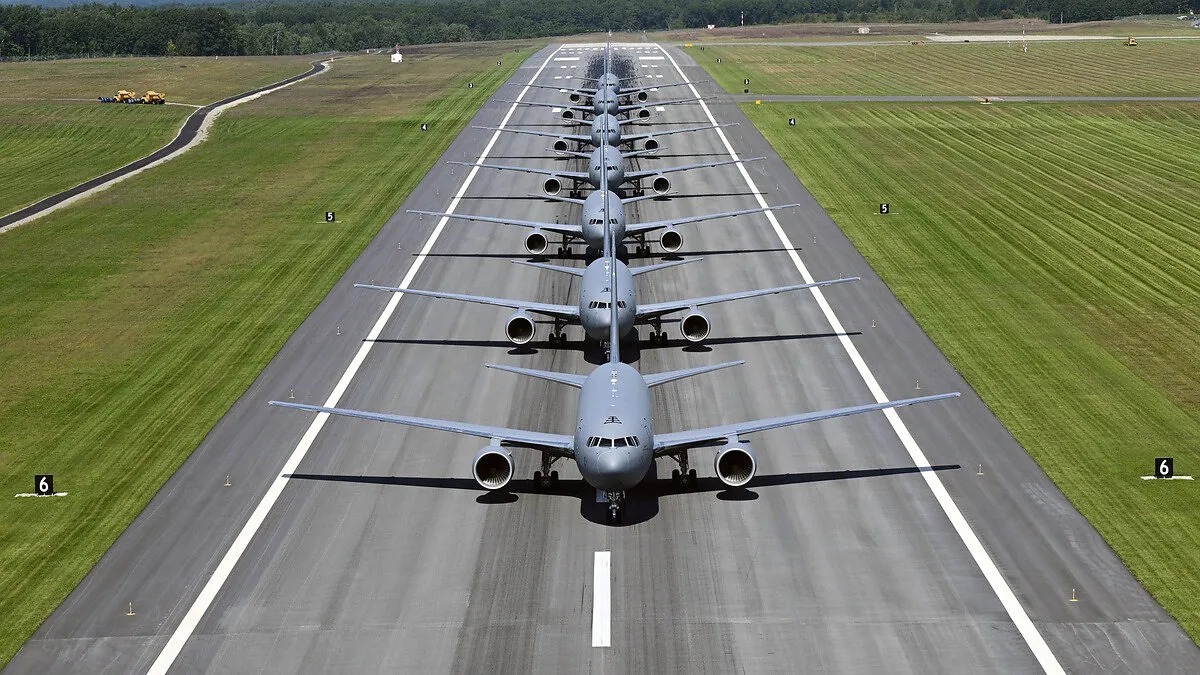
Beacon AI, a California-based aviation software company, says its Murdock AI pilot assistant system has flown aboard three operational U.S. Air Force KC-46A Pegasus tankers. According to the company, it is the first commercially developed AI pilot assistant to fly aboard multiple operational aircraft.
- Beacon AI's Murdock AI pilot assistant flew on three operational USAF KC-46A tankers over five flights and about 20 hours in August and September 2026.
- Beacon says it is the first commercially developed AI pilot assistant to fly aboard multiple operational aircraft.
- The system advises the crew, reads from certified avionics buses and does not modify flight-critical systems; the crew retains authority.
- The work was funded under an AFWERX TACFI contract with Air Mobility Command; Beacon has raised more than $20 million.
- Beacon sees a path from the KC-46 to commercial Boeing 767 fleets and the wider mobility fleet.
Five flights on three tankers
Beacon AI announced that Murdock flew on three KC-46A Pegasus aircraft over five flights and approximately 20 hours of flight time in August and September 2026. The work was done under a U.S. Air Force AFWERX Tactical Funding Increase (TACFI) contract with Air Mobility Command (AMC).
The flights began during Emerald Flag at Eglin Air Force Base, Florida, and continued at two additional airfields, one of them a civil airport. According to Beacon, the system provided advisory capabilities to aircrews in flight and was used without modifying the aircraft's certified flight-critical systems.
How Murdock and Lighthouse work
Murdock is the in-cockpit element of Beacon's connected aviation intelligence platform. The company describes it as a modular compute and crew-interface system that reads from certified avionics buses, advises the crew and records every flight. It connects via satellite communication to Lighthouse, Beacon's cloud-based fleet data platform and web application.
Together, the two systems generate the data used to build safety and efficiency features for aircraft operators and deploy them directly. Beacon says this turns reactive safety into proactive features.
The company stresses that Murdock flew on aircraft already assigned to operational units, flown by fleet aircrews, through an interface the Air Force already fields. It contrasts this with most earlier AI aviation work, which it says happened on dedicated test aircraft. Beacon says fleet adoption matters for its data flywheel, with the main push toward Fleet Learning, where flight data scales and improves features for all operators.
The flights demonstrated what Beacon calls Level 2 assistance, in which the system advises and the crew decides. Beacon describes the concept as building "R2-D2 for pilots". Co-Founder and CEO Matt Cox said that "at every stage, the crew retains authority."
Funding, congressional interest and market size
Beacon reached the milestone under an AFWERX TACFI OTA contract with AMC, which followed a SBIR Phase 2 with U.S. SOCOM. The company is a Series A firm that has raised more than $20 million in venture capital financing. It says it has 13 U.S. military contracts and three commercial airline engagements.
Beacon also pointed to the House Armed Services Committee's report on the Fiscal Year 2027 National Defense Authorization Act. According to the company, the committee noted that recent Air Force and Special Operations Command work showed advisory and pilot-assist tools can improve situational awareness and decision-making without taking control of the aircraft. The committee directed the Secretary of Defense to brief it by February 1, 2027, on the Department's plan to evaluate and adopt such tools.
On the commercial side, Beacon notes that the KC-46 is a military derivative of the Boeing 767, and that 1,361 767s have been delivered since 1982. It says AMC operates more than 1,000 airlift and aerial refueling aircraft, that the Air Force's planned KC-46 buy stands at 263 aircraft, and that roughly 30,300 aircraft are in airline service worldwide, none with AI pilot assistance.
What comes next
Beacon says the next step is for Murdock to provide progressive assistance to aircrew throughout the flight lifecycle, from scheduling to debriefing. In the company's view, success depends on repetition and iteration based on user feedback.
Tiffany Robinson, AFWERX growth stage investment lead, said the investment shows how the TACFI program matches funding and operational needs to move promising technologies toward operational use. For operators, the pitch is a software-focused assistant that adds capability without major replacement or redesign of installed avionics or flight-control systems. The results so far are Beacon's own account of limited flight testing, and wider adoption remains to be shown.