Dahua Showcases AIoT Tools for Safer, More Efficient Cities

Dahua Technology showcased AIoT applications for urban safety, transport, city governance and environmental monitoring at the Smart City Expo World Congress 2026 in Barcelona. The company presented systems that connect cameras, sensors and artificial intelligence to identify risks and support responses.
- Dahua displayed smart city AIoT solutions at SCEWC 2026 in Barcelona.
- Its systems cover urban safety, traffic, public transport and city governance.
- A Campeche project optimized 34 intersections and introduced seven green waves.
- Thermal cameras can detect potential fire hotspots up to 10 kilometers away.
- Dahua highlighted privacy, transparency and accountability in AI deployment.
AIoT applications across city operations
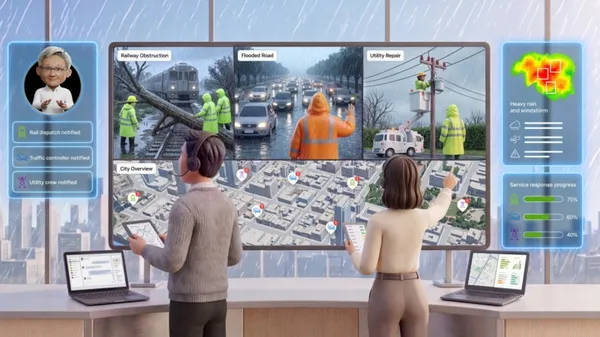
Dahua said its Urban Safety solutions combine cameras and other IoT devices with AI powered analytics to identify risks and coordinate emergency response. One application brings together intelligent recognition, text and image search, route tracking, broadcasting and security workflows to support missing person searches.
Its City Governance technologies use AI analysis and multimodal information processing to detect issues including illegal street vending, waste left in public areas, missing manhole covers, road flooding, blocked fire lanes, smoke and fire. According to Dahua, natural language search and automatic alerts help staff find problems and coordinate responses.
The company also presented Smart Mobility tools for public transportation. In bus operations, driver monitoring is designed to detect risky behavior, while real time video, GPS tracking and passenger counting support safety oversight, fleet management and fare verification.
Traffic project reports gains in Campeche
For Smart Traffic, Dahua presented technologies for traffic monitoring, signal optimization, enforcement and incident detection. In Campeche, Mexico, the company optimized 34 intersections and introduced seven green waves.
Dahua said the project recorded 23 improvements, a 20% increase in traffic volume and a 15% reduction in waiting time. These figures are the company's reported results for the Campeche project.
The example illustrates how Dahua is positioning AIoT as an operational system for city authorities, combining traffic data with tools intended to manage signals, identify incidents and support enforcement.
Environmental monitoring and the role of AI
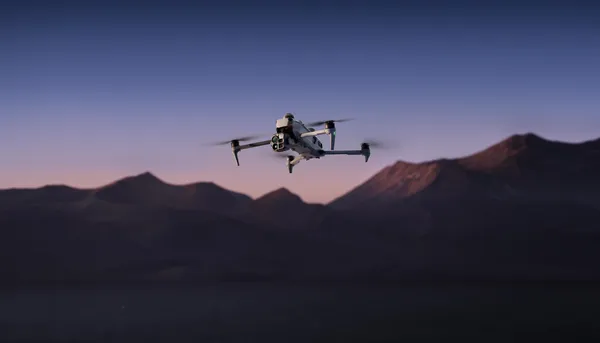
Dahua's Eco Environment solutions focus on natural resource protection and environmental management. High mounted thermal cameras provide 360 degree coverage and can detect potential fire hotspots up to 10 kilometers away, according to the company. The cameras work alongside ground monitoring and drones for fire detection and emergency response.
For water monitoring, Dahua showed a radar based device paired with a PTZ camera. The system tracks water levels in real time and sends alerts when readings exceed preset thresholds.
John Li, General Manager of Global Government Business Department at Dahua Technology, discussed AI at the roundtable “Agentic AI: Systems That Act.” He highlighted AI embedded in cameras and sensors, while stressing the importance of privacy, transparency and accountability. In a statement included in the company's announcement, Li said, “IoT sensing devices are the 'eyes and hands' of AI.”
Max Huang, Director of Global Government Projects at Dahua Technology, said in a solution talk that edge intelligence and high quality structured data provide a foundation for deploying large AI models in real world smart city scenarios. Dahua said it will continue working with customers and partners on smart city solutions and the digital transformation of cities.