CMU and NFL Train AI Models to Understand Football
Carnegie Mellon University researchers are building AI models that can learn football from official NFL film and on-field player-tracking data. The project aims to automate parts of game analysis and could eventually support play predictions, simulations and tactical decisions.
- CMU received official NFL film and Next Gen Stats data.
- Researchers are training separate systems on video and player-tracking data.
- The project could support play predictions and football analysis.
- Potential uses include automated annotation and play simulation.
- The NFL Forward Initiative supports technology for competition and training.
NFL data will train football-focused AI
The NFL has given CMU researchers access to official game film and Next Gen Stats player-tracking data as part of the NFL Forward Initiative. The program allows entrepreneurs and researchers to propose technology for competition, training, player development and growing the sport’s reach.
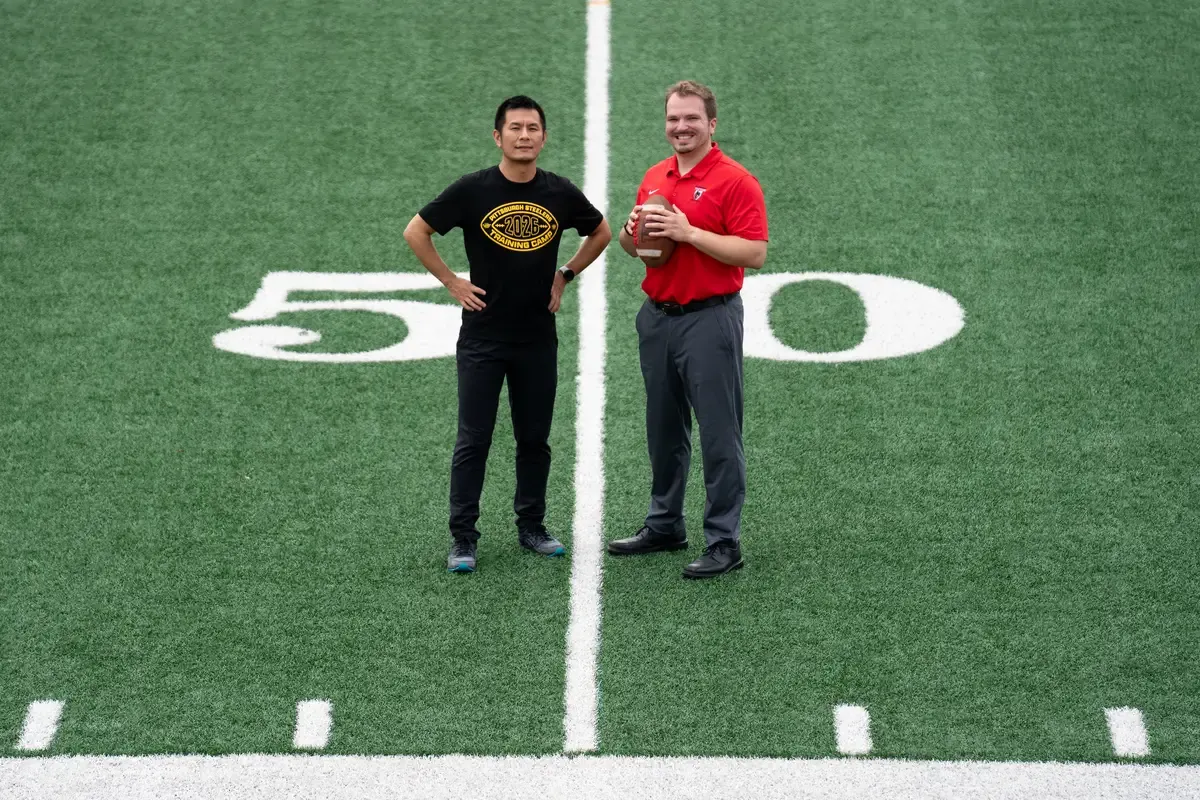
The collaboration brings together Chenyan Xiong, an associate professor in the Kenneth C. Griffin School of Computer Science’s Language Technologies Institute, and Ron Yurko, director of the Carnegie Mellon Sports Analytics Center. The researchers received several terabytes of data for the project.
The Next Gen Stats data is powered by Amazon Web Services and sourced from RFID chips embedded in shoulder pads, game equipment and the ball. It provides real-time location information for everything on the field.
“We’re honored to work with a prestigious institution like CMU as they explore ways to make the game more efficient,” Mike Lopez, senior director of football data and analytics at the NFL, said in the CMU announcement.
Researchers are starting with two AI systems
Because the data includes different types of information, the researchers are using foundation models, which CMU describes as deep learning AI models trained on large amounts of data. Before building a system that combines video and player-tracking information, they created two pretrained systems as building blocks for a larger model.
One system uses game film, while the other uses player-tracking data. Both are being trained to learn what happens in football plays. Xiong said the first step is for the model to understand events on the field.
The intended system could then examine questions before or after a play. Potential tasks include predicting whether a defense will use a blitz, identifying a safety’s coverage change and recognizing whether a play has been run before by another team.
“We want to see whether we can train foundation models on the data to learn the intricacies of football intelligence,” Xiong said.
Potential uses include analysis and play simulation
Football coaches and scouts traditionally spend hundreds or thousands of hours watching footage and manually recording what happened during plays. Yurko said the volume of NFL video and current AI models could allow the process to be automated at scale.
The combined model could eventually simulate how a play develops after particular calls or suggest tactical play calls based on estimated outcomes, according to Xiong. The researchers said reaching that stage may require more data and time.
The work is also intended to help fans understand games. Yurko previously worked with the NFL on the NFL IQ AI Chatbot during the 2026 NFL draft, which allowed users to ask questions and receive answers from the model.
For the league and its teams, the project could make film annotation and analysis more efficient. For viewers, it points toward tools that explain plays, compare formations and potentially anticipate what happens next, although the CMU announcement presents these as research goals rather than finished capabilities.
CMU School of Computer Science: CMU Researchers Teach Football to AI Models