CMU Researcher Wins Grant to Improve Human-AI Decision Making
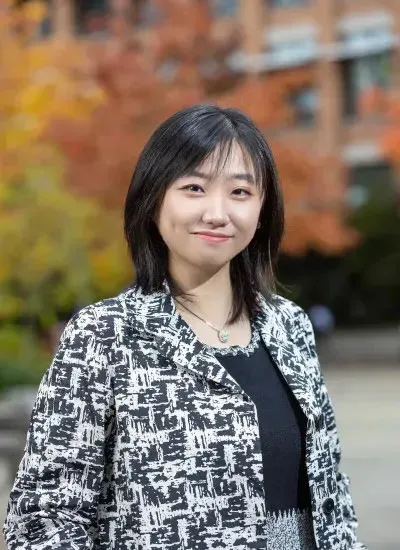
Sherry Tongshuang Wu, an assistant professor at Carnegie Mellon University’s Kenneth C. Griffin School of Computer Science, has received an Okawa Research Grant to study how AI agents can help people and teams make complex decisions. Her project will examine how agents identify changing preferences, explain trade-offs and respond to feedback.
- Sherry Tongshuang Wu received an Okawa Research Grant.
- The project studies AI agents that support complex individual and team decisions.
- An open-source evaluation framework will use simulated users.
- The research will test preference discovery, alternatives and responses to feedback.
Research targets decisions with changing preferences
AI agents can already help with tasks such as planning trips, comparing products and handling other situations that involve multiple choices. The challenge, according to Carnegie Mellon University’s School of Computer Science, is that users may not know all of their preferences at the beginning of a decision. Those preferences can also change as people consider different options.
Wu’s research will explore how agents can identify what users value and help them understand the trade-offs between alternatives. This places the focus on the interaction between people and AI, rather than on producing a single recommendation without explaining how it was reached.
Open-source framework will test AI agents
The project will develop an open-source evaluation framework for assessing how effectively AI agents support decision making. It will use simulated users to test whether agents can uncover preferences, present alternatives and respond to feedback.
The framework is intended to provide tools for examining several parts of the decision process. It will assess how agents learn what matters to users, how they communicate available choices and how they adapt when users provide additional information.
The research will also study team decision making. In those settings, members may have competing priorities, creating a separate challenge for agents that must help groups navigate choices rather than support only one individual.
A focus on human control and imperfect AI
Wu’s broader research at CMU’s Human-Computer Interaction Institute focuses on human-AI collaboration, particularly how people can work effectively with imperfect AI systems. She aims to develop tools and evaluation methods that help people make informed decisions while maintaining control over the process.
For users, the work could support AI systems that do more than list options. The source describes a direction in which agents help people clarify what they want, understand the consequences of different choices and revise decisions as their preferences develop. For teams, the research addresses how AI might support discussions where priorities do not align.
The grant comes from the Okawa Foundation for Information and Telecommunications, which supports research in information and communications technology. Its support will fund work aimed at evaluating how AI agents handle preferences, alternatives, feedback and competing priorities.
CMU School of Computer Science: Wu Receives Okawa Research Grant To Improve Human-AI Collaboration