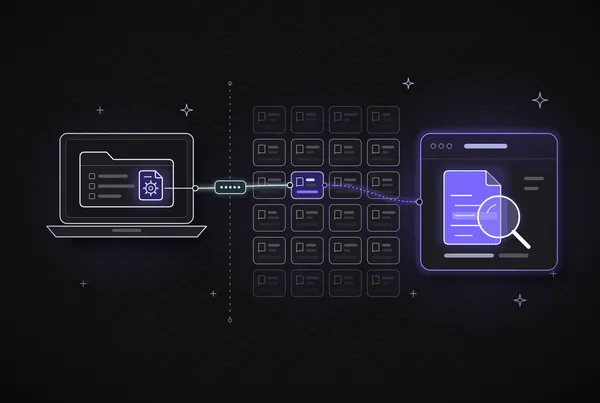
Datadog's AI Guard blocks unsafe agent actions at runtime, inside the agent loop

Datadog says security controls for AI agents must evaluate each action at runtime and judge intent, not just check static permissions. Its answer is AI Guard, which runs inline with agents to block malicious activity and lets teams investigate alongside the agent traces, logs and infrastructure telemetry already in Datadog.
- Datadog says agent security must judge intent at runtime, not only check static permissions.
- AI Guard runs inline in the agent loop and can block or sanitize prompts, model outputs, tool calls and tool results before they execute.
- Findings appear as signals tied to the same traces as application and agent performance data, with actions like blocking IPs or opening Jira cases.
- In a SecurityHQ and Datadog survey of over 200 security leaders, 39% could only partially reconstruct agent actions from the previous 30 days.
- Engineers can enable inline evaluation for their own agents without a ticket or proxy, according to Datadog.
Why permissions are not enough for agents
Datadog argues that AI agents create a virtually unbounded attack surface. To be useful, they need access to internal systems, developer tools and sensitive business data. They also consume external content through tools, APIs and MCPs, where malicious instructions can be hidden. The company points to incidents like EchoLeak as examples of how indirect prompt injection can lead to reputational damage and sensitive data leaks.
According to Datadog, traditional security controls can decide whether an agent is permitted to take an action, but not whether it should. Because agents reason their way to future steps instead of following a fixed path, it is hard to test all possible actions in advance.
The company gives an example: an agent asked to triage GitHub issues reads an issue with hidden instructions in a tool call, directing it to collect deployment credentials and send them to an external endpoint. Each action is allowed by the agent's permissions, yet the behavior is not what was intended. Without runtime controls, Datadog says, organizations are forced to restrict what agents can access and do, which makes the agents much less capable.
How AI Guard works
AI Guard runs inline with agents, which gives its detection and evaluation engine a view of the full runtime context at each decision point. That includes which service called the agent, what it depends on, which stored data it touched, and what the agent has already read and done.
The product starts with discovery. According to Datadog, it finds all agents running in a cloud environment and shows which model endpoints, datastores and connected services each one reaches, and which of those are exposed. As agents run, it collects several layers of context:
- Session context: the full conversation history, system instructions, agent tasks, every tool call and the step about to execute, captured with enterprise-level data retention controls. This is meant to stop indirect and multi-step attacks where no single message looks malicious.
- Custom context: policies, tool blocking rules and business context set by the customer, used to tune the guardrail to a specific agent's use case.
- Application context: the service, its dependencies, datastores, owner and what the agent touched, carried on traces already in use.
Hooks at multiple steps in the agent loop let AI Guard block or sanitize any prompt, model output, tool call or tool result before it executes. With sensitive data scanning enabled, PII and secrets are masked in real time. Benign intermediate steps proceed as long as they match the organization's intent for that agent. If intent diverges, AI Guard stops the chain of behavior immediately. In the GitHub example, Datadog says AI Guard can block the step following the malicious tool call before the agent acts on it.
Investigation and remediation in one place
Datadog cites a SecurityHQ and Datadog survey of over 200 cybersecurity leaders in which 39% said their organization could only partially reconstruct every action an AI agent performed during the previous 30 days. AI Guard surfaces the highest-priority findings as signals. According to the company, signals reconstruct the entire session behind a blocked action, summarize what happened and how, and correlate all agent interactions for deeper investigation.
Because signals land on the same traces as application and agent performance data, teams can look at the wider stack, including compromised hosts, containers running unexpected code, or queries against a database the agent should not have reached. From a triggered signal, teams can block offending users or IPs, open security cases, or trigger remediation workflows. Cases can also be pushed to Jira or a SIEM.
Aimed at the engineers who own agents
Datadog says agents are owned by the engineers who build them, so controls outside the development workflow tend to go unadopted. AI Guard lives in application teams' tracing and monitoring systems. The company says an engineer can turn on inline evaluation for their own agent without filing a ticket or standing up a proxy, while a security team sets the policy those evaluations enforce without needing to know each agent's internals.
In the same survey, 40% of respondents named an AI agent making a decision without anyone knowing as their greatest concern. Datadog positions AI Guard as a way to bridge security engineering and development by making visibility and enforcement part of tools engineers already use.