EPFL researchers: how cities can fit robotaxis in without more congestion
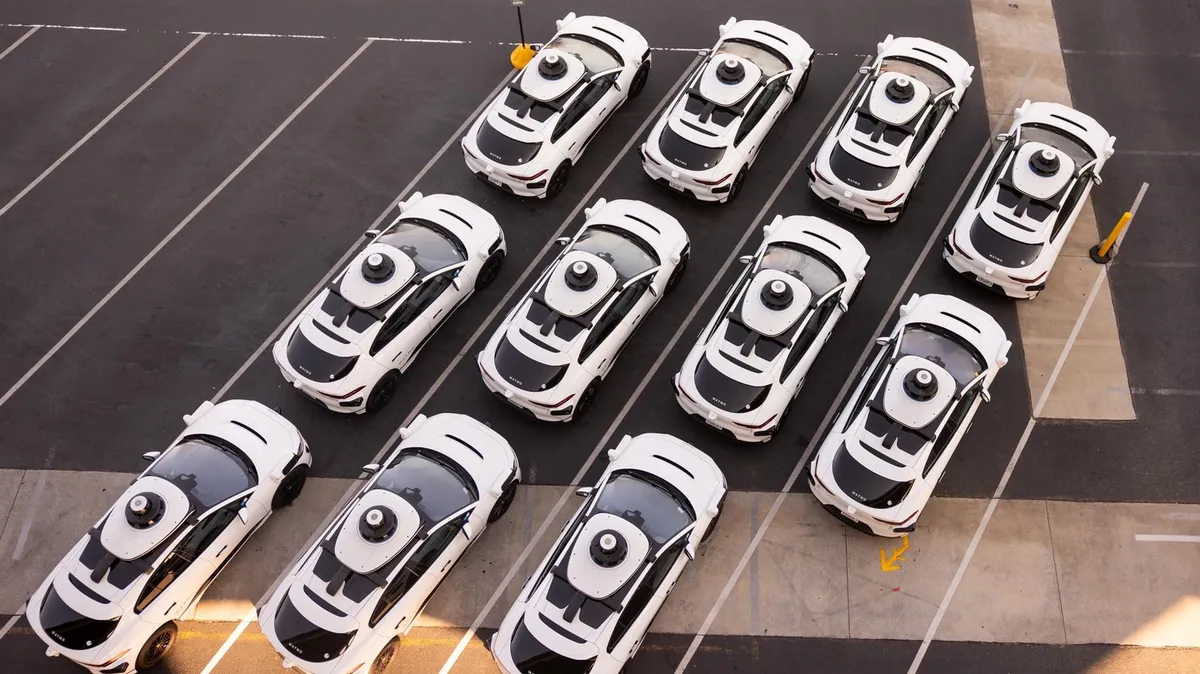
Robotaxis are technically feasible, but their future depends more on regulation, public acceptance, economics and integration with public transport, according to Kenan Zhang of EPFL. Her team has published studies on AI methods for coordinating large autonomous fleets and managing where empty vehicles wait.
- EPFL's Kenan Zhang says robotaxis' future depends on regulation, public acceptance, economics and integration with public transport.
- Reinforcement learning algorithms trained on Shenzhen data redistribute vehicles by anticipated demand to keep service in overlooked neighborhoods.
- Zhang suggests limiting empty driverless vehicles, charging fees for unnecessary circulation, or creating dedicated waiting areas.
- Switzerland's strong public transport network can limit robotaxi demand, especially in city centres.
- The next challenge is proving the models work in real cities, which are more complex than simulations.
AI to coordinate fleets and parking
Driverless taxis are moving from pilot projects to real-world deployment. Switzerland recently launched its first driverless taxi service in Furttal, near Zurich. Researchers are now looking beyond technical feasibility to how large fleets of autonomous vehicles can be integrated into transport systems, and how they could extend mobility options to underserved rural regions.
Kenan Zhang, professor at the EPFL Laboratory for Human-Oriented Mobility Eco-System (HOMES), studies these questions, from fleet allocation to parking placement and social reception. In a series of studies published in Transportation Research, she and her team present artificial intelligence methods that coordinate large fleets and optimize where vehicles wait and park when they carry no passengers.
According to the findings, future robotaxi networks could be coordinated in ways that reduce waiting times, improve vehicle utilization and expand service availability, including in areas traditionally underserved by on-demand transport.
Reaching suburbs, avoiding empty circulation
Taxi drivers naturally circulate around busy places such as urban centers, airports and train stations, which leaves suburban and less densely populated areas with fewer options. A fleet of autonomous vehicles could counter this by dispatching vehicles strategically. Cities may need to coordinate thousands of them to make sure enough are available where passengers need them.
To study centrally coordinated fleet management, Zhang and her colleagues developed reinforcement learning algorithms using real-world data from Shenzhen, China. Instead of letting each vehicle decide independently, the system continuously redistributes vehicles across the city according to anticipated demand. This helps maintain service quality and availability in neighborhoods often overlooked by conventional ride-hailing operators such as Uber.
There is a downside. "As autonomous vehicles reduce the need for traditional parking, they may also spend more time circulating on the streets while waiting for passengers," says Zhang. She suggests regulations such as limiting driverless vehicles without passengers, charging fees for unnecessary circulation, or creating dedicated waiting areas.
Complementing public transport
Even if the technology is ready, successful deployment depends on whether autonomous transport complements sustainable mobility systems rather than undermining them. Autonomous vehicles would ideally be one component of a broader ecosystem, extending the reach of public transport instead of drawing passengers away from it.
The long-term cost of large-scale robotaxi services remains uncertain. If robotaxis become cheaper, more people may use them, which raises both the potential benefits and the risk of competition with public transport. "That would not be a good thing, because public transportation will always be more efficient in transporting travelers with limited vehicle space, road capacity, and energy consumption," says Zhang.
Switzerland is a particular case, the researchers note. The country already has a high-quality public transport network with extensive coverage across most urban areas, which can limit demand for robotaxis, in particular in city centres.
Uneven adoption and open questions
Zhang believes that at the beginning, adoption of autonomous taxis will not be evenly spread. Major cities in countries such as the United States and China could see widespread deployment within the next decade. Adoption could then cascade: "Once a city demonstrates that robotaxis can operate safely and efficiently, other cities with similar transport needs are likely to follow," she says.
The next challenge is making sure the computational models remain effective in real cities, where travel demand, infrastructure and human behavior are far more complex than in simulations.
The studies were supported by the European Research Council (ERC) under the European Union's Horizon 2020 research and innovation program and the Swiss National Science Foundation. They appeared in Transportation Research Part C and Part A.
EPFL News: How cities can make room for robotaxis