Everlaw CEO Says Ignoring AI Will Soon Feel Like Ignoring Search
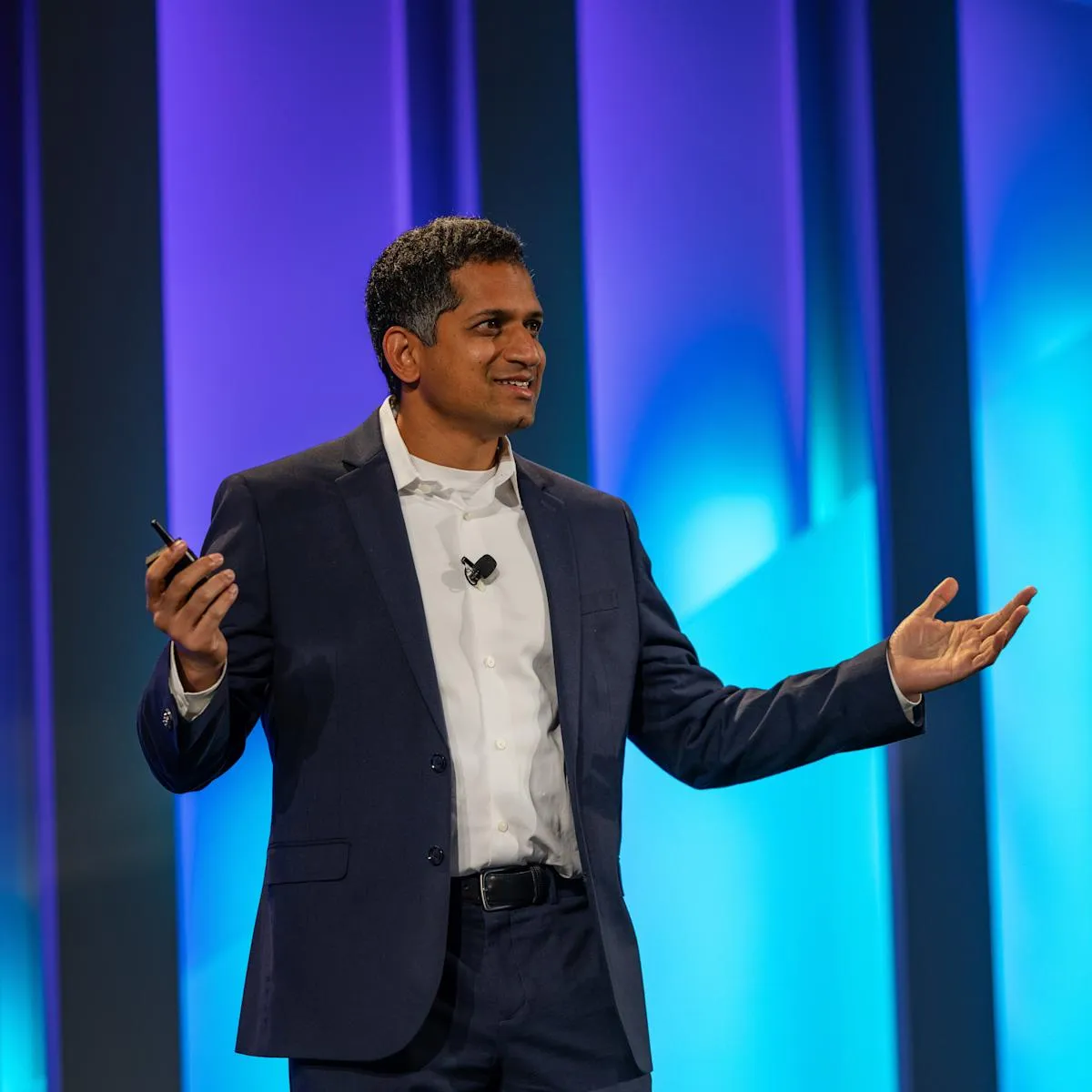
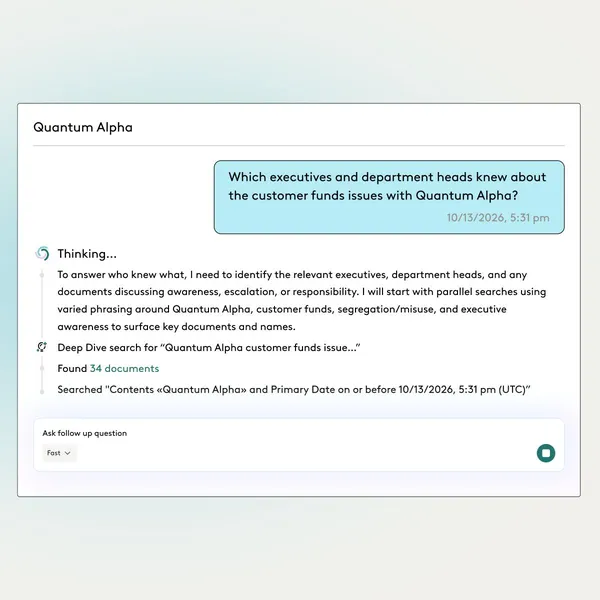
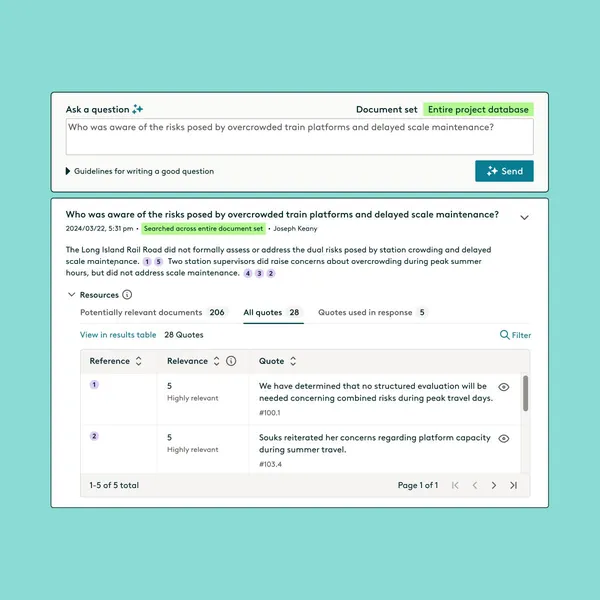
Everlaw CEO AJ Shankar used his keynote at this year's Everlaw Summit to announce the forthcoming public release of Everlaw AI Deep Dive, alongside updates to AI pricing. He told more than 500 legal professionals that generative AI is "transforming the practice of law faster than any prior technology."
- Everlaw CEO AJ Shankar announced the forthcoming public release of Everlaw AI Deep Dive at Everlaw Summit.
- Everlaw also announced AI pricing updates intended to make usage seamless and costs predictable.
- Benesch says Coding Suggestions has performed with more consistency and speed than first-level human reviewers.
- GEICO used custom extractions to evaluate 50,000 contracts for a non-litigation question.
- Everlaw says data sent to model providers is never used for training and is not retained after a query.
AI Deep Dive and pricing changes announced
According to Everlaw, the keynote covered three main themes: customer testimonials about generative AI in litigation, the announcement of the forthcoming public release of Everlaw AI Deep Dive, and updates to AI pricing meant to make usage seamless and costs predictable. The source text does not give a release date or price details for either.
Shankar acknowledged that audiences may feel worn down by AI coverage. "I can understand there's some fatigue," he said. He argued the attention is justified because "the technology continues to advance apace, with new capabilities unlocked every year." He added that the aim of his talks is not to push adoption: "It's to educate you so you can make an informed decision about what's best for you and your organization."
Everlaw's approach to building AI features
Shankar said generative AI is already helping legal teams with document translations, summaries and sentiment analysis, and with first-pass review of thousands of documents in one go. He said the technology is now integrated throughout Everlaw workflows, and predicted that "eventually, ignoring AI is going to feel like ignoring search."
He described the company's development practices as follows:
- All code is developed in-house by a research and development team of nearly 200 people. Shankar said Everlaw has never offshored its engineering and has never acquired another company.
- Data sent to model providers is never used to train their models and is never retained after the query has been answered.
- To limit hallucinations, Everlaw avoids the built-in knowledge of LLMs and instead gives the AI "the four corners of your documents" as ground truth at the time of a question.
- Users can validate output through Bates-numbered citations or direct quotations from the source material.
- AI features are typically beta tested, gathering thousands of items of feedback over many months. "We are much more interested in being the best than being the first," Shankar said.
Benesch: refining Coding Suggestions in Storybuilder
Representatives from Benesch, GEICO and Vorys joined Shankar on stage. Steven Delaney, Director of Litigation Support at Am Law 200 firm Benesch, described how his teams use Coding Suggestions in the Everlaw AI Assistant. According to the source, the feature uses the reasoning capabilities of large language models to speed up review decisions and has shown accuracy that matches or exceeds human reviewers.
Delaney said Benesch uses it for first-pass review, for understanding productions from opposing counsel, and for privilege review. To date, he said, it has performed with more consistency and at a higher speed than first-level human reviewers.
Success depends on attorneys who know the case refining the prompts for each issue. Delaney said they "just need to review five to 10 documents per issue." The litigation support team works with attorneys in Storybuilder Drafts to revise prompts and document the choices and results, with version control. He also urged peers to act early: "Right now, you can actually get ahead of the opposing side by using this technology at this time."
GEICO: a non-litigation use case
Ed Valio, Director of Ediscovery and Records Management at GEICO, described a use outside litigation. His team needed to answer an "unusual question" for the company's contracts group by evaluating tens of thousands of contracts on a short timeline. They uploaded 50,000 contracts into Everlaw and began with custom extractions, an Everlaw AI feature that pulls information such as contract signatories or notice periods from a document set in bulk. Valio then paired that data with high-value search terms. The source text is cut off before the rest of the workflow is described.
Valio said having the full workflow in Everlaw, "with AI in the right places at the right time," made the process simple to execute and let the team move quickly.
What it means for legal teams
The keynote positioned generative AI as a practical part of everyday review and investigation work rather than a standalone add-on. For legal teams, Everlaw's message is that validation tools such as citations and quotations are built in, and that early adopters can gain an edge. The forthcoming AI Deep Dive release and the pricing updates are the next steps to watch, though the source gives no further details on either.