Frédérique Le Roux Studies Bacteria's Natural Enemies to Fight Resistance
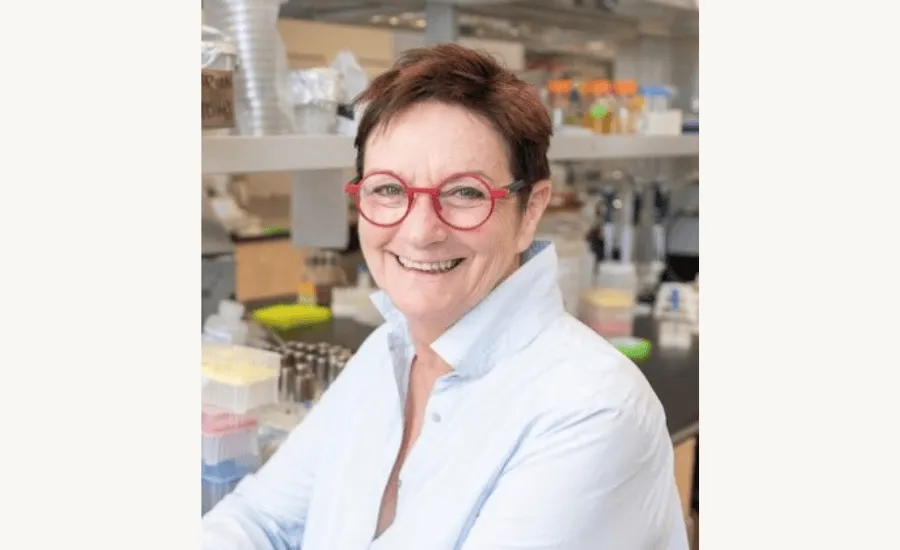
Frédérique Le Roux, an IVADO Professor at Université de Montréal, studies how bacteria and the viruses that kill them evolve together, with the aim of predicting which phages will work against resistant bacteria. According to IVADO, algorithmic tools and AI play a growing role in her work.
- Frédérique Le Roux is an IVADO Professor and Full Professor at Université de Montréal, holding a Canada Excellence Research Chair on microbes in nature.
- Her lab studies vibrios and the bacteriophages that infect them, using a collection of bacteria and phages sampled over several years from the same sites.
- Samples from a Brittany oyster farm in 2017 and four years later contained the same phages and bacteria, an unexpected result.
- The long-term goal is to predict which phages will work against resistant bacteria, supporting phage therapy, with AI refined by each new resistance gene identified.
- She plans to study how climate warming affects vibrio communities in Canada.
Antibiotic resistance as a driving concern
IVADO describes Le Roux as a Full Professor in the Department of Microbiology, Infectiology and Immunology at Université de Montréal. She sees antibiotic resistance as one of the most pressing threats facing modern medicine. Her examples are everyday ones: a toothache that spreads to the brain, or an infection on a prosthesis that no available treatment can clear. Without alternatives, she argues, such situations could become as deadly as cancer.
She holds the Canada Excellence Research Chair dedicated to the ecology, evolution and virulence of microbes in nature. Her research focuses on vibrios, aquatic bacteria that cause disease in animals such as oysters and shrimp. Some species can also cause serious illness in humans.
An arms race between bacteria and phages
Le Roux is particularly interested in bacteriophages, viruses that infect and kill bacteria. Inside an oyster, she says, the dynamic never ends: phages reduce bacterial populations, bacteria develop resistance mechanisms, the phages adapt in turn, and the cycle repeats. She calls this coevolution through an arms race.
She studies this balance in the field, in coastal waters subject to the changing seasons. Her laboratory has built a unique collection of environmental isolates, meaning bacteria and phages sampled over several years from the same sites.
One result surprised the team. In 2017 they collected samples at an oyster farm in Brittany. When they returned four years later, they found the same phages and the same bacteria. According to IVADO, this challenges the idea that bacteriophages necessarily evolve rapidly and unpredictably in nature.
Feeding AI to predict effective phages
The team analyzes the samples with computational tools that compare genomes and identify how bacteria and phages defend themselves and adapt to one another. The long-term goal is to predict which phages will be effective against resistant bacteria, information described as critical to the development of phage therapy.
AI is part of that effort. "Our job, essentially, is to feed AI," Le Roux says, noting that every new resistance or counter-resistance gene identified helps refine prediction systems.
One Health and vibrios as models
Her approach rests on the One Health framework, which recognizes the interdependence of human, animal and environmental health. Pathogenic vibrios have immune defences and coevolve with their phages, and similar mechanisms are found in bacteria that infect humans.
She draws a parallel with medicine: an oyster is efficiently infected by a vibrio only when a herpesvirus weakens its immune system, much as an immunocompromised patient can develop an opportunistic bacterial infection. For this reason, vibrios serve as models. They are more accessible from an ethical standpoint and easier to handle in the laboratory, yet representative of universal biological phenomena.
Career path and next steps
After a PhD at the Université de Lyon, Le Roux worked at several institutions and then led a team specializing in vibrio genomics for thirteen years at the Roscoff Biological Station in France. She moved to Montréal in 2023, drawn by the chance to collaborate with specialists in molecular genetics and microscopy, notably in the department where Yves Brun, Canada 150 Research Chair in Bacterial Cell Biology, also teaches.
She also wants to examine the effects of climate warming on vibrio communities, a phenomenon she plans to study in the Canadian context, where these dynamics remain poorly documented. Her guiding conviction, in her words: "Nature regulates things very well on its own. My job is to try to understand how."