Gong Agent Builder connects revenue signals to sales action
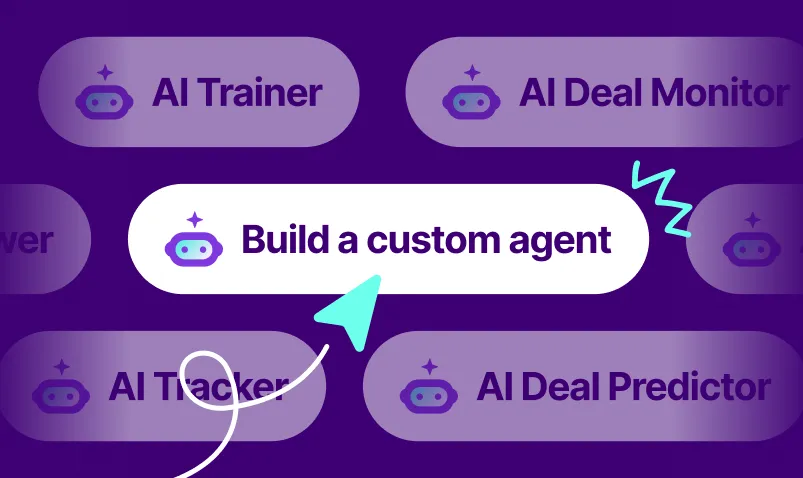
Gong has introduced Agent Builder, a tool that lets revenue teams build custom agents to turn sales signals into actions. The company says the offering combines connected revenue context, governed execution and workflows that place agent output where teams already work.
- Gong Agent Builder creates custom agents for revenue workflows.
- The Gong Revenue Graph connects signals to accounts and opportunities.
- The Revenue Harness adds permissions, guardrails and human review.
- Agents can act through Slack, email, CRM fields, Flows and connected systems.
From buyer interest to a sales motion
Gong describes a workflow in which a buyer shows interest in a product they do not currently use. A custom agent can assess account activity in real time, identify the buyer's interest and timeline, draft outreach based on that information, send a Slack message to the sales representative and create a task for review.
That process is designed to give the representative both context and a relevant next step. Gong says teams can then track whether the signal leads to new opportunities and pipeline, helping them avoid missing potential whitespace that might otherwise remain buried in a conversation.
Gong cites Riskonnect, Inc. as an example. Bryan Seitz, Director of Sales Enablement at Riskonnect, Inc., said: “We built an agent to connect what our buyers are telling us with our broader solution portfolio, helping our sellers see not only what’s already been discussed but also where there may be additional needs or signals pointing to another offering.”
Connected context and controlled execution
According to Gong, the Gong Revenue Graph connects interaction signals with the accounts, opportunities and revenue processes they describe. This allows an agent to relate information from separate interactions to a specific opportunity and its stage. Gong gives the example of a deal where one call sounds positive, while another reveals that a competitor is offering a price 30 percent lower.
Teams can add specialized instructions through reusable Skills, provide documents through agent files and use Model Context Protocol, or MCP, to extend Skills and agents with permitted information from connected systems.
Gong also says its Revenue Harness provides governed access, guardrails, human review, and performance and cost optimizations. Teams can set permissions, define operating conditions and decide where a person remains in the loop. Incremental updates can process only what changed instead of performing a full refresh, while Skills can carry the same specialized process across multiple agents.
Putting agent output into existing workflows
Agent Builder is designed to work alongside Gong Applications, where revenue teams manage their work. Depending on configuration and permissions, an agent can send a Slack message or email, update CRM fields, generate a brief, enrich a contact, start a Flow or act in connected systems.
MCP can extend those capabilities with permitted information and actions from external systems. Gong says an agent that identifies competitive risk on an opportunity could generate a risk brief for a representative, start the next Flow or update the CRM.
The announcement positions Agent Builder as a way to move from agent experiments to business-specific revenue workflows. Within Gong Revenue AI, the agents use the Gong Revenue Graph for context, the Gong Revenue Harness for execution controls and Gong Applications for action. Gong says this structure is intended to create a clearer path between AI investment and revenue outcomes.