Google DeepMind introduces Gemini 4 Hydrogen for faster agentic work
Google DeepMind has introduced Gemini 4 Hydrogen, a model designed for rapid execution across everyday coding, agentic workflows and consumer tasks. The company says Hydrogen brings Gemini 4 to Google AI Studio, the Gemini API, Gemini for business, the Gemini app and Google Search.
- Gemini 4 Hydrogen targets rapid coding and agentic workflows.
- It offers four thinking levels: low, medium, high and xhigh.
- Its 1 million-token context window is priced at $1.50 per million input tokens and $7.50 per million output tokens.
- Google DeepMind says Orchestrator used 24% less quota and finished 19% faster on Terminal-Bench 4.0.
- Hydrogen is being brought to Google AI Studio, the Gemini API, Gemini for business, the Gemini app and Google Search.
A faster model for everyday execution
Google DeepMind positions Gemini 4 Hydrogen alongside its frontier models, Gemini 4 Carbon and Gemini 4 Argon. While those models are intended for deep, long-horizon reasoning, Hydrogen is built to execute tasks quickly across a broad set of workflows.
According to Google DeepMind, Hydrogen surpasses Argon on the Artificial Analysis Intelligence Index at its default high thinking level, scoring 51 compared with 50. It reaches 54 at the highest xhigh setting. The model has four thinking levels, low, medium, high and xhigh, allowing users to trade off reasoning depth, latency and cost.
Hydrogen has a 1 million-token context window and is priced at $1.50 per million input tokens and $7.50 per million output tokens across that window, according to the company.
Orchestrator combines Hydrogen with frontier models
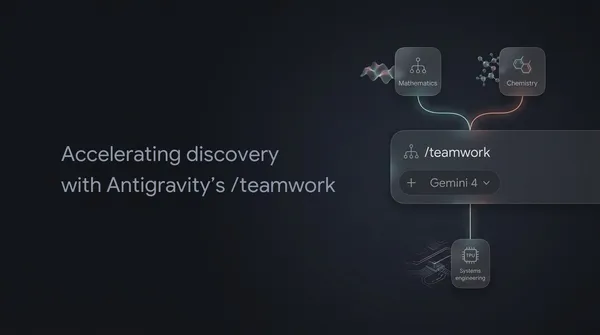
Google DeepMind is also introducing Orchestrator in Google Antigravity. The system can switch between models such as Carbon and Hydrogen during the same session rather than relying on one model for every stage of a task.
In this setup, Carbon can handle architectural decisions or coordinate parallel agents, while Hydrogen can write code, run tests and verify changes. On Terminal-Bench 4.0, Google DeepMind says Orchestrator achieved near-Carbon task success rates while consuming 24% less quota on average and completing tasks 19% faster.
The company also describes Hydrogen as a standalone upgrade for teams moving from Gemini 3.8 Flash. At its high default setting, it completed tasks 2.5 times faster and increased Terminal-Bench 4.1 scores from 18.2% to 57%. Google DeepMind says it also cut fabricated claims by more than 5x and adapted when tool calls failed or searches returned no results.
Coding, multimodal work and consumer assistance
Hydrogen is aimed at iterative repository coding, debugging, research, data analysis and broad codebase navigation. Google DeepMind says it can batch file reading and search calls in parallel, and that partners in early testing saw it run 2x to 2.8x faster than Gemini 3.8 Flash in complex graphs, SQL and data-heavy enterprise workflows, while reducing token usage by 12% to 23%.
The model also supports multimodal work with up to 1 million input and output tokens. The company says it can synthesize PDFs, spreadsheets, charts, audio and recorded video into cited reports and structured deliverables.
For consumers, Hydrogen is available through the Gemini app and Google Search as part of the announced Gemini 4 rollout. Google DeepMind says it follows instructions more closely across multi-turn conversations, uses connected tools more effectively and helps with writing, research, document creation and interactive prototypes. In Google Sheets, the company says Hydrogen generates forecasting outputs over 30% faster than previous models in Sheets canvas.
Google DeepMind: Introducing Gemini 4 Hydrogen