GSMA launches two global challenges for more reliable telecom AI
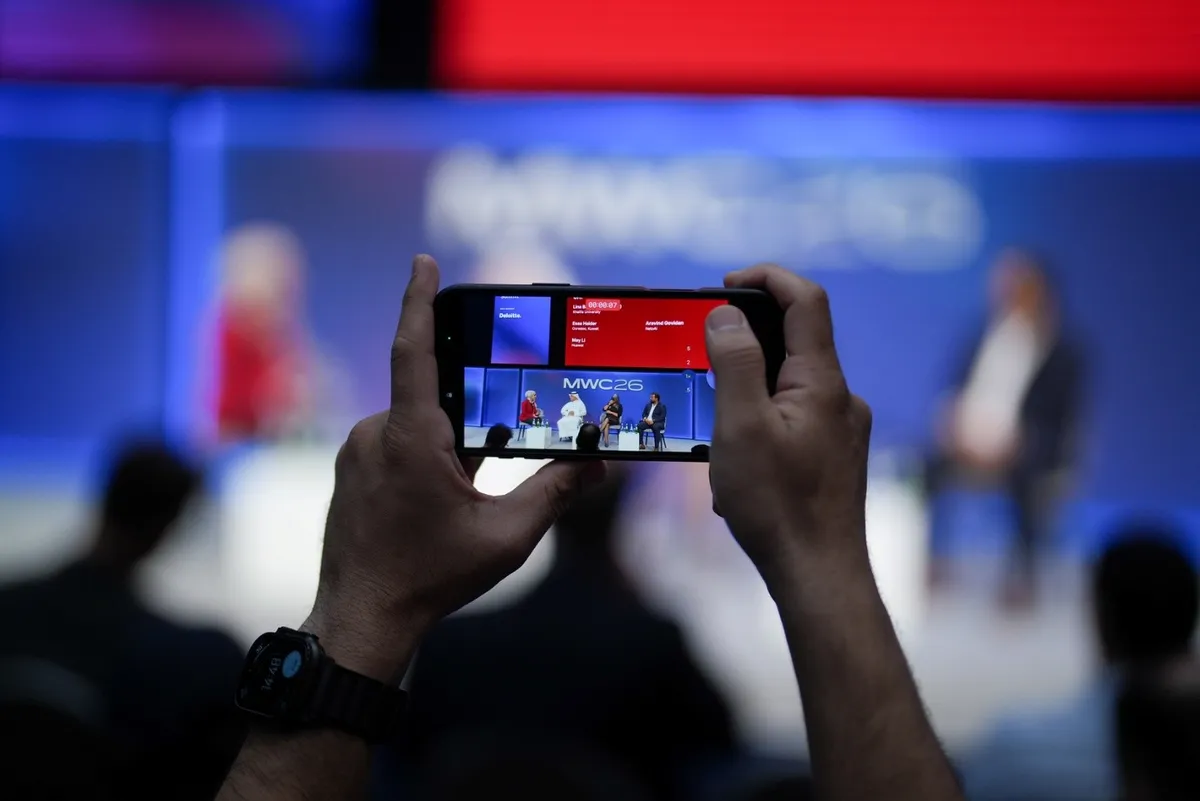
The GSMA’s Open Telco AI initiative has launched two international competitions designed to improve how artificial intelligence retrieves telecommunications standards and handles radio access network engineering tasks. The challenges offer a combined €55,000 in prize money and will recognise winners at MWC27 Barcelona.
- Telco-Retrieve will test AI systems that find and cite telecom standards.
- AI Agents for RAN will use the Giulia simulator for network engineering tasks.
- The two competitions offer €25,000 and €30,000 prize pools.
- Winners will be recognised at MWC27 Barcelona.
- Judging will include accuracy, efficiency, reasoning and security.
Making telecom standards easier for AI to use
The GSMA-led Telco-Retrieve Challenge targets a central problem in telecommunications: technical knowledge is spread across large, frequently updated collections from organisations including 3GPP, CAMARA, ETSI, GSMA, ITU, O-RAN and TM Forum.
Participants will develop an open, vendor-neutral retrieval-augmented generation pipeline. The system will connect AI-generated answers to relevant technical source documents, with a particular focus on 3GPP specifications. Competitors will use provided document collections, question sets and supporting resources to test their approaches.
The challenge is intended to advance systems that can find relevant information accurately, generate answers that remain faithful to the source and trace those answers back to their origins. The competition has a €25,000 prize pool, and selected participants will have the opportunity to present their solutions at MWC27 Barcelona.
Testing AI agents on radio network problems
The AI Agents for RAN Challenge focuses on whether AI agents can reason through practical radio access network tasks rather than simply produce recommendations. Participants will build agents that can use tools and investigate network scenarios through Giulia, an open-source radio network simulator developed by Universitat Politècnica de València.
The tasks include fault diagnosis and troubleshooting, outage impact analysis, radio coverage and configuration optimisation, network site placement, and energy management. Agents must investigate network conditions, test possible interventions and assess how changes affect performance across the wider network.
GSMA, ITU and IEEE will host a dedicated webinar on 18 November 2026 to introduce the challenge, demonstrate Giulia and explain how entries will be evaluated. The competition offers a €30,000 prize pool.
A test of trust, accuracy and efficiency
The challenges were developed in collaboration with GSMA, ETSI, IEEE, ITU and Huawei. They are aimed at telecom operators, AI researchers, developers and startups working on systems that could help design, operate and manage telecommunications networks.
According to ITU AI for Good, both competitions will assess solutions on accuracy, efficiency, reasoning capabilities and security. These criteria reflect the risks of using AI in engineering workflows, where an incorrect interpretation of a technical specification can affect interoperability.
By combining shared resources, practical use cases and verifiable evaluation frameworks, the competitions give researchers and industry participants a way to test telecom AI against defined tasks. The source says the winners will be recognised at a dedicated awards ceremony at MWC27 Barcelona, creating an opportunity for collaboration among operators, researchers, standards organisations and technology providers.
ITU AI for Good: Advancing AI for telecommunications: Two global challenges to make standards more accessible