Harvey's LAB: USCL tests whether AI models can write litigation briefs
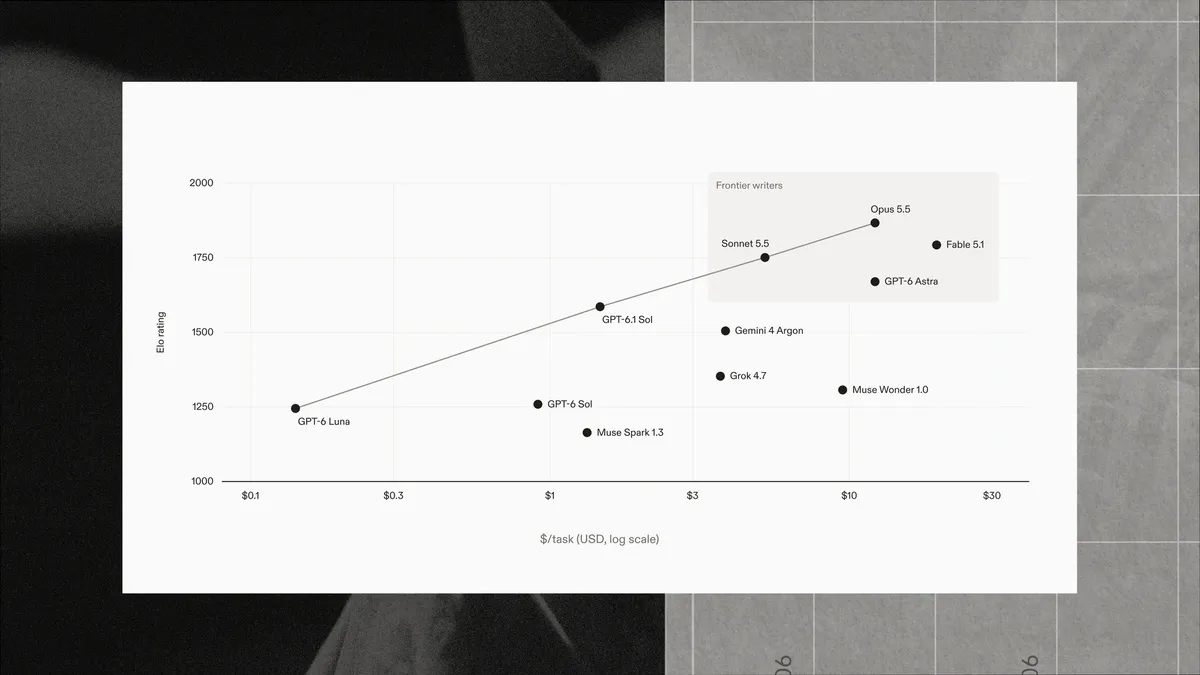
Harvey has introduced LAB: United States Case Law (LAB: USCL), an evaluation framework that tests whether frontier models can research and draft litigation briefs end-to-end using real case records. According to Harvey, a small group of frontier models can now write complete first-draft briefs in a single shot with no attorney guidance, though the output still shows a long tail of failure modes.
- Harvey introduced LAB: USCL, an extension of Legal Agent Bench for U.S. case law.
- Models research and draft litigation briefs from real federal case records built from Free Law Project data.
- Harvey says a small group of frontier models can write complete first-draft briefs in a single shot, with a long tail of failure modes remaining.
- Environments are kept only if more than 95% of the filed brief's case citations match opinions in CourtListener.
- State courts and the U.S. Supreme Court are left for future expansions.
What LAB: USCL measures
LAB: USCL is an extension of Harvey's Legal Agent Bench. Harvey says it adds new approaches for understanding model behavior: the environments are built from real, public data collected by Free Law Project, and model-written briefs are evaluated head-to-head.
Harvey reports that the briefs produced by the best models are "substantially closer to the high bar for filing with a court" and mark a substantial advance on a task that demands complex legal reasoning and advocacy. The company also says it plans to make research in this area more accessible in partnership with Grubel AI.
Why brief writing is a hard test
A brief is the written advocacy a party files to persuade a court to grant a contested motion. Harvey describes brief writing as one of the most complex tasks in litigation, sometimes requiring a team of lawyers multiple weeks. An agent doing the same work has to complete three steps:
- Understand the state of the case. This means reviewing the docket, the official record of filings and rulings, which in complex cases can span thousands of filings.
- Research case law. The agent must find relevant past opinions and read them against the broader body of precedent, since later decisions can narrow, modify or invalidate an earlier one. A brief that relies on an opinion a higher court has rejected misstates the law.
- Write the brief. The agent must synthesize the research, choose which arguments to make and which to leave out, follow strict conventions on length and structure, and keep every citation to the record and case law accurate.
Harvey stresses that the bar is high because a brief is filed on a public docket. The signing attorney certifies that existing law supports the arguments and that factual claims have evidentiary support, and lawyers owe the court a duty of candor, including disclosing directly adverse controlling authority. Mistakes can lead to sanctions, the client being held to the brief's positions, or an argument being lost for good, including on appeal.
Building environments from real dockets
For each task, Harvey selects a brief actually filed in court and asks the model to write a brief for the same party, on the same motion or legal issue, at the same point in the case. The environments are sampled from federal court dockets available through PACER. Because PACER charges per page, the pipeline draws from RECAP, Free Law Project's community-built archive of PACER filings. Coverage in RECAP can be uneven, so Harvey filters for dockets that contain a filed brief and the filings needed to give that brief context.
Harvey notes that a docket is not a complete record. Most discovery, such as deposition transcripts, is never filed unless attached to a motion, and sensitive material may be sealed or redacted. The model therefore gets enough to understand the case, but not everything the lawyer had.
The team then extracts all case citations from the filed brief and uses agents to locate the cited opinions in CourtListener, Free Law Project's database of more than 8 million opinions. An environment is kept only if more than 95% of the citations in the lawyer's brief match opinions available there, so the model works from substantially the same case law the lawyer used.
State courts and the U.S. Supreme Court do not use PACER, and Harvey lists them as areas for future expansion.
What it means
LAB: USCL gives a way to measure legal AI against real filed work rather than synthetic tasks. Harvey's early finding is that a few frontier models can now produce complete first drafts unaided, but the remaining failure modes show why a brief is ready to file only when every citation, characterization and strategic choice can withstand scrutiny.
Harvey: Extending Legal Agent Bench to U.S. Case Law