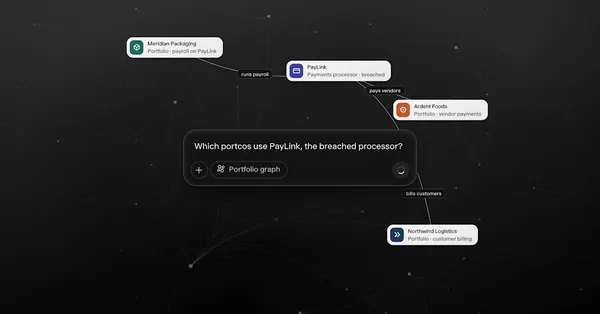
Hebbia says finance teams are replacing email attachments with live apps
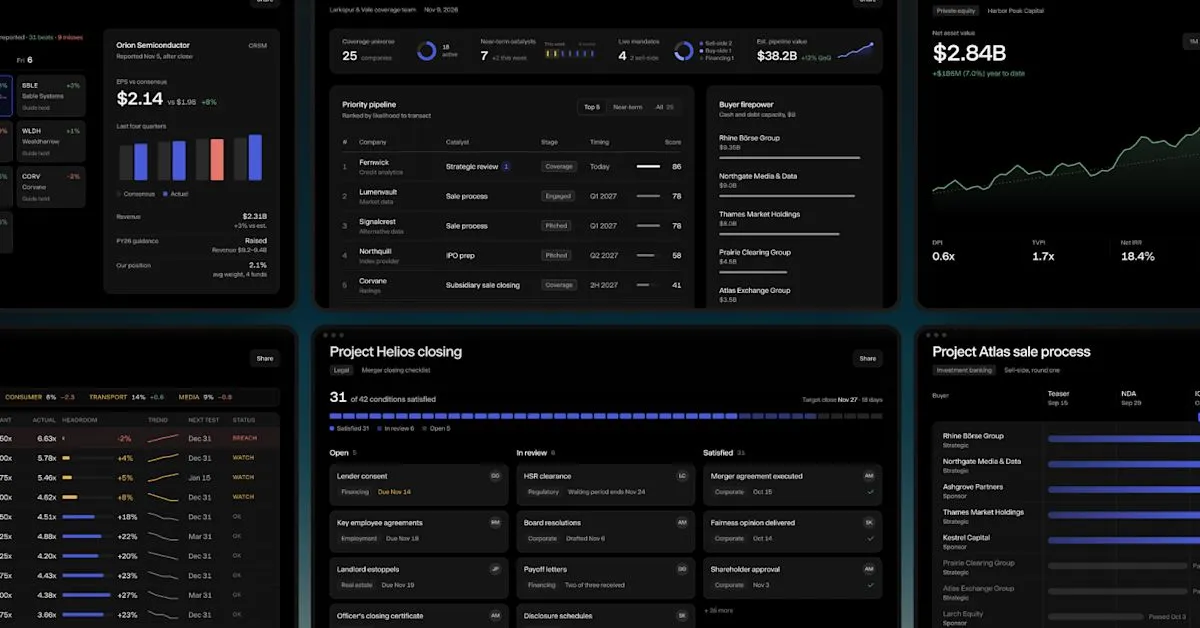
Finance firms are building applications in Hebbia to replace static decks, spreadsheets and email attachments with workspaces connected to company data and access controls. Hebbia says more than half of active firms built an app in October, as usage increased after the launch of Max.
- 59% of firms on Hebbia built an app in October.
- Since Max launched, weekly app builders doubled.
- Customers create 3.1x as many apps each week.
- Apps are shared internally at 10x the rate of traditional decks and documents.
- More than half of active firms built an app in October.
Finance work still depends on files
Banks and investment firms have invested billions in systems for information management, transaction execution and risk monitoring, but Hebbia says much of the work still takes place in Excel, PowerPoint and email.
A typical process can take weeks. A team works on an opportunity, puts its findings into a presentation, circulates the deck for comments and revises it half a dozen times before sending it to a client. Further questions can trigger model changes and another round of revisions.
Hebbia says customers are responding by building their own applications on the platform. In October, 59% of firms on Hebbia built one. Since Max launched a couple of months ago, twice as many people build apps each week, and they create 3.1x as many, according to the company.
Connected applications replace repeated consolidation
Until recently, a team seeking an internal application generally had to ask its technology department to build one. Hebbia says that process involved a queue, a business case and a long wait, while AI can now help a professional produce a useful app in minutes.
The company says an enterprise application also needs to run in a permissioned, access-controlled environment. Its applications remain connected to the firm’s data and follow existing access controls, unlike documents and decks that circulate as attachments.
Hebbia says customers share these applications internally at 10x the rate of traditional decks and documents. They now account for roughly half of all artifacts published to teams. Users also continue revising them, downloading results and reshaping the output for their own needs.
One leading private equity investor uses an app to share portfolio company updates for board preparation. The app refreshes as new information arrives, so the process does not require another attachment.
Live views for pipelines, portfolios and clients
Hebbia describes a coverage team preparing for a weekly pipeline meeting. Client activity may sit in a CRM, recent conversations in meeting notes and potential transactions in deal folders. Instead of consolidating those sources into a spreadsheet each week, an application can bring them into a live pipeline view where the team tracks developments and updates next steps.
The same approach applies to portfolio monitoring. Financial results, research and management commentary can be brought together so investment teams can see what changed, revisit assumptions and record decisions alongside the numbers. Comments, decisions and updates persist in the shared work.
For clients, Hebbia says an application can provide a controlled view of analysis, allowing them to ask questions and return as the information changes. The company expects attachments to remain useful when a fixed record is needed, but says applications are better suited to work that continues to evolve.
Hebbia’s message is that finance teams can start with a workflow they rebuild every week and turn it into an application. The company says more than half of active firms built one in October, within months of Max launching.
Hebbia: Finance is Outgrowing the Email Attachment