Huawei launches LUTERRA S2 all-in-one home energy system
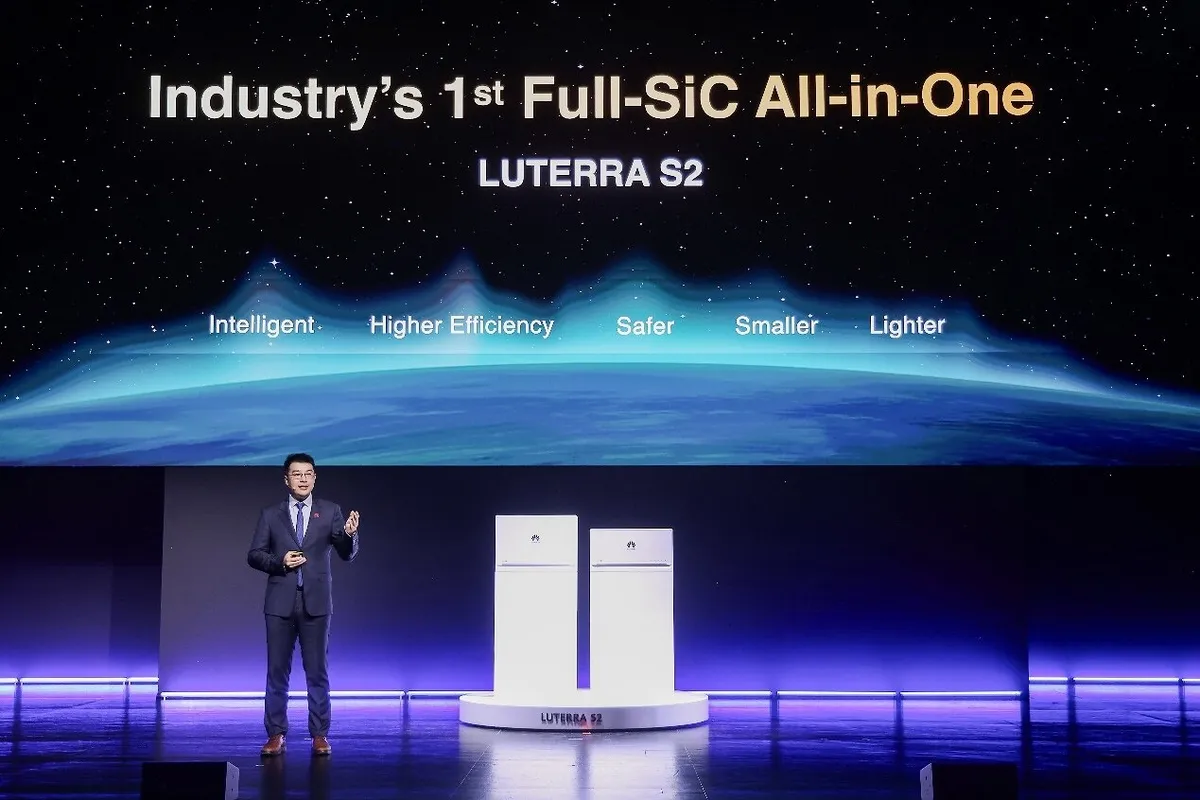
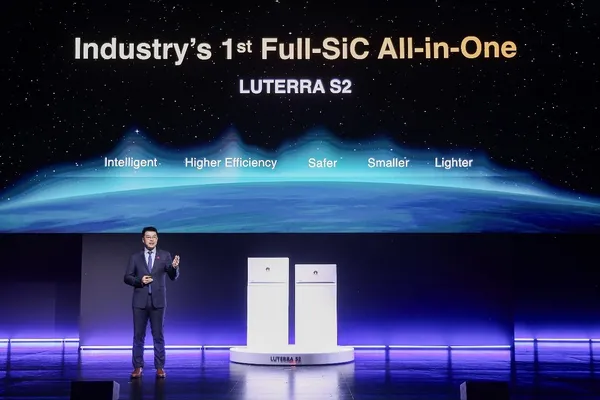
Huawei has launched HUAWEI LUTERRA S2, an all-in-one residential energy system combining a hybrid inverter, energy storage and AI-powered energy management in a stackable unit. The system is designed for installation and commissioning in minutes, with single-phase and three-phase configurations.
- LUTERRA S2 combines an inverter, storage and AI energy management.
- It is available in single-phase 3-10 kW and three-phase 5-20 kW configurations.
- Huawei claims maximum efficiency of 99% and noise below 29 dB.
- The system supports up to 60 kW of parallel inverter capacity and 336 kWh of battery capacity.
- Huawei says it received TÜV Rheinland's highest-level Safety Mark certification.
A compact system for home energy
Huawei announced LUTERRA S2 on November 9, according to the PR Newswire release dated November 12. The system is available in single-phase configurations from 3 to 10 kW and three-phase configurations from 5 to 20 kW.
Huawei says LUTERRA S2 is the industry's first all-in-one residential energy system built on its proprietary full-SiC, or silicon carbide, architecture. The company says the design combines a hybrid inverter, storage and energy management in one stackable unit, addressing the convergence of solar power, energy storage, electric vehicle charging and home energy management.
The system uses Huawei's full-SiC architecture and ANPC topology, with a claimed maximum efficiency of 99%. Its technical specifications include support for up to three inverters in parallel, for a maximum of 60 kW, and up to 48 battery packs in parallel, for a maximum of 336 kWh.
AI coordinates energy use
Huawei's AI Energy Management 2.0 platform is designed to coordinate photovoltaic systems, energy storage, EV charging, heat pumps and virtual power plants. It uses weather forecasts, electricity prices, household loads and energy status to plan operations and optimize the value of generated, stored and consumed electricity, according to the company.
For homeowners, an AI Assistant provides conversational interactions intended to simplify energy decisions. For installers, AI 3D modeling can identify roof structures and installation environments during planning and design. Huawei also highlights AI-powered diagnostics and remote support for operation and maintenance.
The system is designed for quiet operation through fanless natural cooling, with noise below 29 dB. Huawei says it delivers 20 kW-class power, has a design lifespan of more than 15 years and can provide up to 5.0 MWh/kWh of lifetime usable energy through built-in energy optimizers.
Safety testing and system specifications
LUTERRA S2 includes independent protective isolation structures for each battery cell, localized non-propagation design and an intelligent smoke-duct system for directional pressure relief, smoke evacuation and cooling. Continuous AC and DC terminal temperature detection is designed to identify risks at critical connections.
Huawei says the system has been validated against relevant EU Battery Regulation requirements and complies with key international standards, including IEC 63027 AFCI. It underwent TÜV Rheinland testing that included a cell thermal runaway test, a 20-minute fire test at 1,000°C and a 20% hydrogen explosion test, as well as UL 9540A validation.
The technical specifications also list backup switchover under 10 ms, support for up to 20 kW of off-grid load, an operating range of, 25°C to +60°C, IP66 protection and up to C5-M corrosion protection. Huawei says LUTERRA S2 received TÜV Rheinland's highest-level Safety Mark certification. The company has provided further information on its product website.