Human Friendly Robotics Signs $3.55M Tiling Deal With Foley Tile
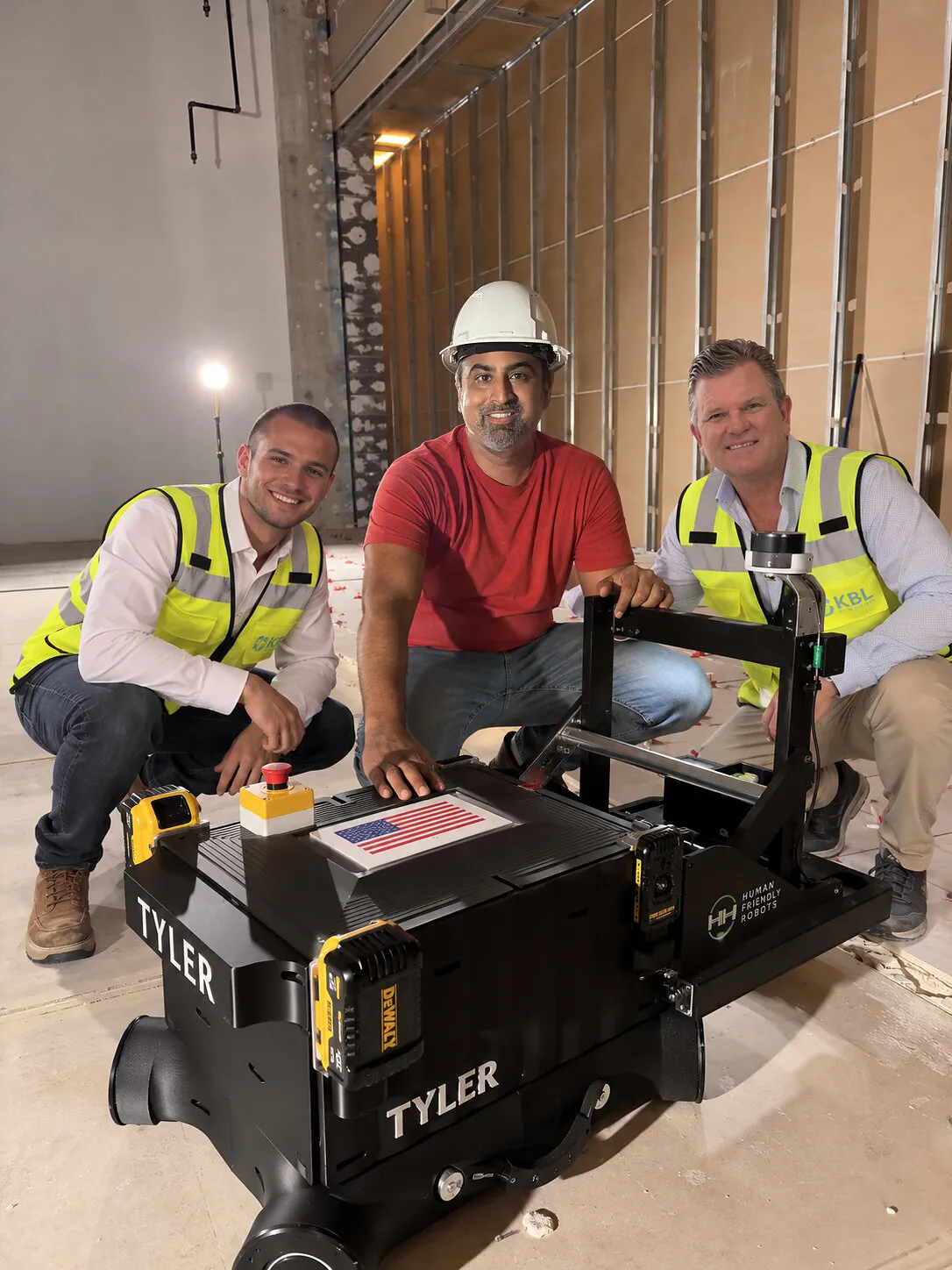
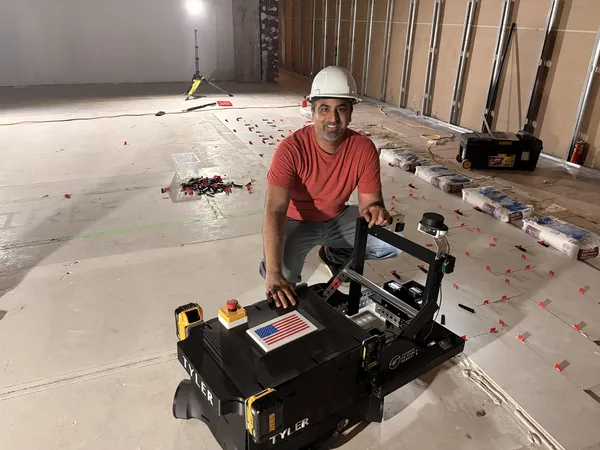
Human Friendly Robotics (HFR) has signed a three-year, $3.55 million robotic tiling contract with Foley Tile, a Tucson, Arizona contractor. HFR will deploy its Tyler robots alongside Foley Tile's installers in Arizona and beyond, according to the company.
- HFR signed a three-year, $3.55 million robotic tiling contract with Foley Tile of Tucson, Arizona.
- Tyler robots will work alongside Foley Tile installers in Arizona and other regions.
- Pricing is per square foot with no equipment to buy, according to HFR.
- At Plaza Las Américas in Puerto Rico, Tyler and the crew reached eight times the human benchmark pace, per the company.
- Tyler has worked dozens of jobsites in NY, NJ and Puerto Rico.
What the contract covers
The agreement, announced on Oct. 22, 2026, runs for three years and is worth $3.55 million. Foley Tile is led by father-and-son team Jerry Foley and Brent Foley. HFR says it will place its Tyler robots with the firm's installers on jobs in Arizona and in other regions.
Foley Tile has historically worked close to home in southern Arizona. According to the announcement, Tyler takes over repetitive tile placement, so a single skilled crew can commit to larger projects both at home and far from Tucson, on a schedule the company can guarantee.
HFR describes the commercial model as per-square-foot pricing with no equipment to buy. The robot travels with the crew.
Taking on work outside the region
Jerry Foley, owner of Foley Tile, said the firm has had to decline big jobs away from home. "We don't like turning down large work outside our region," he said. "Tyler changes the math. Recruiting in a city where we don't know anyone becomes a non-issue, and the robot works at a pace I can plan around."
HFR points to a wider labor problem. The release cites a survey in which 42% of AGC and NCCER surveyed construction firms reported project delays because of worker shortages. The idea is that the same experienced Tucson installers, multiplied by robots, can cover out-of-region work without local hiring.
Foley Tile previewed Tyler's pilot work last summer at Plaza Las Américas in San Juan, Puerto Rico, which the release calls the largest shopping mall in the Caribbean. There, according to HFR, Tyler and the crew achieved eight times the human benchmark pace. The company says Tyler has already worked dozens of jobsites in NY, NJ and Puerto Rico.
How Tyler divides the work
According to HFR, Tyler handles the repetitive placement work: kneeling, bending and lifting. Installers keep the cuts, edges, finishing and quality control. The company says the robot holds its pace as workers tire late in a shift, can support overnight work, and requires no technology background to operate.
HFR CEO Shamoon Siddiqui framed the deal as a step toward a larger goal. "This is a small step toward a Built World of the future," he said, describing a day when contractors scale physical labor on demand and finish on time and on budget. He called this vision "the Autonomous GC." He also argued that a tool like Tyler could ease strain on workers, and said it "could draw a new generation into the skilled trades."
What it means for contractors
For Foley Tile, the contract is a way to widen its reach without adding to headcount in unfamiliar cities. Foley says a predictable, definite schedule lets the firm accept jobs it used to walk away from. The company, which serves commercial and residential clients across southern Arizona, is now expanding to projects nationwide.
For the wider trade, the deal is an example of a robotics vendor selling capacity as a service rather than equipment. The performance and labor claims come from HFR and Foley Tile, and the release does not include independent verification.