Inworld TTS 2 Arrives on Novita AI with Voice Cloning and Steerable Delivery
Novita AI has made Inworld TTS 2 available as a synchronous speech generation API, letting developers steer how much a voice varies, clone a voice from a short sample and get word- or character-level timestamps. A single POST request returns base64 audio in the same response, billed per million characters under SKU INWORLD_TTS_2.
- Inworld TTS 2 is live on Novita AI as a synchronous API with model ID inworld-tts-2.
- deliveryMode offers STABLE, BALANCED (default) and CREATIVE settings; temperature is ignored.
- Voice cloning uses 10 to 30 seconds of audio, and the cloning call is not billed.
- Output supports eight encodings plus WORD or CHARACTER timestamps.
- Billing is per million characters under SKU INWORLD_TTS_2, with Chinese characters counted as two; requests are capped at 2,000 UTF-16 code units.
What Inworld TTS 2 offers on Novita AI
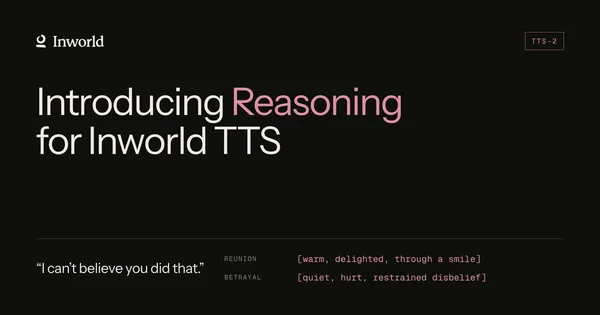
Inworld TTS 2 is Inworld AI's text-to-speech model for expressive, low-latency speech. On Novita AI it runs under the model ID inworld-tts-2. According to the post, Inworld's documentation places it in the Realtime TTS-2 family. The API uses a native Inworld protocol rather than an OpenAI-compatible wrapper, so request bodies use fields such as voiceId, deliveryMode and audioConfig.
Synthesis and cloning are separate synchronous calls, so there is no task ID to poll. Speech is generated through POST /v3/inworld-tts-2/tts/v1/voice, and cloning goes through POST /v3/inworld-tts-2/voices/v1/voices:clone. Each request is limited to 2,000 UTF-16 code units, and the decoded audio can be up to 16 MB.
Delivery modes and voice cloning
The main control is deliveryMode. Novita describes three settings:
- STABLE favors consistent delivery across sessions, which suits long-form narration and documentation.
- BALANCED is the default when the field is omitted and is suggested for conversational agents.
- CREATIVE widens emotional range, so repeated lines produce more distinct takes.
The temperature parameter is accepted but ignored on this model, which makes deliveryMode the supported way to trade consistency for expressiveness.
Voice cloning takes a displayName and one or more voiceSamples, each carrying base64 WAV or MP3 audio. Novita recommends 10 to 30 seconds per sample and truncates anything longer. The response returns a voice.voiceId that can be passed directly into synthesis requests. The cloning call itself is not billed. Language detection is automatic if languageCode is omitted or set to auto, and an optional removeBackgroundNoise setting can strip noise, though the documentation warns it can reduce quality on already-clean audio.
Two limits matter for production. Cloning is rate limited more strictly than synthesis, so batch onboarding should back off on HTTP 429. Cloned voice IDs are also shared among all callers using the same API key, and the system does not record who created which voice. Multi-tenant products therefore need their own ownership layer.
Output formats, timestamps and pricing
The audioConfig.audioEncoding field accepts LINEAR16, MP3, OGG_OPUS, ALAW, MULAW, FLAC, PCM and WAV, with MP3 as the default. Sample rates range from 8,000 to 48,000 Hz, and speakingRate can be set between 0.5 and 1.5, with 1.0 as the default.
For video and avatar work, setting timestampType to WORD returns start and end times per word, while CHARACTER returns alignment at character level. According to the post, this is the metadata a subtitle renderer or lip-sync pipeline needs, delivered with the audio rather than through a separate forced-alignment step. Timestamps enlarge every response, so they should be requested only when needed. Options such as applyTextNormalization and enhanceGeneration are also available, and the post advises testing them on real scripts because normalization changes pronunciation and character counts.
Billing is per million characters counted from the text field, with Chinese characters counted as two. The post does not state a dollar rate and points readers to the model page for the current price.
Where it fits and where it does not
Novita suggests Inworld TTS 2 for character dialogue and game NPC voices, audiobooks and long-form narration, video and avatar pipelines that need timestamps, and products that already have a short recording and want cloning without a separate enrollment service.
It lists clear cases to avoid. The endpoint does not stream, so it is a poor choice if first-audio streaming is part of a latency budget. Chapter-length scripts must be split and stitched by the developer because of the 2,000 UTF-16 code unit cap. Teams needing strict tenant isolation on cloned voices, or working with very short or studio-clean samples, should also be cautious.
For developers, the practical takeaway is that one synchronous call can cover narration, character voices and caption-ready output, provided the length, streaming and voice-sharing limits fit the product.