JFrog Says Black October Exposed the Limits of Threat Intelligence
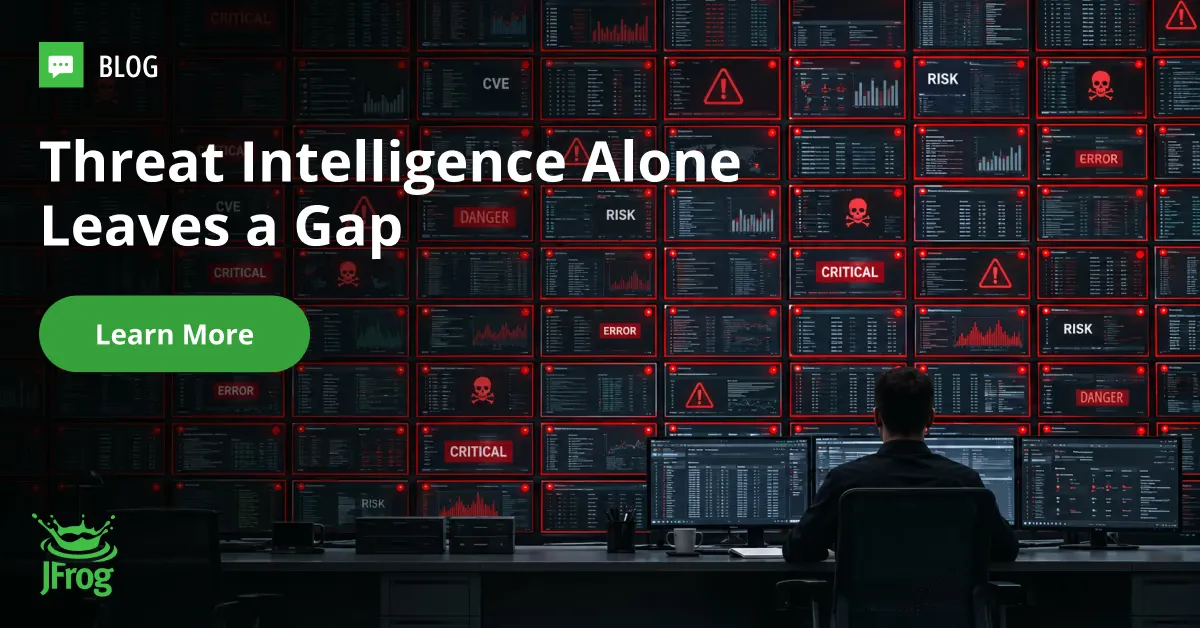
JFrog says a wave of security incidents in October 2026 showed that vulnerability information alone cannot help organizations respond quickly enough. The company argues that teams need a precise view of their software environments and trusted fixes that can be applied within hours.
- JFrog says October 2026 incidents exposed a gap between threat intelligence and remediation.
- The company counted 36,952 CVEs in Q3 2026, compared with 11,725 in Q3 2025.
- A Cloud Security Alliance survey found 9% remediate critical or high-severity production flaws within 24 hours.
- JFrog Threat Hub matches security findings and advisories with scanned artifacts.
- JFrog promotes zero-touch remediation aimed at patching in hours rather than days.
Black October highlighted a remediation bottleneck
In a blog post dated November 16, JFrog described a single week in October during which security teams faced multiple serious incidents. The events included a certificate authority failure, critical PHP flaws disclosed after a broken embargo, the compromise of the open-source AI gateway LiteLLM, and thefts of customer secrets from developer platforms.
Industry insiders began calling the period “Black October,” according to JFrog. The company said the incidents exposed a common problem: security teams have access to vulnerability information, but often lack quick answers about what is affected in their own environments and how to fix it.
JFrog CEO Shlomi Ben Haim said: “The companies that come through well are the ones that know exactly what they are running and can act within hours vs. days.”
More vulnerabilities, faster exploitation
JFrog identified three pressures making vulnerability response harder: volume, exploitability and attacker speed. Based on its count of records in the NIST National Vulnerability Database, JFrog said 36,952 CVEs were published in Q3 2026, compared with 11,725 in Q3 2025, as of November 16, 2026.
The company also cautioned that a severity score does not show whether a vulnerability applies to a particular environment. Triage based only on the number of findings can consume limited security resources without identifying the issues that require immediate action.
A Cloud Security Alliance survey of more than 900 security leaders found that 9% of organizations remediate critical or high-severity production vulnerabilities within 24 hours, while 74% take between one and seven days. JFrog said attackers can use AI to accelerate exploitation, combine lower-severity findings and make repeated automated attempts until an unpatched system provides an opening.
JFrog argues that the traditional disclosure process was built around human review cycles and cannot match automated discovery and exploitation at scale. Patch providers have emerged to supply signed, backported fixes for the exact software versions used by enterprises, sometimes ahead of public disclosure.
JFrog promotes exposure matching and zero-touch remediation
JFrog said threat intelligence describes the outside world, while organizations also need to understand their own software environments. Public databases can trail events, and the company said NIST enriched only a subset of CVEs as of October 2026. It also said PHP2Shell was being probed days before patches shipped.
Its JFrog Threat Hub feature, part of JFrog Xray, combines JFrog Security Research findings and vetted external advisories with scanned artifacts. JFrog says this allows a published threat to be matched to an organization’s environment in one step.
The company recommends inventories covering source code, packages, container images, AI models and agent tooling. JFrog Artifactory, it said, can serve as a system of record for binaries, containers, AI models and MCP server packages. Artifactory can also ingest fixes from supported partners, while JFrog Security applies a selected fix according to customer policy and context and produces a signed evidence chain for audit reviews.
JFrog describes the intended result as a self-healing software supply chain and zero-touch remediation aimed at helping customers patch in hours rather than days. The company said branches past their end of life still require migration as the durable fix. For users, the proposal shifts the focus from receiving a disclosure to identifying exposure, applying a trusted fix and proving that remediation worked.