Kilo Cloud Agents Add Inline Diff Comments and Shared Branches
Kilo has updated its Cloud Agents with a diff viewer that accepts inline comments, which are sent back to the agent as a review. The update also lets several chats work on the same branch and adds sandbox status, a terminal tab and folders for sessions.
- Cloud Agents sessions now include a diff viewer where users can comment inline on changed lines.
- Comments are collected into a review that can be sent to any chat on the same worktree.
- Several chats can work on the same branch or git checkout at once, each with its own context.
- A sandbox status button shows sleeping or active state, provider, sandbox type, vCPU and memory.
- Terminal tabs and session folders are included, and the features are live for all Cloud Agents users, per Kilo.
Comment on the diff, send it back as a review
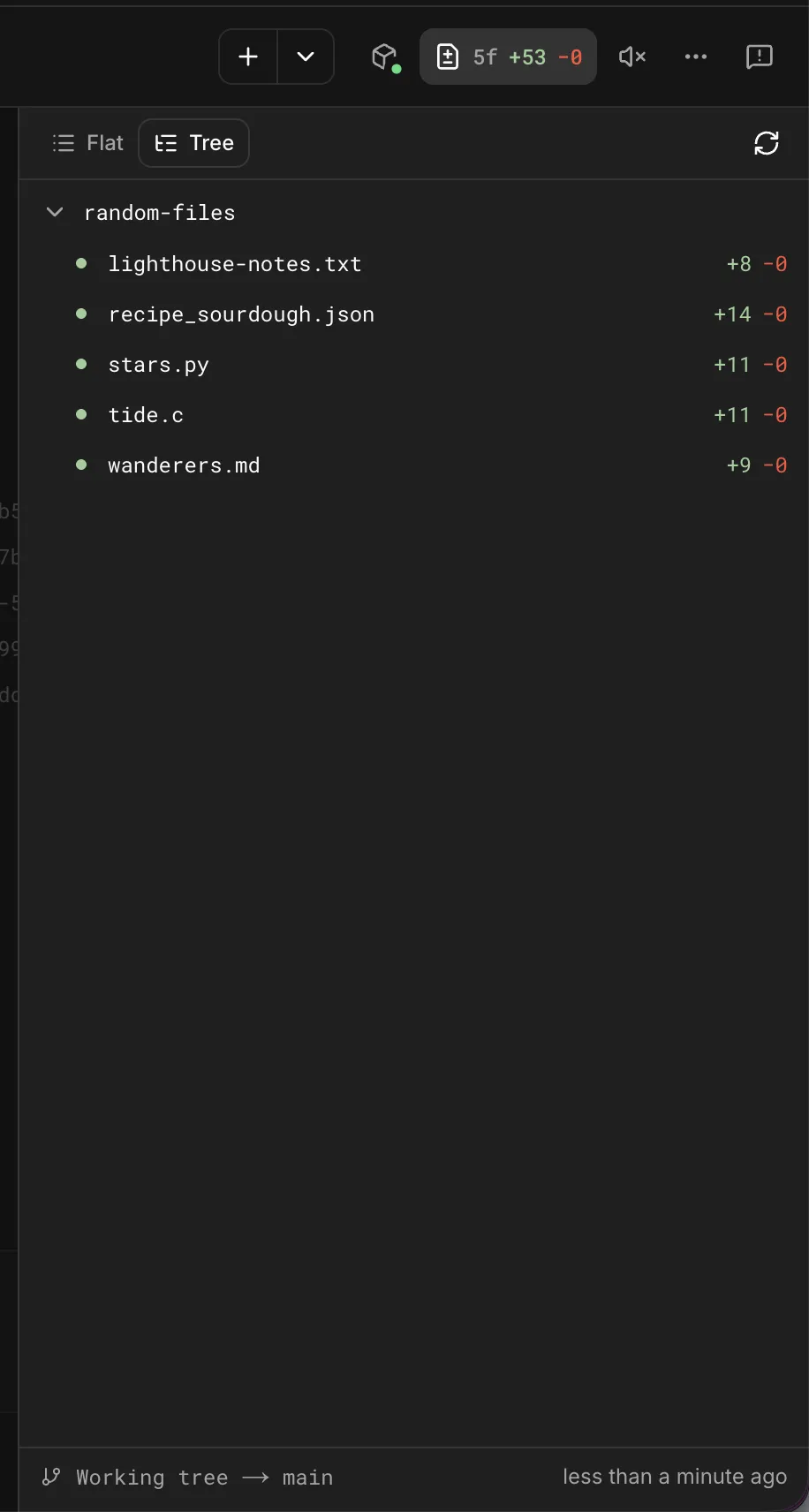
Every Cloud Agents session now includes a diff viewer, according to Kilo. It lists all files changed on the branch, and selecting a file opens its full diff. The file list shows a tree view with line counts per file.
Users can comment directly on the diff, for example on lines 4-6. Those comments are collected into a review that can be sent to whichever chat on that worktree should act on it. A review panel shows the pending comments before sending, and the review arrives in the chat as a single card showing the file and comment count.
Kilo says the agent sees the note on the exact line that was flagged, rather than a general instruction such as "fix the auth logic." For people who use Cloud Agents to run reviews on their own PRs, the company says this closes the loop: see the change, mark the problem, send it back, with no copy-pasting of line numbers into the chat.
Several agents on one branch
Multiple chats can now point at the same branch or git checkout and work at the same time. Kilo gives the example of planning a change in one chat, saving the plan to a file, and opening a second chat to implement it, both live on the same branch.
Each chat keeps its own context, but all work against the same code. According to Kilo, this suits tasks that do not fit into a single conversation: one session can draft the architecture, another can handle implementation, and a third can stay open for a narrower fix, all in parallel without the chats interfering with each other's state. The company's screenshot shows three tabs on one branch: two chats and a terminal.
Sandbox status, terminal and folders
A new status button shows whether a session's sandbox is sleeping or active. It also lists the specs: provider, sandbox type, vCPU and memory. The example in Kilo's post reads "Active, Cloudflare, shared, 4 vCPU / 12 GiB." The company says this helps when several sessions are running and it is unclear which are working and which are idle.
Each Cloud Agents session also has a terminal tab, a direct line into the sandbox where the agent runs. Users can run a command, check a log or inspect the environment without leaving the session or pulling the branch down locally.
Sessions can now be organized into folders, which can be given a color to tell them apart at a glance. Kilo points to teams that use Cloud Agents as a coordination layer, with one agent per PR or one per review angle, as the case where folders keep the session list manageable. Grouped sessions appear in the sidebar.
What it means for users
Cloud Agents let users run Kilo without a local machine, and this update adds more ways to review and steer the agent from within the session. Kilo says the features are live now for everyone using its Cloud Agents. More information is available at kilo.ai/cloud, and users can get started at app.kilo.ai/cloud.
Kilo Code: Cloud Agents Can Now Take Inline Feedback