KRAFTON's Ludo Robotics Unveils Ludi 0.2 for Socially Aware Robots

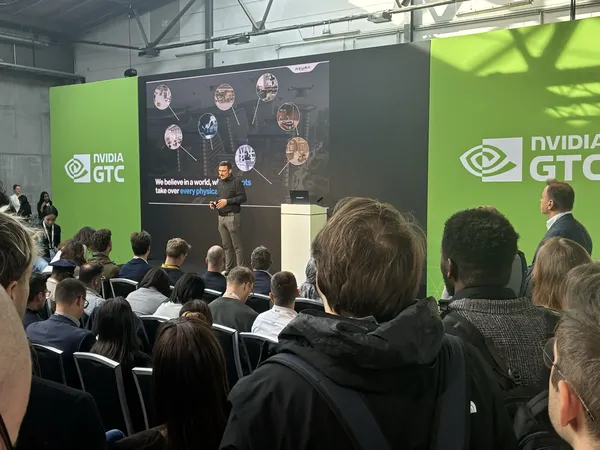
Ludo Robotics, the robotics subsidiary of PUBG: BATTLEGROUNDS maker KRAFTON, has presented Ludi 0.2, an updated robotic intelligence system built to help robots interpret human intent and respond to feedback. The company showed it at the 2026 Bay Area Robotics Symposium (BARS) at UC Berkeley.
- KRAFTON subsidiary Ludo Robotics presented Ludi 0.2 at the 2026 Bay Area Robotics Symposium at UC Berkeley.
- Ludi 0.2 targets social intelligence, memory and reasoning, tool coordination, gesture interpretation and physical movement.
- Ludi 0.1 was introduced in August 2026 and combined a vision-language model with navigation and manipulation capabilities.
- Ludi 1.0, a foundation model integrating perception, dialogue and physical action, is currently in development.
- Ludo Robotics is based in Palo Alto with an R&D lab in Seoul.
What Ludi 0.2 adds
According to KRAFTON, Ludi 0.2 builds on Ludi 0.1, which was introduced in August 2026. That first version combined a vision-language model for reasoning and dialogue with specialized navigation and manipulation capabilities. It was designed to interpret spoken instructions, maintain conversational context, ask clarifying questions and adapt to changing tasks within supported environments.
The company lists five areas of improvement in the new version:
- Social Intelligence: better interpretation of human intent, response to feedback and handling of social cues.
- Memory and Reasoning: improved ability to keep context and reason through changing tasks and situations.
- Tool Coordination: more coordinated use of navigation, manipulation and interaction capabilities.
- Gesture Interpretation: improved recognition of and response to human gestures.
- Physical Movement: smoother, more adaptable movement in supported environments.
The release does not include performance figures or benchmark results for Ludi 0.2.
From game worlds to physical robots
KRAFTON says it is applying nearly two decades of experience in games and interactive virtual worlds to robotics. Its virtual worlds host millions of players whose behavior is unpredictable, social and constantly changing, which the company says led it to invest in machine learning, reinforcement learning, large language models and multimodal AI. That work includes proprietary AI foundation models and Co-Playable Characters (CPCs), AI teammates developed with NVIDIA that are designed to understand players and respond in real time.
CH Kim, CEO of KRAFTON and Ludo Robotics, said the company is building on that experience "to explore how AI can better understand people and interact with them naturally in the physical world." Kangwook Lee, KRAFTON's Chief AI Officer and CTO of Ludo Robotics, said that "understanding and responding to people remains a major challenge" for robots and called Ludi 0.2 "another step" toward bringing conversation, reasoning and physical action together.
Roadmap, team and training approach
Ludo Robotics is working on Ludi 1.0, a next-generation foundation model currently in development. According to the company, it aims to integrate perception, dialogue and physical action in one system, so robots can keep a shared understanding of tasks with people while communicating and acting in real time.
The company is headquartered in Palo Alto, California, with an additional R&D lab in Seoul, Korea. Its leadership includes Kangwook Lee, a former tenured associate professor at the University of Wisconsin, Madison, Chief Scientist Rob Nowak, an IEEE Fellow and UW, Madison professor, and Human-Robot Interaction Lead Yea-Seul Kim, a former UW, Madison assistant professor of Computer Sciences.
The release notes that real-world human interactions involve ambiguity, changing preferences, non-verbal communication and unpredictable behavior, which makes them hard to train for. Ludo Robotics says it combines simulated environments, AI-generated social interactions and real-world human behavior data. It is also developing evaluation benchmarks that test how robots handle complex social situations involving different personalities, preferences and relationships, as well as gesture-driven physical manipulation.
What it means
The announcement is a research update rather than a product launch. No pricing, availability or deployment dates are given. Ludo Robotics states a long-term ambition of robots that collaborate naturally with people in homes, workplaces and other real-world environments, and Ludi 0.2 is presented as continued progress toward that goal. The planned Ludi 1.0 model and the company's social-situation benchmarks will show how far that approach can go.