Krea 3 image editing model targets frontier quality at 8 seconds per edit
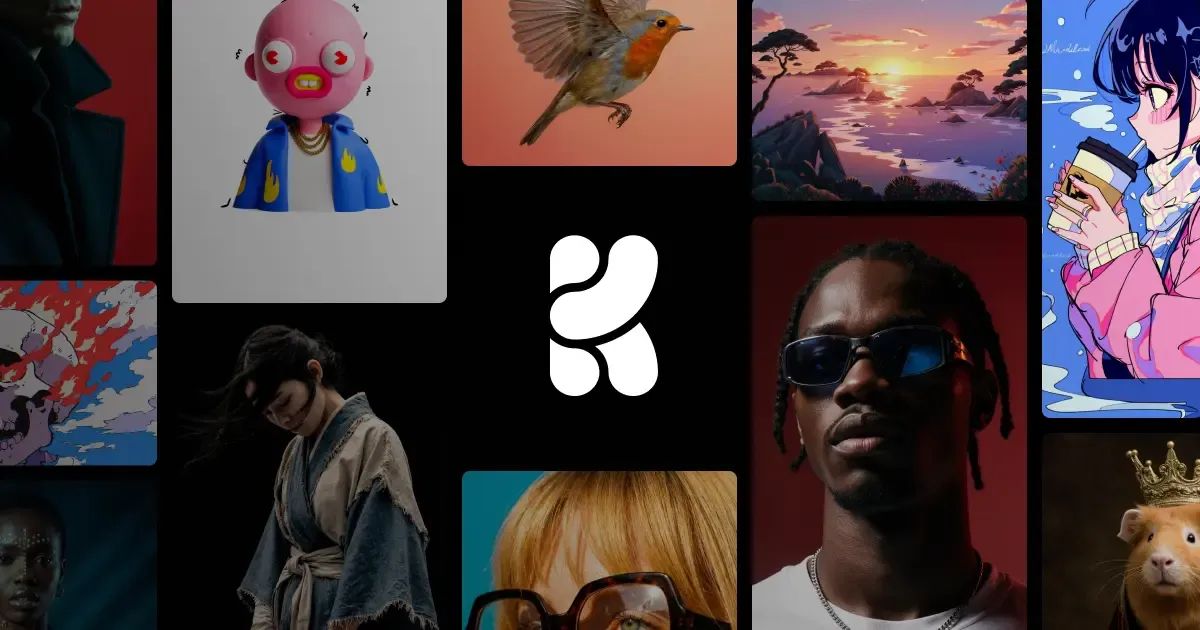
Krea has published the technical report for Krea 3, a foundation image-to-image model that the company says combines frontier-level quality with fast generation and lower cost. According to Krea, edits finish within 8 seconds in production and the model accepts up to 8 reference images in a single generation.
- Krea 3 is an image-to-image foundation model that accepts up to 8 reference images per generation.
- According to Krea, edits finish within 8s in production, roughly 3 to 5 times faster than Nano Banana Pro.
- Krea 3 Ultra debuted at #4 on the Arena.ai, Artificial Analysis and Design Arena leaderboards.
- Krea lists $80.00 per 1k edits for Krea 3 (Fast), against $436.60 for the listed GPT Image models.
- The model is initialized from Krea 2 and trained with native 2K resolution and variable reference counts.
What Krea 3 does
Krea 3 is an image-to-image (I2I) model. Instead of relying only on a text prompt, it takes reference images as input and reasons over them together with the instruction. Krea argues that many visual tasks cannot be described well in words, since an identity, a product or a design reference is easier to show than to explain.
According to the report, the model keeps characters and products consistent across edits, makes targeted changes while leaving the rest of the image untouched, and combines up to 8 reference images in one generation. Krea frames speed and cost as the next frontier once a model is smart enough for complex tasks, and says many recent image models have moved toward slower, more expensive generation for marginal quality gains. Krea 3 deliberately takes the opposite approach, the company says.
Rankings, speed and cost
Krea says Krea 3 Ultra debuted at #4 on all independent arenas, which it says makes Krea the #2 image generation lab in the world. The report cites the Arena.ai, Artificial Analysis and Design Arena image-to-image leaderboards. On the image editing leaderboard, the top three places go to GPT-Image-2.5 Sunburst, GPT-Image-2.5 Flare and GPT-Image-2 (Medium), with Krea 3 Ultra in fourth, ahead of Gemini Nano Banana 2.1 and Seedream 5.0 Pro.
Speed is where Krea 3 differs most, according to the company. In production, edits finish within 8s. Krea reports that, in its own production traffic, Nano Banana Pro takes around 20 to 40 seconds for a comparable edit, making Krea 3 roughly 3 to 5 times faster. GPT Image models can take up to several minutes, it adds.
In a latency comparison with one reference at 2K output, measured through the fal API, Krea 3 (Fast) averaged 8.0s. Other models measured:
- Nano Banana 2.1: 19.3s
- Nano Banana Pro: 22.3s
- FLUX 3 Image: 41.1s
- GPT Image 2 (high): 88.6s
- GPT Image 2.5 Sunburst (max): 90.2s
On price, Krea lists $80.00 per 1k edits for Krea 3 (Fast), or $8,000 per month for 100,000 edits at API prices. The same volume would cost $15,000 with Nano Banana Pro, $19,200 with FLUX 3 Image and $43,660 with the GPT Image models listed, which Krea puts at 5.5 times the cost of Krea 3.
Architecture and training
Krea describes the architecture as deliberately standard, with the contributions lying in training, data and post-training. Krea 3 is initialized from the Krea 2 pretrain and continues pretraining on a wider and improved text-to-image dataset that includes native 2K resolution samples. Image-to-image data is then added.
Reference images are encoded with a variational autoencoder and appended as clean tokens to the diffusion transformer's latent image sequence, using timestep modulation vector t = 0. Krea says this choice is in-distribution at initialization and enables later causal distillation, allowing key-value caching of the reference tokens. The text encoder is a vision-language model that sees the references, downsampled to a 384² pixel area, alongside the edit instruction. Only the instruction tokens are passed on to the diffusion transformer, because the VAE latents hold higher-fidelity pixel information.
For training, Krea describes three systems changes: decoupled reference-target resolution sampling, length-binned packing, and sequence-length-dependent memory optimization for native 2K training. Sampling resolutions independently for the target and each reference adds flexibility at inference. Copying fine text needs a high-resolution reference, while placing a simple product does not, and pairing a high-resolution output with lower-resolution references shortens the sequence and speeds up sampling with little to no quality loss, according to Krea.
The report also covers how Krea mines, synthesizes and captions image-to-image data, reinforcement learning with an agentic reward harness, and preference optimization.
What it means for users
For teams that iterate on many versions of an idea, the report's argument is that latency and price matter as much as quality. If Krea's figures hold in practice, Krea 3 offers editing quality competitive with models such as Nano Banana Pro and GPT Image 2 at a fraction of the price. Note that the speed and cost comparisons are Krea's own measurements, while the rankings come from independent leaderboards.
Krea: Krea 3 Technical Report