Leonardo picks Shield's Hivemind to build autonomy for Proteus rotorcraft
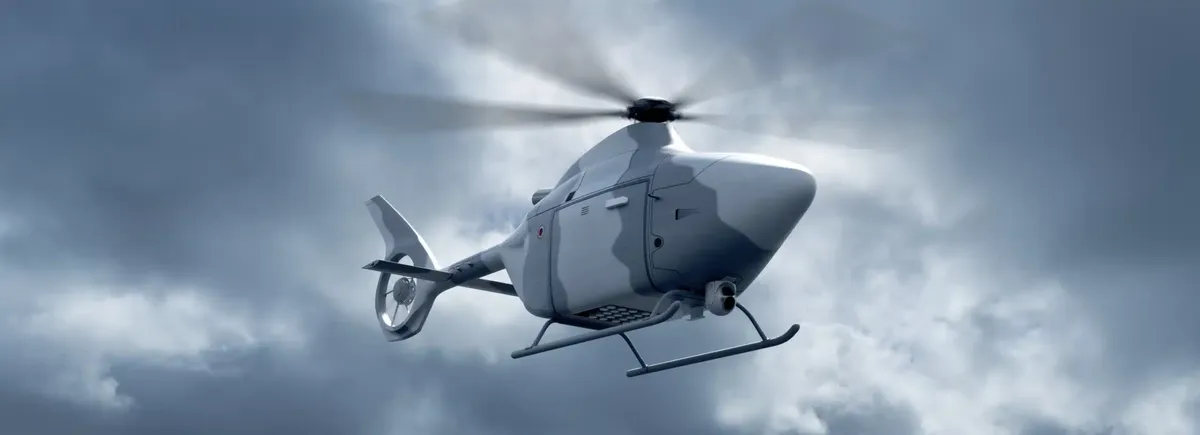
Shield has signed an agreement with Leonardo under which the Italian group will use Shield's Hivemind software to develop autonomy capabilities for Proteus, its autonomous uncrewed rotorcraft. According to Shield, the deal expands Leonardo's tools for building its own mission autonomy software for new and existing systems.
- Leonardo will use Shield's Hivemind SDK to develop autonomy for its Proteus uncrewed rotorcraft.
- Target missions include anti-submarine warfare, ISR and contested logistics helicopter operations.
- Leonardo engineers build and own the mission autonomy software, according to Shield.
- A real Proteus aircraft made its maiden flight in early 2026 with Leonardo-designed autonomy embedded.
- Leonardo says it may extend Hivemind to other programmes in its rotary-wing portfolio.
What the agreement covers
Under the agreement, the two companies will use the Hivemind Software Development Kit (SDK) and work together to integrate the software. The aim is that Leonardo engineers can then develop new autonomy capabilities for rotary-wing operations. Shield names anti-submarine warfare (ASW), intelligence, surveillance, and reconnaissance (ISR), and contested logistics helicopter operations as target areas.
Shield describes Hivemind as a toolset that lets partners develop, integrate, test, deploy, and continuously update their own autonomous pilots. Partners build mission autonomy for their own platforms and missions, then refine it as operations, environments, and threats change. According to Shield, partners own what they build and can sustain and adapt it independently, which lowers lifecycle cost through reuse and rapid iteration.
Tom Schaefer, vice president of Hivemind engineering at Shield, said: "Autonomy software is never finished. It changes with the mission, the threat, and the sensors on the aircraft." He added that Leonardo's engineers can tailor Hivemind software to their mission sets, and "the work stays with them."
About the Proteus platform
Proteus is an advanced uncrewed vertical take-off and landing (VTOL) Technology Demonstrator. Leonardo developed it with the Royal Navy and UK Defence Innovation (UKDI) under the Rotary Wing Uncrewed Air System (RWUAS) CCD Phase 3B Technology Demonstrator Programme. It informs the Royal Navy's Maritime Aviation Transformation (MATx) strategy, which outlines the evolution of maritime aviation until 2040.
The aircraft has a large modular payload bay designed for a circa one-tonne payload or two standard NATO pallets (463L). That lets an operator integrate customer and mission-specific payloads for tasks such as anti-submarine warfare, airborne early warning or intra-theatre lift.
After demonstrations in all-synthetic operational scenarios, a real aircraft carried out its maiden flight in early 2026 with Leonardo-designed autonomy capability embedded. Shield says Hivemind will sustain further development of those capabilities.
Leonardo's view and possible expansion
Adam Wardrope, Vice President Market Development Helicopters UK at Leonardo, said there is a need for autonomy powered by AI given the demands of customers and the reality of military and security operations in both wartime and peacetime. He said the ability to develop and integrate mission autonomy using Hivemind onto Proteus will support the implementation of autonomous capabilities.
Wardrope also said Leonardo believes it can benefit from Shield's software to support the development and delivery of autonomous solutions, "potentially also extending it through other programmes within our rotary-wing portfolio."
What it means
The agreement keeps autonomy development in the hands of Leonardo's own engineers, with Shield supplying the software toolkit rather than a finished autonomy package. For Proteus, it adds a commercial autonomy toolset to a programme tied to Royal Navy planning. Both companies say the deal provides a pathway for greater future collaboration, combining Shield's autonomy expertise with Leonardo's product and service portfolio. No financial terms or timelines were disclosed in the announcement.
Shield, founded in 2015, is a venture-backed defense-tech company whose products include Hivemind, the V-BAT and X-BAT aircraft, and Aechelon simulation technologies. Leonardo is an international industrial group listed on the Milan Stock Exchange, which reported consolidated revenues of €19.5 billion in 2025.