Linker Vision launches Linker AI Nexa to turn city data into coordinated action
Linker Vision, a Physical AI company, has unveiled Linker AI Nexa, a platform that connects real-time city data with government standard operating procedures (SOPs) to coordinate action on public safety, resilience and sustainability. The company presented it at Smart City Expo World Congress 2026 in Barcelona and also announced a collaboration with Dutch architecture firm MVRDV.
- Linker Vision unveiled Linker AI Nexa at Smart City Expo World Congress 2026 in Barcelona.
- The platform follows four steps, Sense, Predict, Decide and Act, tied to government SOPs and built on NVIDIA technologies.
- Initial applications focus on flood and typhoon response, building on the Kaohsiung City Government Lighthouse Project in Taiwan.
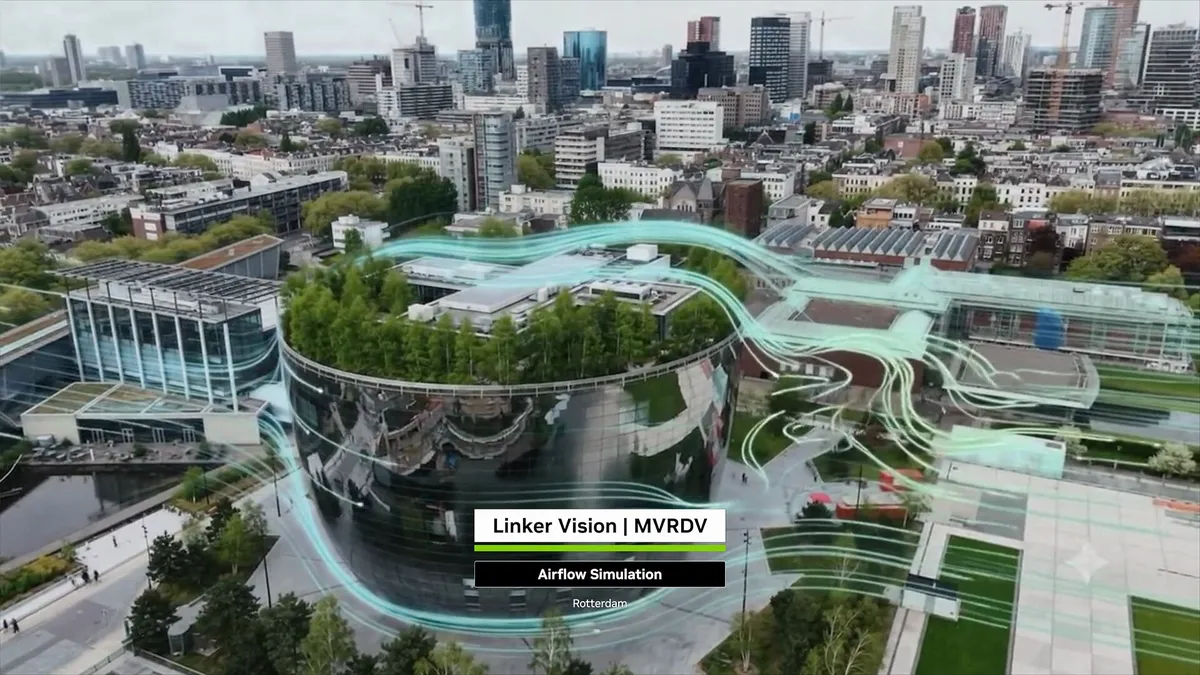
- With MVRDV, Linker Vision is exploring AI-powered digital twins for urban planning in Poland, the Netherlands, Ireland and Berlin.
- In Taipei, the company reports tree survey throughput rising from about 100 to over 1,000 trees per person per day.
What Linker AI Nexa does
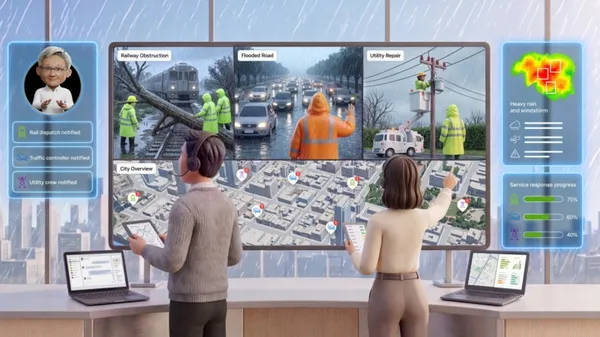
According to Linker Vision, Nexa combines physical AI and agentic AI with NVIDIA technologies. It builds on the company's existing AI capabilities by integrating real-time data, AI agents, domain knowledge and digital twin technologies. The aim is to extend perception and analytics into decision-making and coordinated action, so that organizations can build, deploy and scale Physical AI applications across cities and industries.
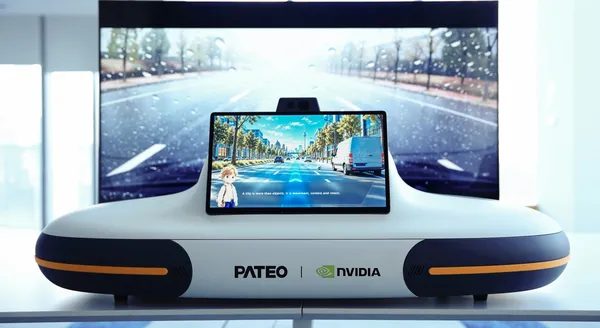
The platform uses several NVIDIA components. The NVIDIA Metropolis Blueprint for video search and summarization (VSS) and NVIDIA Cosmos open world foundation models help interpret video and understand real-world conditions. NVIDIA Omniverse libraries and OpenUSD unify city, tree and environmental data in a digital twin built with 3D Gaussian Splatting. NVIDIA Nemotron reasoning models let users explore scenarios and optimize shade through natural language.
A four-step framework tied to city SOPs
Nexa links real-world understanding to city SOPs through four steps:
- Sense: interpret real-time camera and IoT sensor data.
- Predict: assess potential outcomes using simulation and environmental models.
- Decide: identify responsible teams and recommended actions based on city SOPs.
- Act: coordinate workflows and trigger responses through connected systems.
The company describes the framework as modular and repeatable, adaptable to different operational environments, domain knowledge and tools. Security policies and operational controls govern AI-driven actions, which Linker Vision says helps cities and enterprises speed up validation and deployment.
The first application examples are planned to focus on flood and typhoon response. They build on the company's experience monitoring road hazards and traffic incidents. Its city-scale Lighthouse Project with the Kaohsiung City Government in Taiwan provides an operational foundation for these uses.
Climate planning with MVRDV
Linker Vision and MVRDV combine urban design expertise with physical AI and agentic AI to help cities evaluate climate adaptation measures before implementation. MVRDV contributes scientific data and evaluation criteria, while an ESG agent helps planners identify heat hotspots, assess planting options and simulate long-term outcomes.
In Taipei, urban forest applications with the ESG agent show the following results, according to the company:
- Tree survey throughput rose more than tenfold, from approximately 100 to over 1,000 trees per person per day, using 3DGS scanning.
- Pilot simulations project shade coverage rising from 15.7% to over 50% within 15 years.
- Fifteen-year outcomes can be simulated in 10 minutes, covering future canopy, shade and thermal comfort before planting.
- Multiple design iterations can be completed in one hour, compared with approximately two weeks per iteration.
Expansion plans in Europe
The two companies are exploring opportunities in Europe, including Poland, the Netherlands, Ireland and Berlin, Germany. The collaboration aims to extend the platform from urban forests to residential communities, urban regeneration, public spaces and rooftop utilization.
Linker Vision follows a "build once, reuse many times" approach. The shared digital twin and AI framework adapts to local data, planning priorities and governance needs, so one foundation can support multiple applications across cities.
"Cities need AI that turns information into action and delivers measurable value," said Paul Shieh, Founder and CEO of Linker Vision, according to the announcement. He added that the company is extending its approach across Europe with MVRDV "to help cities become safer, more resilient and more sustainable."
For city governments, the pitch is a way to move from monitoring to documented, SOP-based response, and to test climate measures in simulation before spending on them. The performance figures come from Linker Vision's own pilot and Taipei applications, and the source gives no pricing or availability details.
PR Newswire: Linker Vision Unveils Linker AI Nexa to Bring Physical AI to City Governance