PATEO Runs Nemotron and ByteDance Doubao Locally on Its Thor-Based AI Box
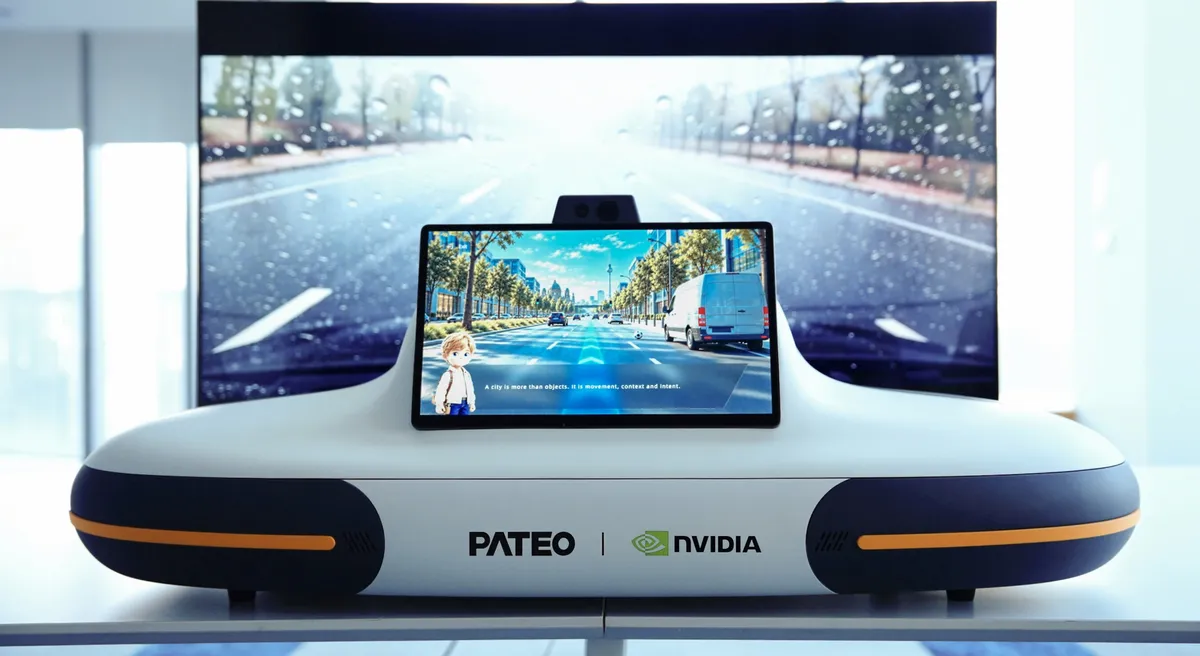
PATEO is deploying NVIDIA Nemotron and ByteDance's 35-billion-parameter Doubao language model in its AI Box, which is built on NVIDIA DRIVE AGX Thor. According to the company, the solution pairs local inference with PATEO's AI Agent platform to handle multilingual interaction, read cabin context and coordinate vehicle functions.
- PATEO is deploying NVIDIA Nemotron 3.5 ASR and the 35-billion-parameter ByteDance Doubao model in its AI Box on NVIDIA DRIVE AGX Thor.
- The model suite can run inference locally without a cloud connection, according to PATEO.
- The AI Box is pitched as an upgrade path for existing vehicles without replacing the main control chip.
- Mass production for a nominated new-generation vehicle program is expected in the second quarter of 2027.
- PATEO plans recurring revenue through its Tokenomics strategy and is exploring robotics applications.
Local model suite for the cockpit
PATEO says it has integrated NVIDIA Nemotron 3.5 ASR for speech recognition into its in-vehicle model suite. Together with ByteDance, it has also integrated Doubao, described as a 35-billion-parameter mixture-of-experts language model. The suite further includes text-to-speech synthesis and a 2-billion-parameter language model used for semantic classification and request rejection.
According to PATEO, the suite can run inference locally without a cloud connection. That supports multilingual voice interaction and real-time streaming speech recognition, and it means core AI functions stay available when connectivity is limited. Connected services and cloud updates then extend what the system can do.
The PATEO AI Agent platform combines voice, visual and sensor inputs to interpret user requests and cabin conditions. Within vehicle safety permissions, it can invoke cabin controls and online services, coordinate concurrent tasks and manage longer-running requests. With user authorization, it can remember preferences and habits to personalize later interactions.
Scenarios and the role of Thor
PATEO lists several use cases for the AI Box:
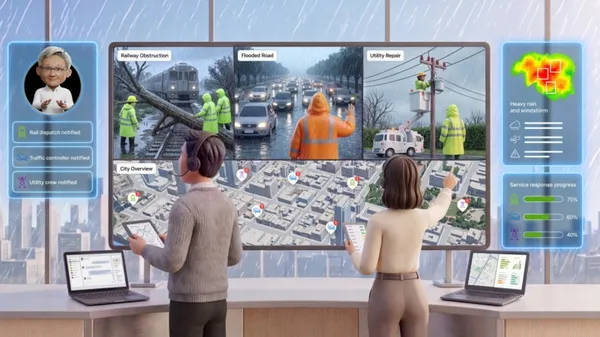
- Sentinel AI can identify and issue alerts for risks such as parking violations, flooding and fire.
- On hot commutes, occupants can adjust driver and passenger climate settings independently by voice or gesture.
- During long highway drives, the agent can detect driver fatigue and ask whether the driver wants to open a window or activate seat massage.
- In areas with poor air quality, it can suggest closing windows and switching to recirculation, based on location and learned driving habits.
The company argues that these experiences depend on memory bandwidth as well as peak compute measured in TOPS. As context builds up across conversation turns and agent actions during a trip, the model's key-value (KV) cache grows, which raises demands on memory capacity and bandwidth. PATEO says Thor's accelerated compute and high memory bandwidth help support responsive local inference.
The AI Box uses a modular software architecture and integrates with in-vehicle systems and NVIDIA's edge and cloud AI ecosystem, which PATEO says supports model deployment, tuning and customization across vehicle programs.
Upgrade path and customer pipeline
PATEO also positions the AI Box as an upgrade route for existing vehicles. By adding dedicated AI computing capacity without replacing the original main control chip, it can serve cars whose processors cannot support larger models, concurrent multimodal interactions and proactive agents through software updates alone.
At Auto China 2026 in Beijing, PATEO announced joint development of the solution with ByteDance and a leading new energy vehicle automaker. The company also reports a project nomination for a new-generation vehicle from a leading new energy vehicle automaker, with mass production for that program expected in the second quarter of 2027.
From hardware sales to AI services
PATEO says it is building on the AI Box to move from one-time hardware delivery toward ongoing AI services and operations. Its in-vehicle Tokenomics strategy aims to create recurring revenue around the deployment and use of AI capabilities.
In June 2026, PATEO formed partnerships with Mininglamp Technology, Xunce Technology and Saimo Technology to jointly develop a token-based physical AI world model and TokenOS. The collaboration brings together on-device hardware, simulation testing and data infrastructure.
The company is also looking beyond cars. PATEO reports a project nomination from a leading domestic robotics computing provider, which would let it apply its platform capabilities to physical AI applications outside vehicles.
What it means
The announcement shows how a cockpit supplier is trying to bring larger language models onto the vehicle itself rather than relying on the cloud. PATEO frames the reusable AI Box platform, deployment across vehicle programs and ongoing AI services as the basis for its evolution from a smart cockpit supplier into an AI platform company. The source gives no pricing or fleet-wide availability details, and the one named production timeline is the second quarter of 2027 for the nominated program.