Malicious Microsoft Agent Framework Packages Target Azure and CI Credentials
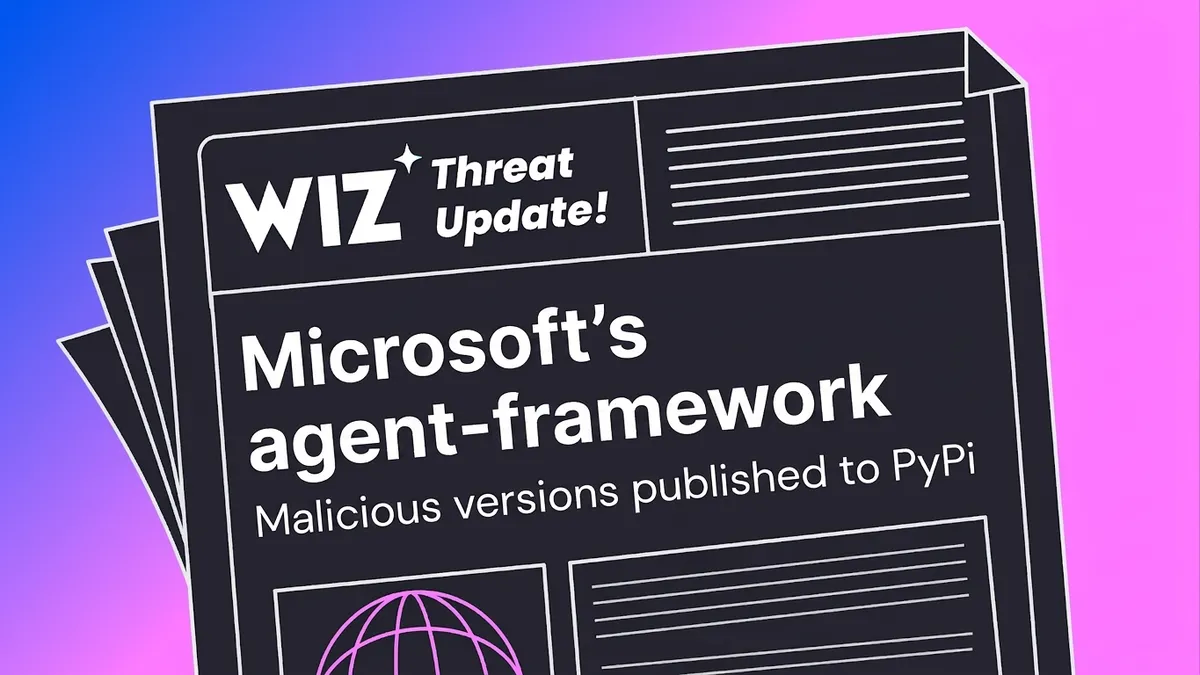
Malicious versions of Microsoft’s agent-framework package were uploaded to PyPI on November 17, targeting Azure, Azure DevOps, GitHub Actions and other development credentials. Wiz says versions 1.26.1 and 1.26.2 were removed from PyPI by about 21:30 UTC, but environments that installed them may still be exposed.
- Wiz identified malicious agent-framework versions 1.26.1 and 1.26.2 on PyPI.
- The payload ran at Python startup through a .pth file.
- The stealer targeted Azure, CI, package registry and developer credentials.
- Both versions were no longer available on PyPI by about 21:30 UTC.
- Wiz recommends investigating affected environments and pinning to 1.26.0.
The compromised releases
Wiz reported that version 1.26.1 was uploaded at 20:35 UTC, followed by version 1.26.2 at about 21:08 UTC. The package receives about 41,000 downloads a week, according to the security company. The most recent safe version is 1.26.0.
Both malicious releases install code that runs through a Python .pth file whenever Python starts in the affected environment. This means the stealer can execute even when agent-framework is never imported. Version 1.26.1 uses agent_framework_meta.pth, while version 1.26.2 uses af_runtime_diag.pth.
Wiz says the root cause has not been confirmed. The malicious 1.26.1 release had no matching tag or release in Microsoft’s microsoft/agent-framework repository, and it was published as a wheel only rather than the wheel and source distribution normally released alongside the matching agent-framework-core version.
What the credential stealer collected
The payload was designed to collect credentials and configuration data from Azure and development environments. Wiz says it searched environment variables containing terms such as TOKEN, SECRET, PASSWORD, AZURE, AWS, GITHUB, OPENAI, HF_, FOUNDRY, NPM, PIP and NUGET.
It also read secret-looking values from other processes, credential files including Azure CLI data, .npmrc, pip.conf, .netrc, .git-credentials and Docker configuration, plus Hugging Face tokens and Azure DevOps agent credentials. The malware could request Azure managed identity tokens for 12 resources, including ARM, Key Vault, Storage, Azure AI/ML, Azure DevOps and AzureADTokenExchange.
Version 1.26.2 expanded the collection to GitHub Actions. In workflows with id-token: write, it requested GitHub OIDC tokens for Azure endpoints. It also added searches for GitHub Actions and runner data, and increased the file collection cap from 60 to 80.
The collected information was combined into a JSON document, compressed, encoded and sent in one HTTPS POST to a hardcoded webhook.site address. Wiz confirmed that the attacker’s free-tier account captured a maximum of 50 requests. The company warns that those requests could still contain working cloud, CI and registry credentials.
Wiz’s recommended response
Security teams should search lockfiles, CI logs, virtual environments and container images for versions 1.26.1 and 1.26.2, then pin installations to 1.26.0. They should also inspect site-packages for the persistence files and modules associated with each version. Wiz says any Python process started in an affected environment ran the payload.
Teams should review network logs for the listed webhook.site endpoint. A response of 200 indicates the host’s data was accepted, while 410 or 429 suggests it was rejected, according to Wiz. The company recommends rotating every secret present on affected hosts and runners, including Azure credentials, Azure DevOps credentials, package registry tokens, Hugging Face tokens and Git credentials.
Wiz also advises auditing Azure sign-in and activity logs for managed identities and federated credentials reachable from affected systems. Stolen managed identity and OIDC-exchanged tokens are valid for up to 24 hours, the company says. For environments that installed 1.26.2 through GitHub Actions, teams should review trusted Entra ID federated credentials and rotate repository and organization secrets exposed to the job.