Masimo's smartSET Gets FDA Clearance for AFib Detection on Radius VSM
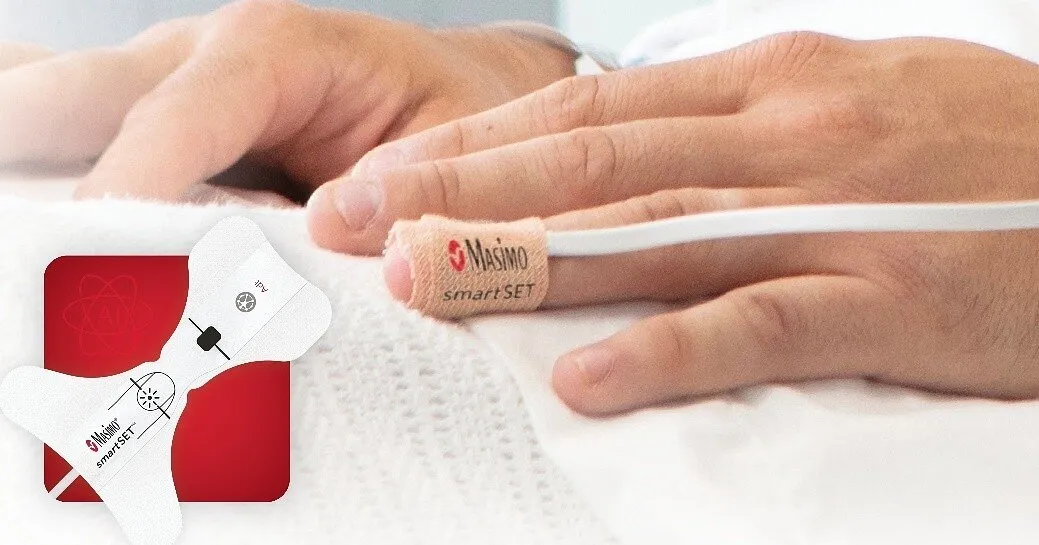
Masimo, a Danaher company, has received FDA 510(k) clearance for an atrial fibrillation (AFib) capability on its Radius VSM monitor. Together with a previously cleared AI-enabled detector for opioid-induced respiratory depression (OIRD), it forms the smartSET pulse oximetry platform.
- Masimo received FDA 510(k) clearance for PPG-based AFib detection on Radius VSM.
- The AFib capability joins previously cleared AI-enabled OIRD detection under the smartSET name.
- In Masimo's validation testing, AFib detection showed 97% sensitivity and 100% specificity against ECG review by three clinicians.
- The feature indicates a need for further evaluation and does not replace ECG confirmation of AFib.
- Masimo says it plans to expand the smartSET platform to other clinical needs.
What smartSET adds to pulse oximetry
According to Masimo, smartSET builds on its Signal Extraction Technology (SET) pulse oximetry and more than 35 years of signal-processing work. The company says the platform moves pulse oximetry beyond individual measurements, using pattern recognition and AI signal analysis to help clinicians recognize physiological changes tied to important clinical events.
Masimo describes smartSET as the next evolution of SET, extending continuous monitoring "from reliable measurement to clinical insight." Both the AFib and OIRD capabilities run within a traditional pulse oximetry workflow.
How the AFib capability works
The PPG AFib capability continuously analyzes pulse waveform data to identify rhythms suggestive of AFib. Its purpose is to help clinicians decide when additional electrocardiogram (ECG) or telemetry evaluation may be appropriate. Masimo stresses that it provides an indication for further clinical evaluation and does not replace ECG confirmation of AFib.
The FDA clearance covers identifying rhythms suggestive of AFib over a monitoring period to supplement the decision for AFib screening in patients 18 years or older. The feature is not intended to replace traditional methods of diagnosis or treatment.
Masimo cites data on file from clinical validation testing, in which the AFib capability showed sensitivity of 97% and specificity of 100%. The study included cohorts with and without AFib, including some patients with other arrhythmias. Three clinicians reviewed concurrently collected ECG strips, which served as the ground truth for AFib classification.
The company points to the clinical need: citing a 2018 PLoS One paper, it says AFib affects more than 10% of patients over age 65 and often goes undiagnosed, significantly increasing long-term stroke risk.
The OIRD detection side
The OIRD capability was cleared earlier. It continuously analyzes oxygen saturation (SpO₂), pulse rate (PR) and perfusion index (Pi) in real time to assess opioid overdose risk. When it identifies patterns associated with OIRD, the system generates escalating notifications on Radius VSM.
Masimo cites research indicating that 1 in 10 surgical patients receiving opioids experience an opioid-related adverse event, and that 85% of postoperative OIRD events occur within the first 24 hours after surgery. The company notes that continuous monitoring helps fill the gaps between routine spot checks, but that identifying OIRD can still depend on recognizing concerning trends in the data.
What it means for hospitals
Masimo Chief Medical Officer Dr. Basil Matta said respiratory compromise and cardiac arrhythmias often develop silently between routine rounds when a patient deteriorates on a general care floor. He said smartSET helps clinicians "see subtle physiological shifts earlier."
Masimo President Tim Benner said the company intends to keep expanding the smartSET platform to address other critical clinical needs. Healthcare organizations interested in the platform can visit the smartSET webpage or contact their Masimo representative to schedule an evaluation. The release does not give pricing or availability details.