Meta Expands AI Teen Account Protections Worldwide
Meta is expanding globally the AI technology it uses to identify suspected teen accounts, including accounts that list an adult birthday, and place them under its built-in protections. The company says the move will bring age-appropriate settings to millions more teens using Instagram.
- Meta is expanding suspected teen account detection globally on Instagram.
- The technology can identify teens who use an adult birthday.
- Facebook rollout is continuing, with Threads planned later this year.
- Meta has begun using Apple’s age-range signal in Australia.
- The company is investing in stronger detection for children under 13 and teens aged 13 to 17.
Protections will expand across Meta’s apps
Teen Accounts on Instagram, Facebook and Messenger automatically limit who can contact teens, the content they see and the amount of time they spend on the apps. Meta says identifying a user’s age is necessary to ensure that all teens receive those protections.
The company has been using AI technology to find people it suspects are teens, even when they have entered an adult birthday. Meta says it has placed more teens in age-appropriate protections since introducing the technology and is now expanding it globally based on what it describes as successful results.
The immediate expansion applies to Instagram, where Meta says millions more teens around the world will receive built-in protections. The company is continuing to roll out the technology on Facebook and plans to begin launching similar technology globally on Threads later this year.
Meta outlines its approach to parents and age signals
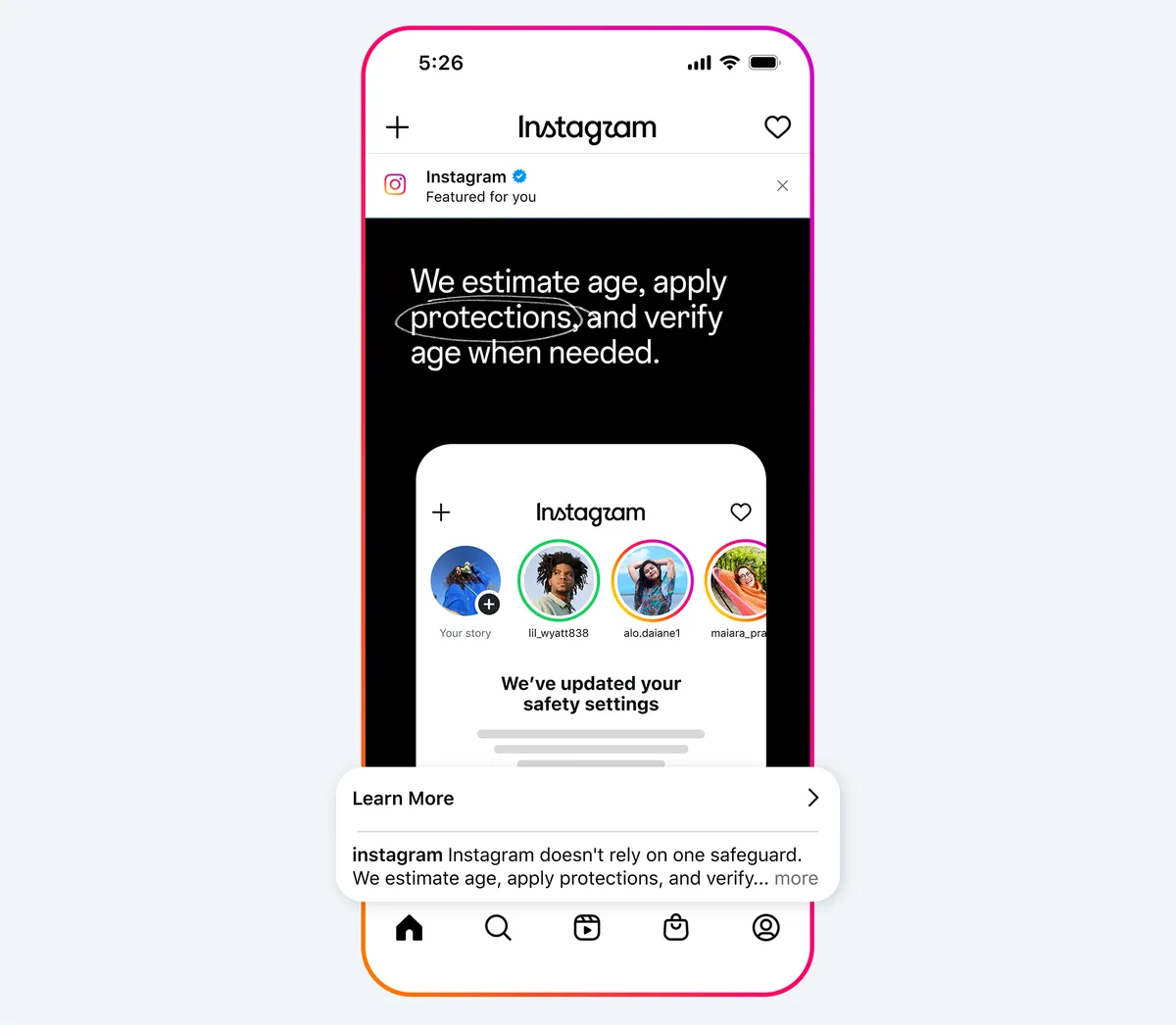
In the United States, parents will begin seeing an in-feed video on Instagram this month explaining how Meta works to place teens in age-appropriate protections. The video will link to an article by Larry Magid, internet safety advocate and President and CEO of ConnectSafely, about Meta’s multi-layered approach to age assurance.
That approach includes keeping children under 13 off Meta’s platforms, providing age-appropriate experiences for teens and informing parents about ways to help ensure their teens provide the correct age online. The article is available for parents worldwide to read, according to Meta.
In Australia, Meta has also begun using Apple’s age-range signal as another way to understand a user’s age. When a parent sets up a smartphone for a teen, the app store can confirm the user’s age and assign an age range. When the teen downloads an app, Apple can pass that range to the developer, confirming whether the teen meets the app’s age requirement.
Meta says it is using the signal voluntarily. It argues that a verified signal shared consistently with apps would provide more consistent and privacy-preserving age checks than requiring every platform to verify age separately.
The expansion follows an agreement with attorneys general
Meta says the global expansion builds on its recent agreement with 52 bipartisan attorneys general across US states, territories and the District of Columbia. As part of that agreement, the company says it is investing in stronger technology to identify accounts that may belong to children under 13.
Meta is also strengthening the technology used to identify accounts that may belong to teens between 13 and 17. The goal is to place those accounts in experiences designed for teens even when users provide an adult birthday.
The company says laws governing online safety have expanded rapidly in countries around the world, but often do not explain how technology companies should determine a user’s age. Meta says some laws require invasive checks for everyone, while others give companies little guidance on how to understand age without collecting sensitive information such as government IDs.
Because Instagram is only one of the apps teens use, Meta is calling on TikTok and YouTube to adopt similar practices. For users and parents, the change means Meta will rely more heavily on proactive age estimation to apply teen protections when a stated birthday does not reflect the company’s assessment of the account holder’s age.