Meta details open AI networking stack at 2026 OCP Global Summit
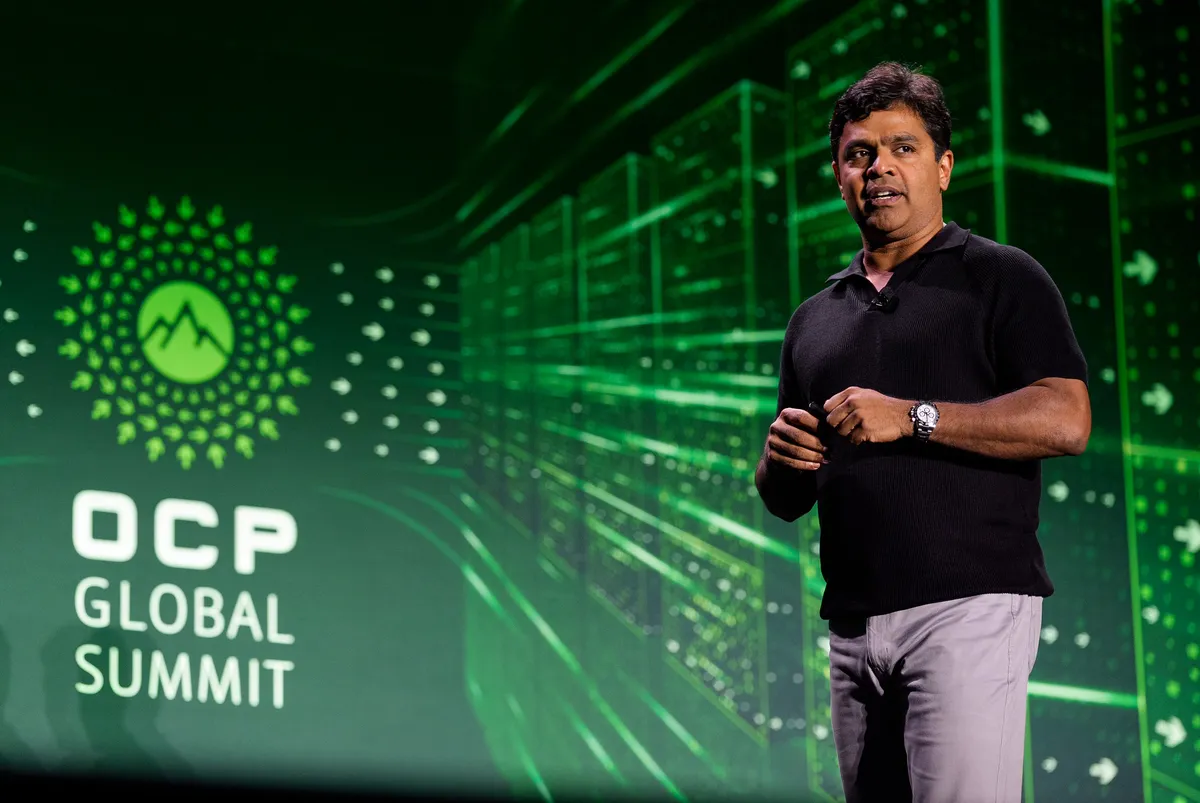
At the 2026 Open Compute Project (OCP) Global Summit, Meta presented the networking technology behind its latest AI models, including Muse Wonder and Muse Spark, and its gigawatt-scale Prometheus cluster. The company says the talks and slide decks are now available to everyone.
- Meta unveiled IcePack and IceCube, its first liquid-cooled network rack with 102.4T switch blades (128×800G) running FBOSS.
- Flattened Planar Fabric connects each GPU to eight network planes and moves from a 3-tier to a 2-tier Clos design.
- Tahan is an Ethernet scale-up switch for MTIA 300, and ESUN is progressing from 1.0 to 1.1.
- OSPA, co-led by Meta, Microsoft and Alibaba, has submitted a v1.0 spec to OCP.
- MetaRoCE, Meta's RDMA transport for AI networks, is going open source.
New hardware and fabrics for scale-out
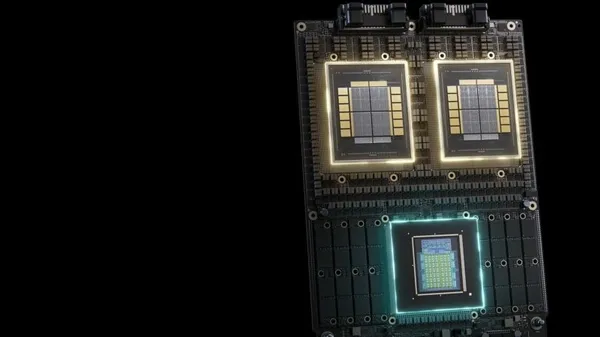
Meta's headline hardware is IcePack and IceCube, which the company describes as its first liquid-cooled network rack with 102.4T switch blades. The blades offer 128×800G and come in two variants, one based on Broadcom Tomahawk 6C and one on NVIDIA Spectrum-6, running Meta's FBOSS network operating system. According to the session description, IceCube and N-IceCube use a 2OU, hybrid liquid/air-cooled, PHY-less design with non-blocking capacity.
For scale-out, Meta introduced Flattened Planar Fabric (FPF), a multi-plane fabric in which each GPU connects to eight network planes. The design moves from a 3-tier to a 2-tier Clos topology and uses NIC-level packet spraying together with a combined host and switch control plane. Meta says it built FPF with NVIDIA and shared it with its cloud partners.
Scale-across and scale-up
For linking sites, Meta described BAG (Backend Aggregation), a petabit-scale super-spine that joins buildings, campuses and regions in the Prometheus cluster. The company also covered SRv6-based regional backbones running on FBOSS and SAI. A session on SRv6 says the timeline from concept to deployment took a matter of months.
Inside the rack, Meta presented Tahan, an Ethernet scale-up switch for its MTIA 300 system, based on Broadcom Tomahawk5. It also previewed 72 accelerators per rack on 102.4T silicon. The ESUN effort (Ethernet for Scale-up Networking), launched with the community last year, is progressing from version 1.0 to 1.1.
Open standards and software
Meta, Microsoft and Alibaba are co-leading a new OCP initiative called OSPA (Open Switch Platform Architecture). It aims to standardize the switch platform layer, which Meta says remains proprietary and fragmented even though SAI has made data plane software portable. According to the talk abstract, that fragmentation adds months of duplicated bring-up work per platform. The v1.0 specification has been submitted to OCP.
Meta also said MetaRoCE, its RDMA transport for AI networks, is going open source. Other sessions cover the NVIDIA SDK and FBOSS integration, config-driven FBOSS platform bring-up with Nexthop AI, and how Meta uses cloud GPU capacity.
Optics and operations
Several talks focused on optical links. Topics include lessons from validating 51.2T co-packaged optics that could carry over to 102.4T, operating linear pluggable optics at hyperscale, large-scale deployment of 800G active electrical cables, and building an ecosystem for near-package optics. The linear optics session asks whether removing the per-module retimer DSP can match retimed reliability at fleet scale.
Meta's keynote framing is that AI progress now depends on the network as much as on compute, and that the path forward is a full-stack, open approach. A cross-industry panel on scale-across networking included speakers from Meta, Google Cloud, Microsoft Azure, Broadcom and Arista Networks.
What it means
With the specifications, open-source release and recorded sessions public, other operators and vendors can examine Meta's designs and, in the case of OSPA, ESUN and MetaRoCE, take part in or build on them. Meta's stated aim is to build AI networking in the open ecosystem rather than behind proprietary walls.