Microsoft Discovery app used to build phage therapy pipeline in under four hours
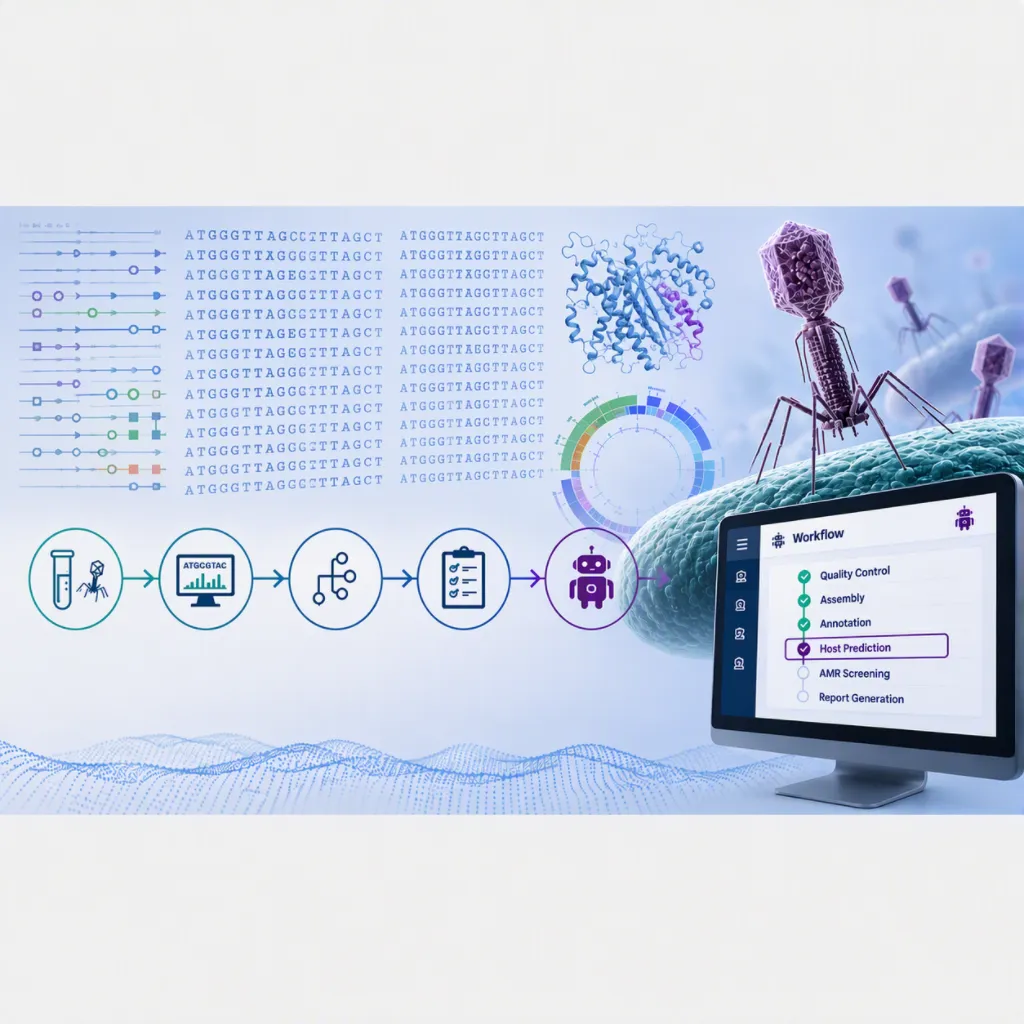
Microsoft says a team of scientists used its Discovery app to build a cloud-deployable bioinformatics pipeline for finding phages that could target drug-resistant bacteria. According to the company, the project went from task-tree generation to a draft report in less than four hours.
- Microsoft used its Discovery app to help scientists build a cloud-deployable bioinformatics pipeline for finding phages against bacterial pathogens.
- According to Microsoft, the project went from task-tree generation to a draft report in less than four hours.
- The app proposed a six-module architecture and linked each step's outputs to the next step's inputs in a traceable chain.
- The team used a curated Bookshelf of 170 articles and MCP-based adapters to sources such as PubMed and AlphaFold.
- Microsoft says it does not claim a treatment result and that laboratory validation is still required.
Why phage selection is hard
Drug-resistant infections are a major threat to global health, Microsoft writes, and that is driving a search for treatments when antibiotics no longer work. Bacteriophages, or phages, are viruses that infect bacteria and can be repurposed against drug-resistant microbes. They are abundant in the environment, but picking the right ones for a specific infection is difficult. According to the post, effectiveness depends on phage genetics, bacterial antiphage defenses and infection dynamics.
The team used the Microsoft Discovery app to help develop a bioinformatics workflow that searches large environmental datasets for useful phages against bacterial pathogens. The pipeline had to provide explanatory statistics using accepted methodologies, so scientists could decide which phages to test in a laboratory. Microsoft stresses that the goal was not to claim a treatment result, but to build a reproducible computational approach.
How the human-agent team worked
The team described the scientific goal in standard scientific language. The Discovery app turned that into a research assistant with a specific persona, which Microsoft calls a "purpose", expected technical outcomes and an inspectable "task" tree. Scientists had fine-grained control over the tasks and the overall approach, and could redirect the workflow when their judgment called for it.
The requirements given to the app were that the pipeline should:
- accept the genome of a bacterial pathogen as input;
- verify antibiotic resistance markers and produce a resistance profile;
- estimate the types of antiphage defenses that may be present;
- search environmental data for novel phages that may infect the bacteria;
- propose a mixture of one or more therapeutic phages;
- explain the computational steps and evidence behind the conclusion;
- recommend follow-on laboratory experiments.
Rather than letting agents search the whole internet, the team focused research on a curated collection of articles through the Microsoft Discovery Bookshelf feature, which stores, indexes and searches trusted material separately from the wider web. The first task reviewed an initial bookshelf of 170 articles from the scientists' collection before expanding to other sources.
The agent also developed and integrated MCP-based adapters, giving access to resources such as PubMed, Europe PMC, NCBI BLAST, Semantic Scholar, ClinicalTrials.gov, AlphaFold and biomarker databases. Microsoft says this took minutes and avoided substantial engineering effort. In one example, the agent proposed a revised plan combining literature search, genome analysis and protein structure prediction, which the team reviewed and approved before the affected tasks went ahead.
Outputs, expert review and limits
The Discovery app proposed a six-module computational architecture with defined inputs, outputs, quality and safety checks, alternative approaches, positive and negative control datasets, a laboratory validation plan and supporting references. Microsoft says a significant part of the under-four-hour timeline went to sourcing genomic references and running non-trivial bioinformatics workflows.
Experts inspected and validated the artifacts as they were generated, and approved items were added back into the curated knowledge base. According to the post, this expert review was essential for separating scientifically grounded results from "plausible-sounding but unsupported AI output" and for finding areas that needed refinement before the pipeline could be trusted and reused.
What it means
Microsoft describes the outcome as a structured plan, a working cloud-based implementation and a clearer picture of evidence gaps that still need expert review and laboratory validation. The author writes that the app "amplified that expertise rather than replace it", helping build a deterministic, reusable pipeline while keeping human judgment at every consequential decision point. The post is a case study of a workflow, not a clinical result, and experimental validation is still required.