Mistral Opens Munich Hub to Push Physics AI and Industrial AI in Germany
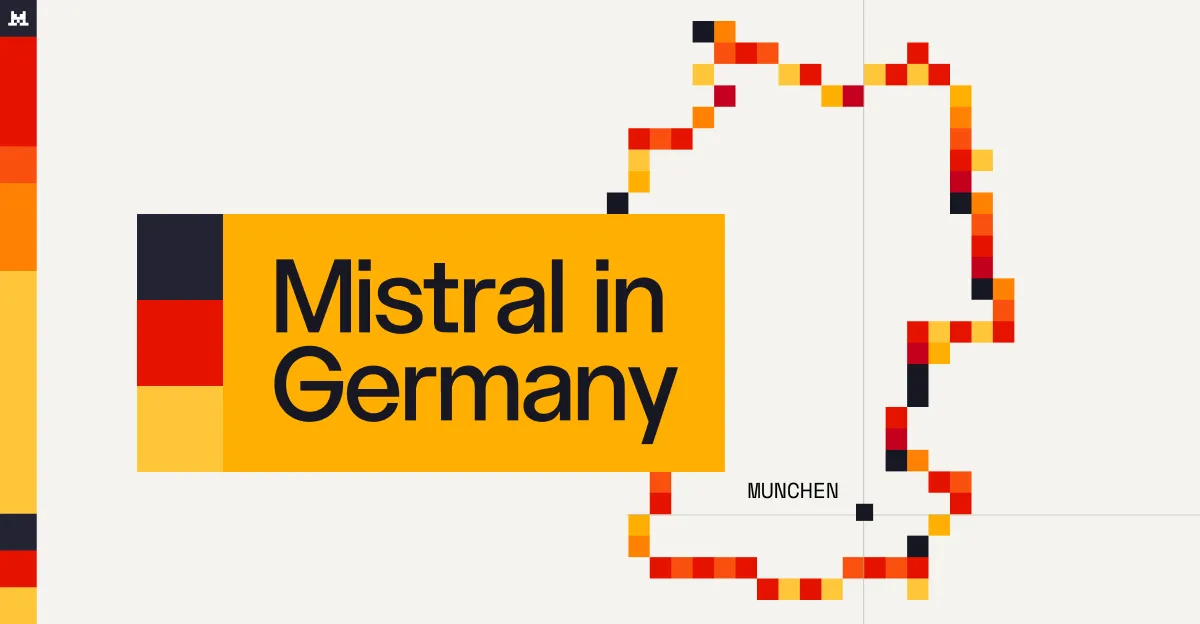
Mistral AI has opened a new hub in Munich, where research teams will focus on Physics AI and Industrial AI alongside applied engineers who work directly with enterprise partners. According to the company, the move is aimed at Germany, the largest industrial economy in the European Union.
- Mistral opened a Munich hub focused on Physics AI and Industrial AI, with research teams and applied engineers.
- The company is working with BMW on crash simulations and with Siemens Energy on industrial AI applications.
- Mistral acquired Emmi AI in May 2026, bringing more than 30 physics and engineering AI experts.
- A research partnership with TUM will use wind tunnel facilities to build digital twins for automotive aerodynamics.
- Mistral says it will build one gigawatt of European compute capacity by 2030.
A hub built around industrial research
Mistral announced the Munich hub on September 28, 2026. The company says the site will house specialised research teams dedicated to Physics AI and Industrial AI, together with applied engineers serving enterprise partners. Mistral also says the hub will anchor its hiring across research, engineering and applied AI roles, and that it is actively recruiting in the Munich region.
The company argues that German enterprises have built up proprietary data and process knowledge over generations in automotive, energy, aerospace and advanced manufacturing. In its words, it is not arriving as a software vendor but as a long-term technological partner.
Physics AI, BMW, Siemens Energy and TUM
Physics AI is the centre of the announcement. Mistral describes it as AI that understands the physical world, including fluid dynamics, material deformation, thermal behavior and mechanical stress. The company notes that the simulations needed for these calculations require enormous compute time and sometimes take days per run.
The capability comes in part from Mistral's acquisition of Emmi AI in May 2026. According to Mistral, more than 30 physicists, researchers and engineers with expertise in Physics and Engineering AI joined the company as a result. Emmi AI specialised in large-scale AI modelling of computational fluid dynamics, structural mechanics and multi-physics simulations.
In Munich, Mistral says it is working with BMW on crash simulations and engineering AI, and with Siemens Energy on industrial AI applications. The company calls this what it believes will be the blueprint for Physics AI in European heavy industry.
Mistral has also formed a research partnership with the Technical University Munich (TUM). Using TUM's wind tunnel facilities, the teams will develop digital twins for automotive aerodynamics in collaboration with Prof. Dr. Nikolaus A. Adams. The research aims to fuse real-time experimental sensor data with offline computational fluid dynamics simulations to deliver highly accurate aerodynamic predictions in real time.
Sovereignty and open weights
Mistral frames the hub as part of a sovereignty strategy. It says German industry, public institutions and organizations already have access to its full AI stack: frontier language models, Physics AI capabilities, enterprise deployment and sovereign compute infrastructure. To secure Europe's AI sovereignty, the company says it will build one gigawatt of European compute capacity by 2030, while continuing frontier model development.
The company points to its open-weight architecture as the basis for that claim. Unlike closed systems, where the model's internal logic is hidden and runs on the vendor's servers, Mistral says its model weights are fully accessible to the customer. According to Mistral, models run on the customer's own infrastructure, are trained on the customer's data and operated under European law, with full auditability and no data leaving the organization.
Political backing and what it means
The announcement includes statements from two officials. Dr. Karsten Wildberger, German Federal Minister for Digital Transformation and Government Modernisation, said Mistral "demonstrates what European research, talent, and entrepreneurial spirit can achieve." Dr. Florian Herrmann, Head of the Bavarian State Chancellery, said that Mistral's decision to choose Munich "sends a strong signal for our position as a high-tech location."
For industrial customers in Germany, the source points to a local team of researchers and engineers, ready-made partnerships in automotive and energy, and a deployment model in which models run on the customer's own infrastructure. Mistral CEO Arthur Mensch said the company is there to support German industry in mastering the most demanding AI applications. The source gives no figures on hub size, headcount or investment.
Mistral AI: Hallo, Deutschland!