MIT team uses AI to make RNA vaccines stable without ultracold storage
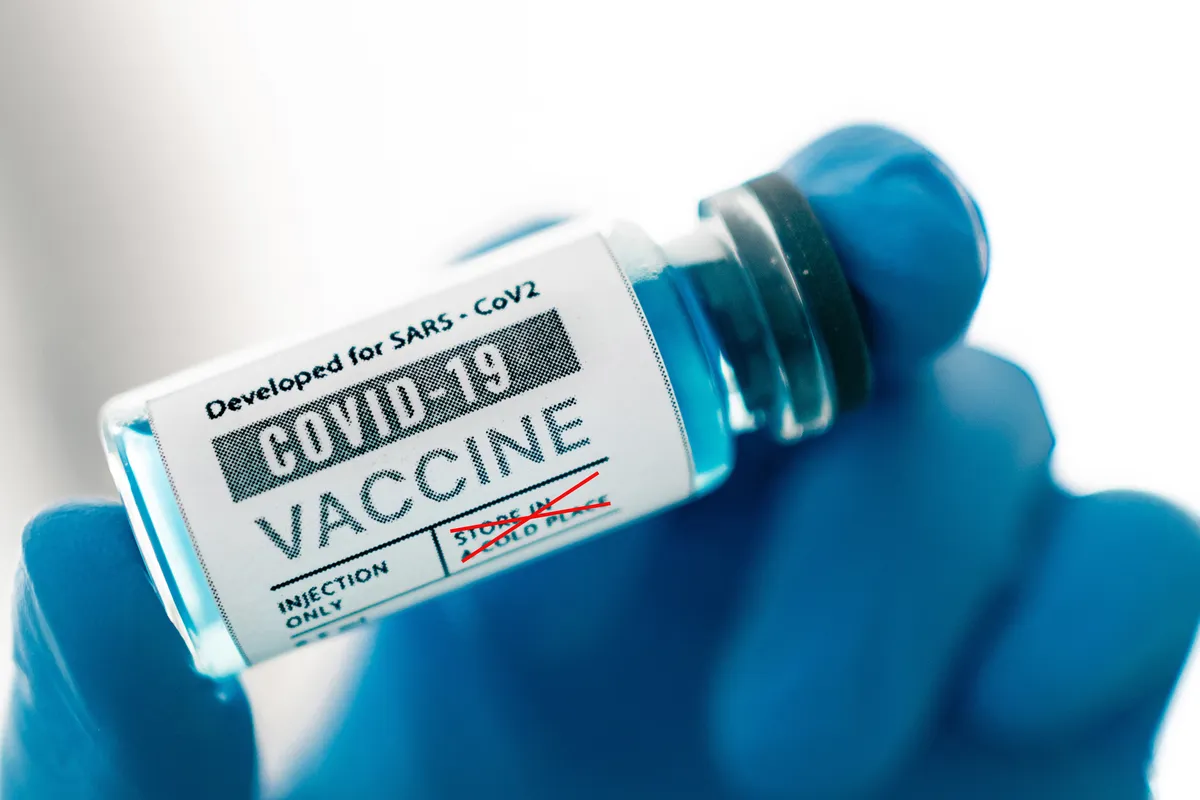
MIT engineers have used an AI algorithm to redesign the formulation around the lipid nanoparticles that deliver mRNA vaccines, producing versions that stay stable at room temperature for up to a year. The work, published in Nature Biotechnology, could ease the need for ultracold storage that complicates vaccine distribution.
- MIT researchers used an AI algorithm to design LNP formulations that make mRNA vaccines heat-resistant.
- Vaccines stayed stable at room temperature for up to a year, or at 37 degrees Celsius for two months.
- In mice, immune responses matched those from LNPs similar to the original Moderna formulation.
- The algorithm needed only small datasets, and the formulation search took a few weeks.
- The approach also worked for a Pfizer-like LNP and for microneedle patches.
The cold-storage problem
RNA vaccines have proven effective against Covid-19 and are now being developed for other diseases, including cancer. One drawback is storage. RNA is a highly fragile molecule, so researchers protect it with lipid nanoparticles (LNPs), which shield the RNA from degradation and help it enter cells. Even so, these RNA-LNP vaccines still need to be kept at -20 to -80 degrees Celsius, according to MIT. That makes shipping difficult to regions without cold-storage facilities.
More heat-tolerant vaccines would allow wider distribution. They could also help researchers develop vaccines delivered by new methods such as microneedle patches, which contain hundreds of vaccine-filled microneedles that dissolve when applied to the skin.
Researchers have previously tried adding excipients, meaning sugars, salts or polymers, to LNPs. Ana Jaklenec and Robert Langer recently developed polymer-stabilized LNPs that withstand higher temperatures, but those differed slightly from the FDA-approved formulations used in the Moderna and Pfizer Covid-19 vaccines. The new study aimed to stabilize those approved formulations.
How the algorithm helped
The team began by reusing excipients that had worked before, but progress stalled. "It was really frustrating for the team," Jaklenec said. They then worked with researchers at MIT's Computer Science and Artificial Intelligence Lab (CSAIL) to build a machine-learning algorithm that makes predictions from very small datasets.
The researchers analyzed nearly 50 FDA-approved excipients. To measure how well each protected RNA, they delivered mRNA encoding firefly luciferase, a protein that produces bioluminescence, into cells and measured the light emitted. They chose five of the most promising excipients and used the algorithm to predict ratios that would best stabilize LNPs similar to Moderna's.
The team tested two formulations at a time in cells, fed the results back into the algorithm and generated new predictions. After several rounds, they picked one formulation for animal studies. According to MIT, this took only a few weeks. Tran said that before the algorithm, the group spent several months testing combinations and prescreening excipients without reaching 100 percent stability.
"The real beauty of this algorithm is that we can use it with small data sets," Jaklenec said. Mina Konaković Luković of CSAIL said the algorithm converged on a stable formulation in "just a handful of iterations."
Results in mice and microneedle patches
To test heat resistance, the team packaged Covid-19 mRNA antigens in the new LNPs and dehydrated them by vacuum drying. The particles were then stored at 37 degrees Celsius (98 degrees Fahrenheit) for two months, or at room temperature for one year. Mice vaccinated with these particles showed immune responses equivalent to mice that received vaccines carried by LNPs similar to the original Moderna formulation.
The researchers also used the formulation to make solid microneedle patches delivering a SARS-CoV-2 antigen. According to MIT, these produced an immune response similar to that of injectable RNA vaccines.
The algorithm also stabilized other LNP formulations, including one similar to those Pfizer uses for its Covid-19 vaccine. It uses the same excipients as the Moderna-like version, but in a different ratio.
What it could mean
The researchers say that once a heat-resistant formulation exists for a given LNP, it could be adapted to deliver any type of mRNA payload. Graduate student Jinbi Tian said the approach broadens the application of mRNA vaccines and also of therapeutics and drug-delivery platforms that require a solid state or stability at higher temperatures.
The results so far come from cell and mouse studies. Jaklenec and Langer are the senior authors, with Tian and postdoc Khanh Tran as lead authors. The research was funded in part by the Gates Foundation.
MIT News: New formulation helps RNA vaccines withstand high temperatures