MIT method trains faster, more adaptable AI climate emulators
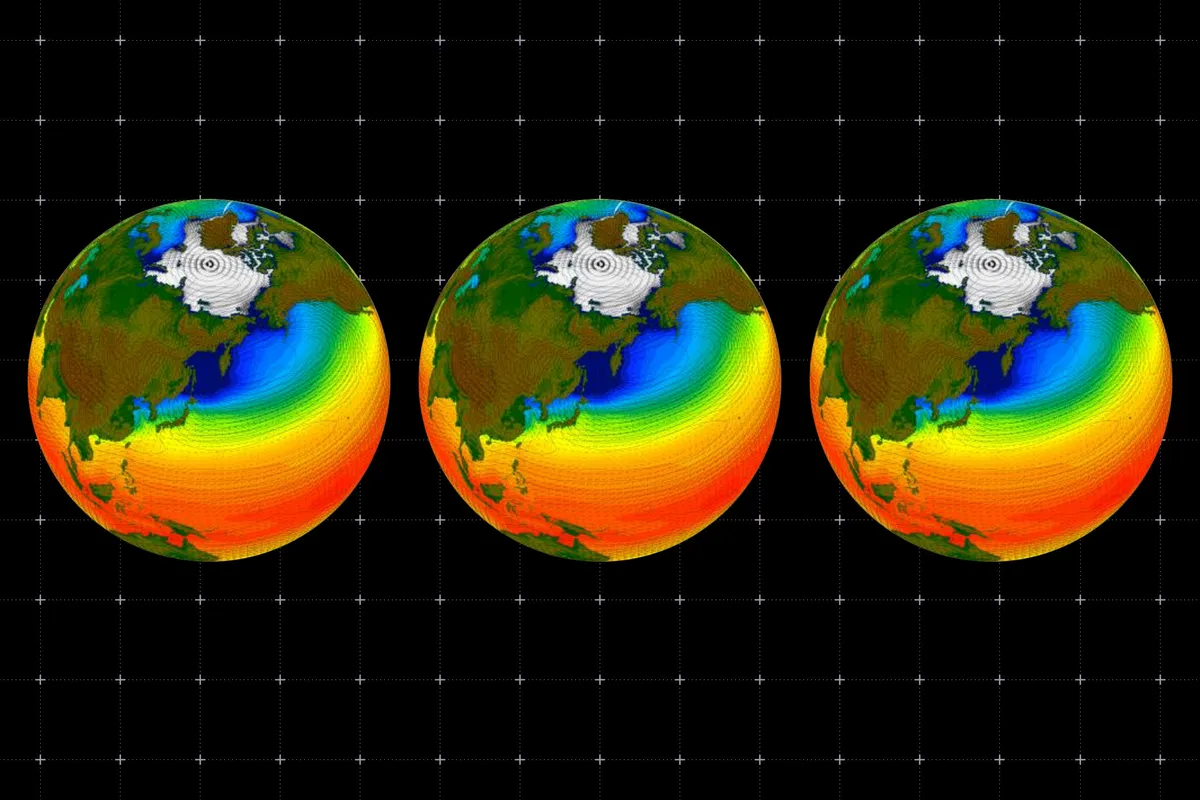
MIT scientists have developed a training method for climate emulators that uses a fraction of the data typically required. The approach is designed to produce faster, more trustworthy and adaptable AI models for testing future climate scenarios.
- MIT developed a data-efficient training method for climate emulators.
- The algorithm creates optimized synthetic emissions scenarios.
- Users would need to run a full earth system model once instead of six to eight times.
- The trained emulator predicted unfamiliar scenarios more accurately than traditional emulators in the reported evaluation.
- The researchers aim to apply the method to other climate models and fields.
AI surrogates for complex climate models
Climate scientists commonly use earth system models, or ESMs, to project how global temperature and precipitation may respond to changing greenhouse gas emissions. These physics-based models represent major climate components and their interactions in detail, but a single scenario can take months to run on a cluster of supercomputers.
Climate emulators provide a faster alternative. These AI surrogate models mimic the behavior of full-scale ESMs and can simulate the effects of human activities on future climate in seconds. Researchers can therefore examine thousands of scenarios, including the potential effects of specific pollutants, regional interventions, temperatures and sea level.
According to MIT, this rapid testing can support more reliable estimates and help identify unexpected results from regional policies. Accurate, up-to-date projections are also used in planning for power-grid resilience, public health and agricultural yields.
Synthetic data targets model weaknesses
The researchers’ method addresses a limitation in how emulators are usually trained. Scientists often run a full ESM for six to eight future emissions scenarios based on realistic trajectories, then use those results as training data. MIT researchers found that this approach can leave emulators unable to predict unfamiliar scenarios.
The new algorithm instead generates a synthetic dataset of optimized climate scenarios for a particular emulator. The process begins with an arbitrary scenario created using a fast, simple climate model. The team measures the emulator’s error and then repeatedly updates the training data to improve its predictions.
The resulting scenarios may include sharp changes, such as a dramatic increase in CO2 emissions in 2050 or a rapid decrease in methane emissions in 2037. MIT says the data contain rapid variations rather than the smooth emissions paths expected in realistic futures. The researchers say these “high-frequency wiggles and oscillations” help the emulator extract more information about the climate system.
Instead of running a full ESM six or eight times to produce training data, a user would need to run it once. The team reports that an emulator trained on the smaller, carefully selected synthetic dataset accurately predicted scenarios absent from its training, while traditional emulators failed to adapt to new situations.
Potential use in policy and future research
The optimized emulator captured the effects of local pollution-control policies that reduce one pollutant while other emissions continue to rise. The traditional emulators evaluated by the researchers failed this test.
“Climate emulators are especially well-suited for modeling policy-relevant scenarios,” says Christoher Womack, the paper’s lead author, according to MIT News. Womack is now a postdoc at ETH Zurich. Senior author Noelle E. Selin says the method could provide more reliable information to stakeholders facing climates and scenarios that have not appeared in the training data.
The research appears this week in the Proceedings of the National Academy of Sciences. The team plans to test the technique with an emissions scenario generated by a full ESM, apply it to other climate models and explore broader machine learning and computer vision applications. The work was part of the Bringing Computation to the Climate Challenge project and was supported by Schmidt Sciences through the MIT Grand Challenges.